Crafty Captain
  • Home Upgrades
  • Style
  • Advice
  • Crafts
Tips

8 Things Professional Organizers Always Declutter First

August 18, 2026 · 10 min read
Woman kneeling on the floor placing wooden spoons into a cardboard donation box next to a trash bag.

Clearing out a cluttered room feels paralyzing when every drawer, shelf, and closet competes for your attention. You can regain control of your living space quickly by targeting low-stakes items that require zero emotional debate.

Professional organizers never begin an overhaul with sentimental keepsakes or expensive heirlooms. Instead, they hunt for fast, obvious wins that build momentum and instantly free up physical space.

Targeting the easiest clutter first sharpens your decision-making stamina for tougher choices later. Eliminating these eight specific categories immediately transforms your home from chaotic to functional.


Diagram outlining a timeline of 2 to 4 hours, a budget of $0 to $30, and a starter toolkit with basic supply icons.
Budgeting zero to thirty dollars for basic household supplies allows for a transformative decluttering session without buying expensive containers.

Planning Your Decluttering Session: Timeline, Budget, and Skill

Decluttering does not require professional certifications or expensive designer bins. In fact, seasoned organizers advise against buying storage containers before you purge, as purchasing storage prematurely often creates extra clutter. You can accomplish a transformative session with household supplies you already own, such as heavy-duty trash bags, cardboard donation boxes, a permanent marker, and painter’s tape for labeling.

Budget roughly zero to thirty dollars for basic supplies like contractor bags. Allocate realistic blocks of time rather than attempting an entire home in a single marathon weekend; a single room typically takes two to four hours when you follow a targeted priority list.

Duplicate spatulas, measuring cups, and spice jars sit on a kitchen counter beside a cardboard box and a person holding peelers.
Clear out items occupying prime storage space without functional value to eliminate visual clutter without difficult sentimental choices.

The 8 High-Priority Items Experts Purge First

When professional organizers assess a disorganized room, they hunt for belongings that occupy prime storage space without offering functional value or comfort. Purging these eight categories first eliminates visual clutter without forcing difficult sentimental choices.

1. Obvious Trash, Broken Goods, and Empty Packaging

The fastest starting point in any space is literal trash and packaging materials. Flattened delivery boxes, shipping materials, broken picture frames, dried-up pens, and chipped mugs consume valuable cabinet and closet space. Homeowners often hold onto retail boxes for electronics assuming they might need them for returns or resale, yet these bulky containers rarely serve any purpose once return windows close. Walk through your space with a heavy-duty trash bag, immediately discarding or recycling damaged items you have not repaired in the past thirty days.

2. Expired Pantry Staples, Spices, and Medicine Cabinet Products

Pantries and medicine cabinets harbor massive amounts of hidden clutter that silently degrades. Ground spices lose potency after two years, baking powder loses leavening power, and canned goods degrade past their prime. Similarly, over-the-counter pharmaceuticals and topical ointments lose chemical stability once they pass their expiration dates. Check dates on pantry goods and spices, discarding expired items and setting aside unexpired, unopened canned goods for local food pantries. Dispose of outdated medications safely and discard old sunscreens whose UV blockers have broken down.

3. Duplicate Cooking Gadgets and Redundant Kitchen Tools

Kitchen drawers overflow when households accumulate multiple tools designed for the exact same task. You rarely need four silicone spatulas, three vegetable peelers, multiple can openers, and duplicate measuring spoons. Empty your utensil drawers onto the counter, group identical tools together, and select your single favorite peeler or spatula with the best grip and condition. Place redundant duplicates into a donation box, and apply the same scrutiny to duplicate appliances like extra slow cookers or redundant blenders to reclaim cabinet space.

4. Promotional Swag, Freebies, and Branded Trinkets

Promotional items enter homes easily through conferences, trade shows, community races, and festivals. These branded plastic water bottles, cheap tote bags, foam stress balls, and promotional lanyards clutter closets and desks. Because you did not purchase these items, you carry minimal emotional attachment to them, making them prime targets for fast removal. Gather all promotional swag, test pens to discard duds, and pack usable tote bags and water bottles into donation boxes for community shelters, keeping only the durable items you genuinely use.

5. Travel-Sized Hotel Toiletries and Cosmetic Samples

Bathroom vanities and linen closets frequently become storage grounds for miniature shampoo bottles, hotel conditioners, and cosmetic sample sachets collected during trips. These small bottles scatter inside drawers, create visual clutter, and often dry out before use. Refillable travel containers filled with your preferred products offer far greater utility than mismatched hotel freebies. Gather all mini toiletries into one bin, toss crusty or opened lotions, and pack clean, unopened travel-sized soaps and shampoos into a pouch to donate directly to local hygiene banks.

6. Mystery Electronics, Tangled Cables, and Obsolete Tech

Almost every household possesses a drawer filled with unidentified cords, outdated charger bricks, obsolete auxiliary cables, and power adapters for discarded appliances. Hesitating to toss cords out of fear that they might belong to an active device creates clutter and stress. Match every cable to its corresponding active device in your home, separating obsolete chargers immediately. Consult the Environmental Protection Agency to locate certified local e-waste recycling centers that accept obsolete electronics, battery backups, and cables safely without sending toxic materials to landfills.

7. Outdated Paperwork, Old Manuals, and Utility Receipts

Paper clutter generates significant mental fatigue because it accumulates continuously on countertops and desks. User manuals for appliances like microwaves, blenders, and televisions are now accessible online through manufacturer websites, rendering thick paper booklets obsolete. Similarly, paid utility bills, expired warranty certificates, and ancient grocery store coupons create useless bulk in filing cabinets. Shred documents containing sensitive personal information, such as old bank statements beyond required retention windows, and recycle appliance manuals, expired coupon mailers, and old magazines to clear flat surfaces.

8. Ill-Fitting or Uncomfortable Clothing and Footwear

Closets full of unworn clothes make daily routines stressful. Stiff shoes that cause blisters, garments kept for an aspirational size, and scratchy sweaters drain energy every morning. Professional organizers recommend clearing out garments that do not fit your current body or match your daily lifestyle. Try on questionable garments with total honesty; if an item causes discomfort or negative feelings, remove it immediately. Reviewing design and closet curation guides from Architectural Digest can inspire you to build a functional capsule wardrobe that highlights your favorite, best-fitting pieces.

Diagram showing four steps: Quick Sweep, Category Sort, Surface Clearing, and Contain & Label with icons.
Progressing through a structured framework keeps your physical space manageable and focus sharp from start to finish.

A Step-by-Step Execution Framework for Fast Results

Approaching a decluttering project without an organized system leads to mid-project burnout and scattered piles. Professional organizers rely on a structured, three-phase framework that keeps your physical space manageable and your focus sharp from start to finish.

Phase 1: Preparation and Staging

Clear a dedicated staging surface, such as a clean dining table or open floor area, before pulling items out of closets. Set up four labeled collection zones: Keep, Donate, Recycle, and Trash. Establishing distinct boundaries prevents sorted items from migrating back into clean areas during your session.

Phase 2: Active Sorting and Rapid Decision-Making

Work clockwise around the room and tackle one contained area at a time, such as a single drawer or shelf. Apply the twenty-twenty rule: if you can replace an item for under twenty dollars in under twenty minutes, let it go if you have not used it in the past year. Keep your hands moving and avoid reminiscing over memorabilia.

Phase 3: Immediate Removal and Finishing

The decluttering session is not finished until unwanted items physically leave your living space. Tie up trash bags and place them directly into outdoor waste bins. Load donation boxes directly into your vehicle. Incorporating staging principles featured on HGTV helps you wipe down freshly cleared shelves and return kept items with breathing room between categories.

Illustration of a minimalist wooden built-in shelf decorated with a vase of eucalyptus, framed art, and stacked books.
Leave intentional empty negative space across your shelves to provide critical visual relief and maintain a serene environment.

Styling and Curating Your Newly Cleared Spaces

Once you eliminate primary clutter categories, your remaining belongings need intentional placement to maintain a serene environment. Avoid packing every square inch of your shelves; empty negative space provides critical visual relief and allows the architecture of your home to shine. Group similar items together in matching open bins made from natural materials like woven hyacinth, clean canvas, or clear acrylic.

Maintain visual balance by incorporating consistent neutral color palettes across your storage accessories. When your storage containers look intentional and coordinated, you feel more motivated to return items to their proper homes rather than dropping them onto cleared countertops.

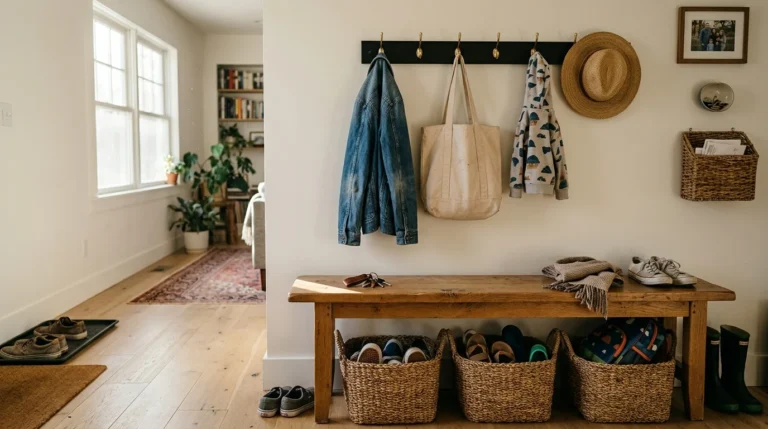
Entryway featuring a wooden bench with a tray, a tote bag on a wall hook, and an outgoing mail basket.
Contrary to popular belief, keeping unused items in your home does not recover your financial investment.

Troubleshooting Roadblocks and Preventing Rebound Clutter

The most common obstacle homeowners face during a purge is the sunk-cost fallacy—the feeling of guilt over parting with an item because it cost money originally. Remember that the money was spent the moment you purchased the item; keeping it in your home does not recover that financial investment, but it does consume your peace of mind. Reframe donation as passing value along to someone who will actively use the item today.

Preventing clutter from returning requires simple daily habits. Implement a strict “one in, one out” policy for clothing, home decor, and kitchenware. Resources from Penn State Extension emphasize that establishing a simple five-minute evening reset routine keeps your home functional and stops clutter creep before it begins.

Frequently Asked Questions About Decluttering Priority

What basic tools should I gather before starting a decluttering session?

You only need heavy-duty contractor bags for trash, sturdy boxes for donations, painter’s tape, a permanent marker for labeling, microfiber cloths, and an all-purpose surface spray. Having basic cleaning supplies on hand allows you to wipe down dusty shelves before returning kept items.

How do I handle sentimental items without getting overwhelmed?

Set sentimental keepsakes aside in a designated holding bin and deliberately leave them for the final phase of your decluttering project. Dealing with unemotional clutter like expired goods and duplicate tools first builds your decision-making stamina, making it easier to evaluate sentimental items with a calm perspective later.

Where can I donate items so they benefit the community responsibly?

Distribute items based on category: unexpired canned foods go to local food pantries, professional attire goes to career training charities, unopened toiletries go to homeless shelters, and functional household goods go to nonprofit thrift stores. Contact local organizations directly to confirm donation wish lists before dropping off boxes.

How can I prevent family members from re-cluttering cleared areas?

Create intuitive, clearly labeled storage zones that require minimal effort to maintain. If returning an item requires moving multiple bins or reaching to an inaccessible high shelf, items will end up on flat counters. Keep daily essentials at eye level and store items exactly where they are used.

Building Lasting Momentum in Your Home

Transforming your living environment from chaotic to calm does not require endless weeks of labor or expensive storage installations. By starting with obvious trash, expired goods, broken items, and duplicate tools, you bypass emotional hesitation and create immediate visual order. Step into your most challenging room today with a single trash bag, target these eight priority categories, and experience how quickly your home becomes a lighter, more functional sanctuary.

Share this article

Facebook Twitter Pinterest LinkedIn Email

Leave a Reply Cancel reply

Your email address will not be published. Required fields are marked *

Most Popular

  • A modern cordless impact driver sits on a wooden workbench with a green laser level casting a alignment line on a wall in the background.
    9 Tool Upgrades Worth the Investment for DIYers August 14, 2026
  • A warm, sunlit entryway featuring a person sitting on a newly built rustic pine farmhouse bench next to a potted plant.
    7 DIY Furniture Builds Perfect for a Beginner August 14, 2026
  • Close-up photograph of hands using an adjustable wrench to tighten a plumbing joint under a wooden kitchen sink.
    8 Small Repairs Every Homeowner Should Learn to Do August 14, 2026
  • An inviting front porch featuring a freshly painted slate blue door, cedar plaque with modern house numbers, and potted ferns in morning lig
    9 Outdoor DIY Projects That Boost Curb Appeal August 14, 2026

Trending

  1. 1 8 Home Items You Should Throw Away After 50
  2. 2 Want To Be Happy? Throw Out These 8 House Items!
  3. 3 9 Clever Garage Organization Ideas That’ll Free Up a Parking Spot
  4. 4 10 Common Cleaning Mistakes That Promote Germ Growth
  5. 5 10 Best Dollar Store Hacks You Need to Try for Your Home

Newsletter

Weekly DIY tips in your inbox.

Related Articles

organizing hacks

These Organizing Hacks Will Change Small Apartments Forever

Some seconds of your time used correctly may be the secret weapon in organizing your…

Read More →
garbage disposal isn't working

Garbage Disposal Not Working: 4 Common Issues and How to Fix Them

What do you do when the garbage disposal isn’t working? The garbage disposal system not…

Read More →
Duct Tape Hack

14 Genius Duct Tape Hacks You Never Knew About

We found some duct tape hacks that will blow your mind! Before we get into…

Read More →
Styling Rule

8 Effortless Styling Rules Interior Designers Don’t Want You To Know

Do you follow any styling rules in YOUR home? Styling your home usually feels overwhelming…

Read More →
A brown bottle of hydrogen peroxide sits on a white kitchen counter with small bubbles fizzing at the opening.

11 Surprising Uses for Hydrogen Peroxide

Discover 11 surprising hydrogen peroxide uses to elevate your DIY cleaning solutions. Learn practical hacks…

Read More →
wall storage

9 Amazing DIY Storage Hacks for Your Garage

You never have enough storage space? Tired of all the chaos? Do you wanna see…

Read More →
A DIY cleaning setup on a bathroom ledge with a glass vinegar spray bottle, baking soda, and a wooden scrub brush on white tile.

DIY Mold and Mildew Remover That Actually Works

Learn how to make a DIY mold and mildew remover that actually works. Restore grout,…

Read More →

Spring Cleaning: 5 Tips to Make the Most of a Dreaded Tradition

Is spring cleaning a little daunting for you, or are you one of those one-in-a-million…

Read More →
Dryer Lint Hack

8 Brilliant Dryer Lint Hacks That Will Change Your Life

You can reduce waste with these clever dryer lint hacks! Here at Crafty Captain, we…

Read More →

Crafty Captain

the DIY ship hasn't sailed yet!

Inedit Agency S.R.L.
Bucharest, Romania

contact@craftycaptain.com

Explore

  • Contact
  • Editorial Policy
  • Advertiser Disclosure
  • FAQ
  • Subscribe
  • Unsubscribe
  • Privacy Policy
  • Terms and Conditions
  • Disclaimer
  • Do not sell my personal information
  • Request to Know
  • Request to Delete
  • CA Private Policy

Categories

  • Advice
  • Bathroom
  • Bedroom
  • Crafts
  • Decorations
  • Garden
  • Home Upgrades
  • House
  • Inspiration
  • Kitchen
  • Living room
  • Plants
  • Renovate
  • Style
  • Tips
  • Tools
  • Vintage

© 2026 Crafty Captain. All rights reserved.