Most home organization systems collapse within three weeks because they demand impossible daily perfection. You can build lasting order immediately by aligning physical storage with your natural routines instead of fighting your family’s daily habits.
True clutter control relies on accessible, low-friction storage zones that everyone in your home can reset without frustration. Thoughtful spatial adjustments will protect your valuable weekends from endless, exhausting cleaning marathons.
These ten battle-tested organization hacks deliver durable systems that stay tidy through hectic mornings and busy evenings. You will reclaim valuable square footage and establish an effortless rhythm throughout your entire home.

Project Planning and Resource Overview
Every successful storage overhaul requires realistic expectations before you purchase containers or swing a hammer.
Most homeowners can tackle these upgrades for fifty to two hundred dollars by repurposing existing containers and buying simple hardware. You will work primarily with basic hand tools like a tape measure, a bubble level, and a cordless drill.
Beginner DIY enthusiasts can complete these modifications without specialized carpentry training or structural alterations. You will achieve the highest return on investment by targeting high-traffic pinch points first.
Map your daily paths through the house to identify where items collect naturally on floors or countertops. Observing these movement patterns prevents you from building storage systems in locations your family instinctively avoids.
Always verify what lies behind finished drywall before driving long screws into wall studs. Use an electronic stud sensor equipped with live wire detection to protect your home electrical wiring and copper plumbing pipes.

The Three-Phase System for Lasting Order
Durable home organization demands a structured workflow to prevent chaos from spreading across multiple living spaces.
Dividing your project into distinct stages keeps the process manageable and ensures consistent quality from start to finish.
Phase One: Preparation and Spatial Auditing
Empty your target space completely before you clean the surfaces or purchase any storage supplies.
Measure the interior width, depth, and vertical clearance of every shelf with a rigid metal tape measure. Record these dimensions in a notebook so you avoid buying bins that do not fit properly.
Establish a sorting station on a nearby folding table to categorize items into keep, donate, and discard piles. Grouping similar objects together reveals duplicate purchases and clarifies how much volume you must house.
Check local municipal disposal guidelines before throwing out old household chemicals, aerosol cans, or broken electronics. Disposing of hazardous products responsibly keeps toxic compounds out of municipal landfills.
Phase Two: Physical Execution and Hardware Installation
Install sturdy mechanical fasteners whenever you anchor shelving brackets or wall hooks into wall framing. Hollow-wall anchors support lightweight decor, but loaded storage baskets require rigid backing for long-term safety.
Use a four-foot bubble level to position wall standards and mounting tracks with complete accuracy. Level lines prevent containers from sliding forward and distribute weight evenly across your fasteners.
Predrill pilot holes into wooden studs to prevent the framing lumber from splitting under heavy screw pressure. This simple step guarantees superior screw thread engagement and reinforces overall weight capacity.
Phase Three: Finishing and Friction Elimination
Arrange your everyday necessities between waist and eye level to minimize physical strain during retrieval.
Store secondary supplies on higher shelves while placing bulky, low-frequency gear near the floor. This ergonomic layout accelerates daily routines and makes returning items completely effortless.
Live with your preliminary layout for three days before finalizing shelf positions or adhesive label placements. Testing your new system under real morning rush conditions exposes awkward placements that require adjustment.

10 Organizing Hacks That Actually Stick
1. Establish Zero-Effort Drop Zones
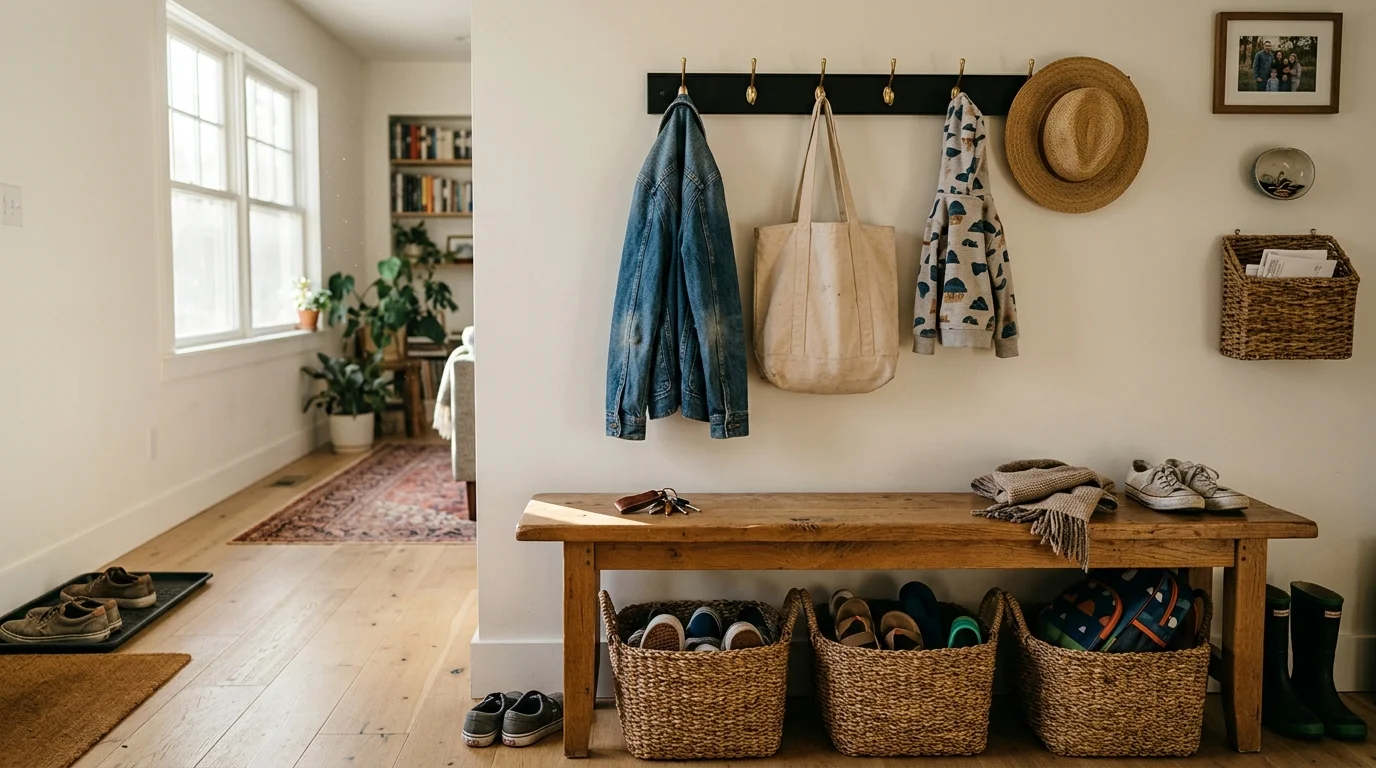
Clutter collects naturally near primary doorways because family members shed their daily belongings as soon as they walk inside.
Position wide-mouth baskets and heavy-duty coat hooks directly at this natural transition threshold. An accessible landing zone captures backpacks, shoes, and mail before they scatter across your kitchen counters.
2. Implement the One-Touch Rule
Touch incoming items only once by processing them immediately instead of shifting them between temporary holding zones.
Sort junk mail directly over your recycling bin, hang coats inside the entryway closet, and load dirty dishes straight into the dishwasher. This single behavioral shift eliminates the secondary micro-clutter that constantly threatens tidy living areas.
3. Deploy Clear Bins Without Lids
Opaque plastic bins hide contents from view, which leads directly to forgotten inventory and duplicate purchases.
Lidded containers also introduce unnecessary friction because removing snap-on lids requires two hands. Open-topped acrylic bins provide instant visibility and allow you to drop items inside with a single fluid motion.
4. Exploit Overlooked Vertical Surfaces
Standard storage cabinets leave valuable cubic feet completely empty above plates and beneath deep shelves.
Mount wall-hung tracks or adjustable shelf risers to capture this wasted overhead room. The interior design editors at Architectural Digest highlight vertical zoning as the most effective method for expanding usable storage in compact rooms.
Perforated metal pegboards also convert blank garage or laundry room walls into customizable, high-capacity utility racks. Hanging bulky items vertically frees up floor space for safe foot traffic and larger projects.
5. Enforce Strict Spatial Boundaries
Assign a dedicated bin or drawer tray for every category of household goods to establish an uncompromising physical boundary.
When the allotted container becomes full, you must declutter existing items before introducing new acquisitions. Physical boundaries prevent subtle category creep and eliminate the need for sudden, overwhelming deep-cleaning marathons.
6. Habit-Stack Your Daily Resets
Anchor a brief five-minute tidy routine to an established daily habit you already perform without thinking.
Wipe your kitchen counters while the morning coffee brews, or organize the bathroom vanity while running your evening bath. Pairing a quick reset with an automated routine cements the behavior into your subconscious mind.
7. Store Items at the Point of Performance
Store tools and supplies precisely where you consume them rather than grouping items by arbitrary historical categories.
Keep glass cleaner and microfiber towels under the bathroom vanity instead of isolating them in a central hallway closet. Proximity reduces the physical resistance to cleaning and encourages instant cleanup when spots appear.
8. Utilize Back-of-Door Space
The reverse side of standard interior doors offers unexploited storage potential across bedrooms, pantries, and linen closets.
Install over-the-door rack systems fitted with wire baskets to house spices, cleaning bottles, or hair care accessories. Renovation experts at HGTV recommend back-of-door storage as a premier space-saving solution for cramped pantry layouts.
Secure the bottom mounting rails with structural screws or industrial double-sided adhesive foam to keep the assembly from rattling. A stable, firmly attached door rack feels built-in and operates silently during daily use.
9. Apply High-Contrast Text Labels
Labels remove the mental guesswork of putting items away for every member of your household.
Print crisp black lettering onto durable white adhesive tape or write directly onto dark bins with white paint pens. Clear labeling establishes visual accountability and prevents family members from claiming they did not know where an item belonged.
10. Master the One-In, One-Out Inventory Rule
Maintain an equilibrium between incoming and outgoing possessions to prevent long-term clutter accumulation.
Whenever you bring home a new shirt, coffee mug, or kitchen gadget, select an older equivalent to donate or discard. This simple discipline caps your physical volume at the exact capacity your home can comfortably support.
Keep a permanent cardboard donation box inside your closet or garage to receive outgoing items immediately. Once the box fills to the brim, seal the flaps and drive it straight to your local charity thrift shop.

Styling and Personalizing Your Storage
Functional organization should complement your home architecture and personal aesthetic rather than resemble a sterile warehouse.
Incorporate natural materials like woven seagrass baskets, turned wooden handles, and matte ceramic crocks to introduce organic warmth. These varied textures break up monotonous rows of plastic bins and turn everyday utility storage into handsome interior decor.
Select a cohesive color palette across all storage bins, hardware fixtures, and shelving surfaces to create a soothing visual rhythm. Matching metallic accents, such as satin nickel or matte black, instantly elevates utility closets and pantries into custom-built features.
Position frequently used cooking tools in heavy stoneware vessels on your kitchen countertops. This display method keeps essential spoons within arm reach while enhancing the artisanal character of your cooking workspace.
Install low-voltage LED strip lights beneath deep shelving to illuminate dark cabinet recesses and highlight your organized displays. Thoughtful accent lighting makes finding ingredients simple while giving your pantry the polished appearance of an upscale boutique.

Troubleshooting Common Organization Pitfalls
Even well-designed systems encounter strain when family schedules change or storage demands increase unexpectedly.
Avoid the common trap of micro-sorting small items into an excessive number of tiny compartments. Hyper-specific categories create decision fatigue and guarantee that loose items will end up dumped on open horizontal surfaces.
Involve everyone in your household during the initial planning phase to secure their buy-in and cooperation. Family members respect organization systems much more consistently when they participate in designing the layout and setting category rules.
Schedule a quick audit every three months to adjust container capacities as your seasonal routines shift. Extension specialists at Iowa State University Extension recommend auditing home storage seasonally to match organizational systems with evolving family dynamics.
Replace cracked bins promptly and tighten loose mounting brackets before small hardware failures snowball into widespread clutter. Proactive maintenance preserves your initial investment and prevents small messes from eroding your home habits.
When organizing utility basements or mechanical closets, ensure you leave adequate clearance around water heaters and HVAC furnaces. The energy efficiency specialists at the U.S. Department of Energy stress maintaining unobstructed airflow around mechanical equipment to ensure home safety and peak efficiency.
Frequently Asked Questions
What tools do you need to install custom vertical shelving?
You need a dependable cordless drill, a magnetic torpedo level, a metal tape measure, a pencil, and masonry or drywall anchors. A reliable electronic stud finder ensures you secure heavy shelf brackets into solid structural framing lumber.
How do you choose durable materials for high-moisture areas?
Select moisture-resistant materials like powder-coated steel, marine-grade polymer, or naturally rot-resistant bamboo for bathrooms and basements. Avoid raw particle board because humid environments cause composite wood cores to absorb moisture, swell, and delaminate.
Where can you source budget-friendly organization hardware?
Shop commercial restaurant supply warehouses and local hardware centers for affordable, industrial wire shelving and food-grade polycarbonate bins. These commercial products often cost half as much as designer retail organizers while offering superior load capacities and longevity.
How do you adapt these systems for small rental apartments?
Rely on tension-rod dividers, over-the-door hanging racks, and freestanding modular shelving that require zero holes in finished walls. Heavy-duty adhesive hooks hold lightweight acrylic bins securely without stripping wall paint or damaging drywall upon move-out.
Take Control of Your Space Today
You do not need an entire free week or an unlimited budget to make meaningful organizational progress in your home.
Select just one troublesome junk drawer or a single cluttered entryway corner to conquer this afternoon. Applying these low-friction systems to a single compact zone will build immediate confidence and positive momentum.
Small, consistent physical changes yield compounding benefits for your daily productivity, mental clarity, and living comfort. Grab your tape measure, clear your first surface, and transform your home into a calm, functional sanctuary today.