Maintaining an immaculate home should never require exhausting physical strain or sharp joint discomfort. You can easily keep floors, bathrooms, and countertops spotless by using ergonomic cleaning strategies built around your natural range of motion.
Adaptive household tools and low-effort cleaning formulas eliminate the punishing need for bending, kneeling, and heavy lifting. These smart adjustments protect your joints while saving precious physical energy throughout the day.
Discover how eleven practical modifications can transform your weekly chores into painless, manageable tasks. Whether you live with chronic fatigue, arthritis, or permanent mobility challenges, these methods bring immediate relief to your routine.
Planning Your Adaptive Cleaning Routine
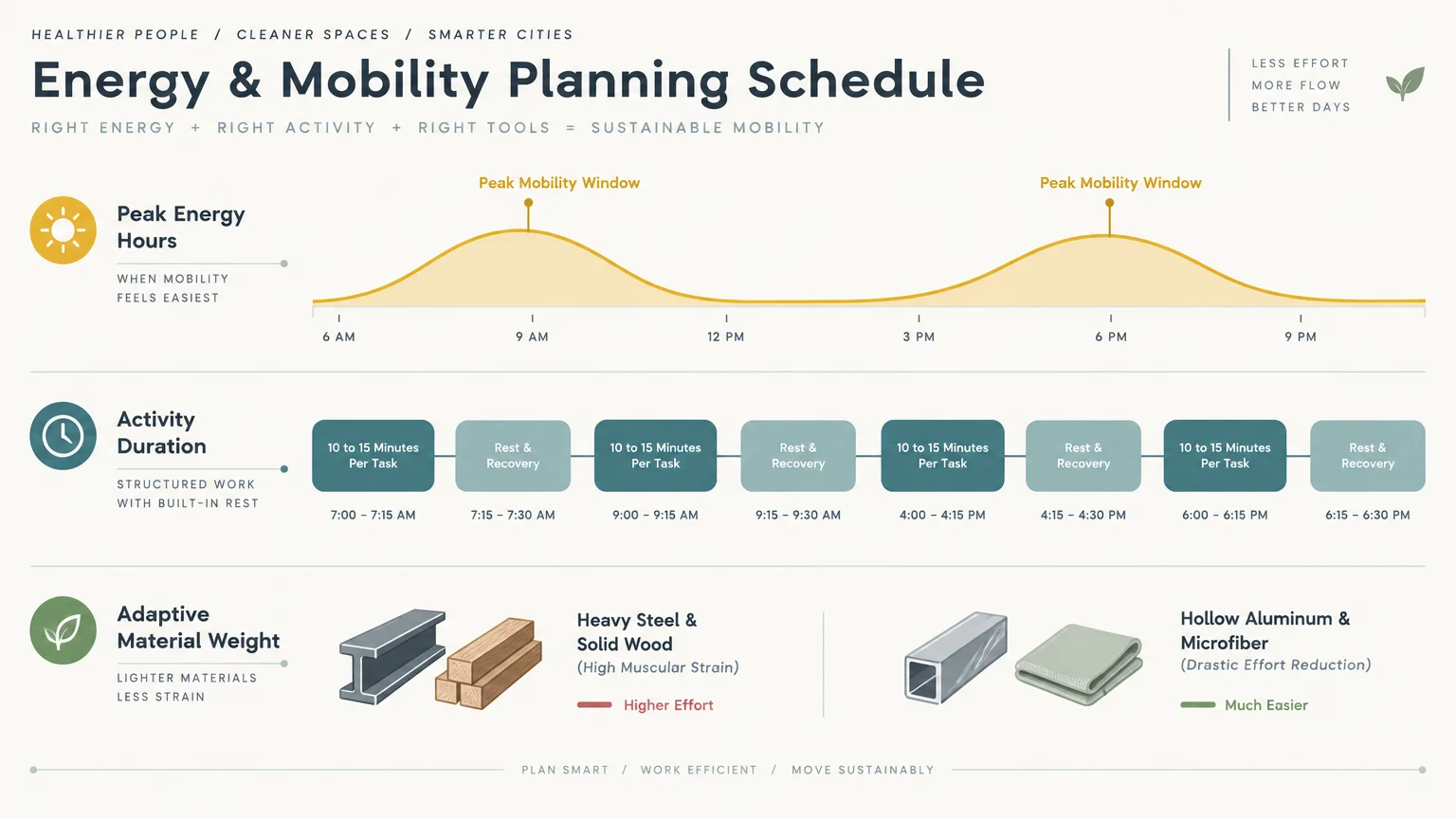
Setting up an accessible cleaning plan requires an honest assessment of your daily physical comfort and energy reserves. You avoid fatigue by scheduling tasks during the hours when your mobility peaks.
Most adaptive cleaning gear fits comfortably into a modest household budget. You can acquire basic reach extenders, long handles, and lightweight supplies without buying expensive specialty medical gear.
Expect to spend an initial afternoon gathering tools and organizing supply stations throughout your living spaces. Once your setup is in place, routine maintenance tasks take just ten to fifteen minutes each.
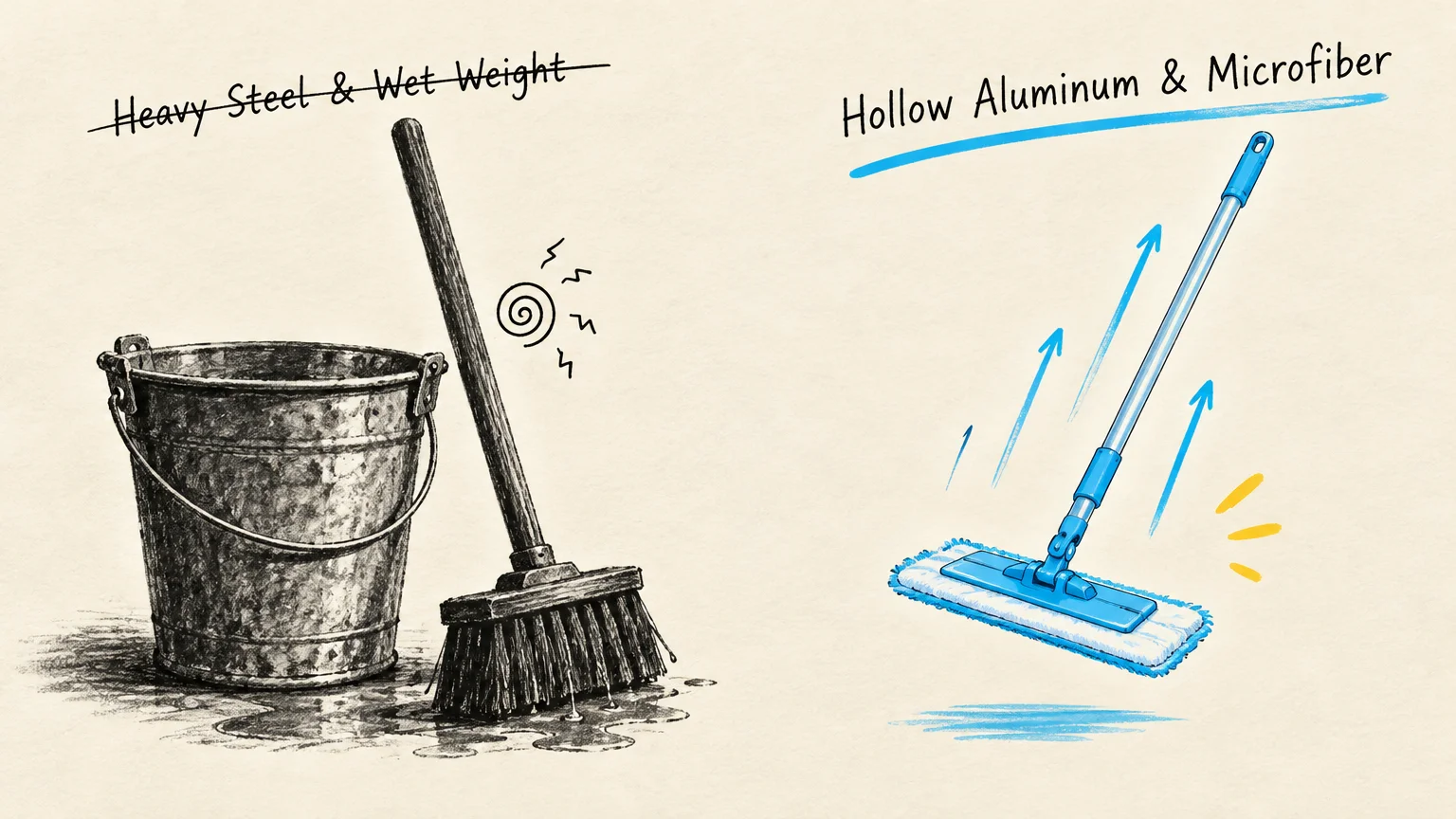
Prioritize lightweight materials like hollow aluminum, microfiber, and cellular plastics over heavy steel or solid wood. These choices drastically lower the muscular effort required for every sweeping motion.
Research published by university extension services emphasizes keeping home maintenance work within your personal comfort zone to prevent joint inflammation. Adapting your environment supports your long-term physical independence.
Adaptive Strategies: Preparation and Setup
Thorough preparation eliminates tiring trips back and forth between rooms searching for misplaced supplies. Streamlining your staging area sets the foundation for a pain-free cleaning session.
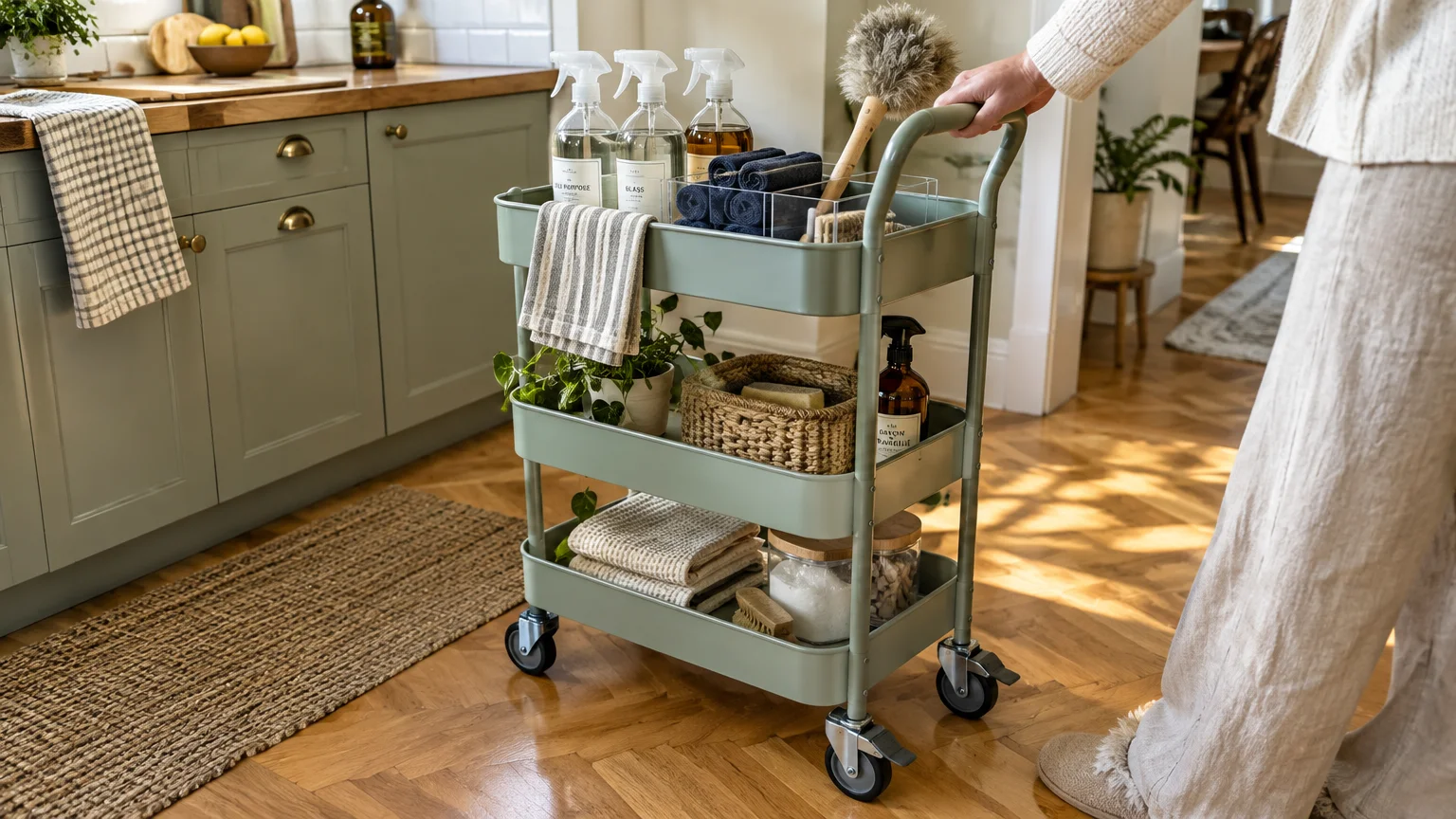
1. Assemble a Mobile Cleaning Caddy on Wheels
Transporting heavy buckets and spray bottles strains your wrists, shoulders, and lower back. A multi-tier utility cart with smooth caster wheels keeps all your essentials at waist level.
Organize each tier by room or function, placing your most frequently used sprays on the top tray. You can glide the cart smoothly with a gentle push, conserving vital physical stamina.
Choose a cart with locking caster wheels and ergonomic rubber handles. This setup prevents accidental rollaways while providing steady balance as you navigate hallway turns.
Keeping cleaning bottles on wheels means you never lift heavy containers off the floor. You simply wheel your workstation along as you clean each room.
2. Use High-Tack Microfiber Dusting Mitts
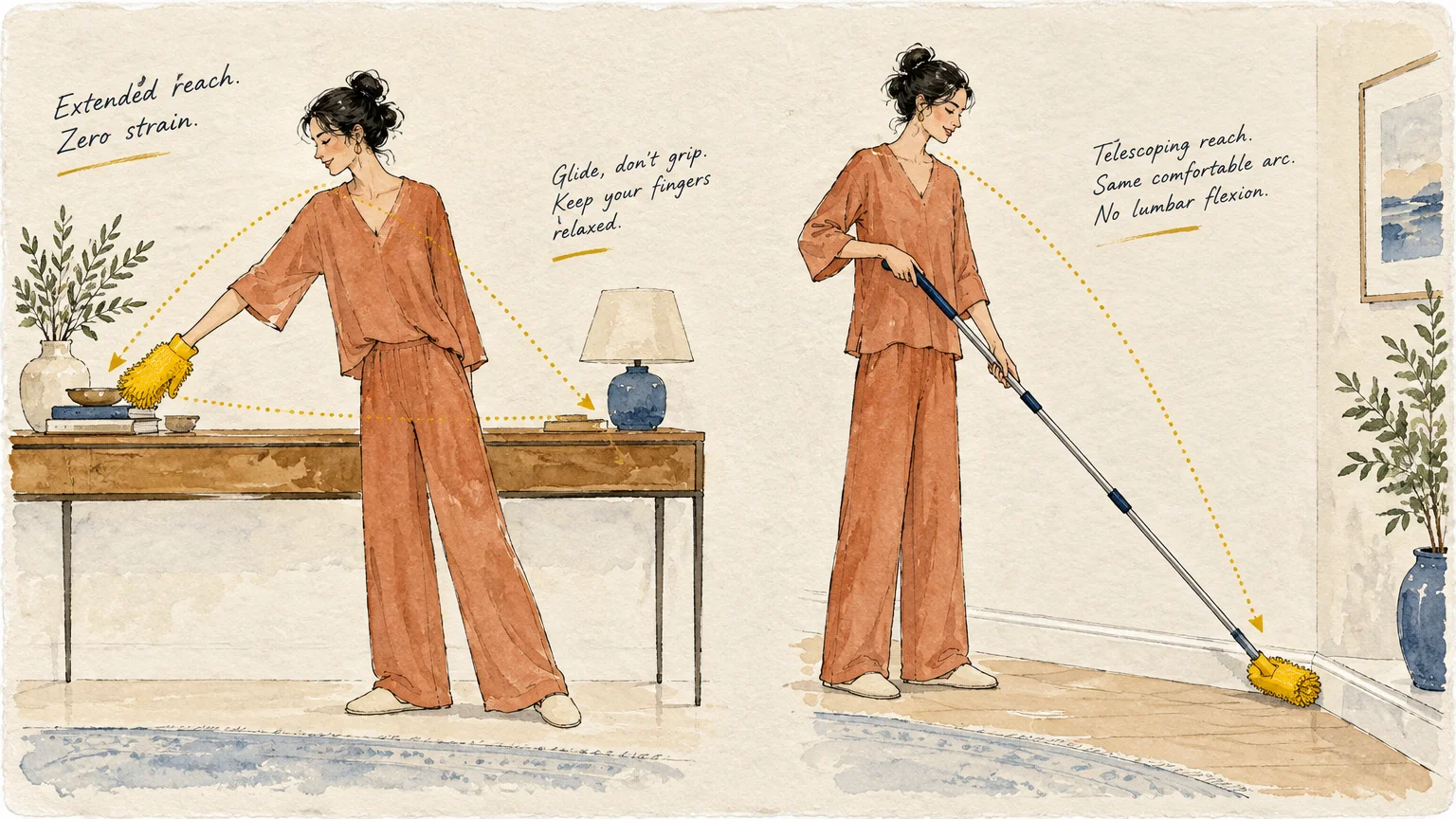
Gripping a standard dusting cloth for prolonged periods leads to painful hand cramps and finger stiffness. Wearable microfiber dusting mitts turn your natural hand movements into powerful cleaning sweeps.
You simply stroke lampshades, picture frames, and television consoles without squeezing your fingers together. The dense synthetic fibers trap dust particles electrostatically, eliminating repeated wiping over the same surface.
Wash the mitts in warm water without fabric softener after every chore session to renew their static cling. Having several pairs on hand ensures you always have a clean set ready.
These mitts also fit over the ends of reaching tools for dusting distant ceiling fan blades. You achieve full dusting coverage without straining your hands or wrists.
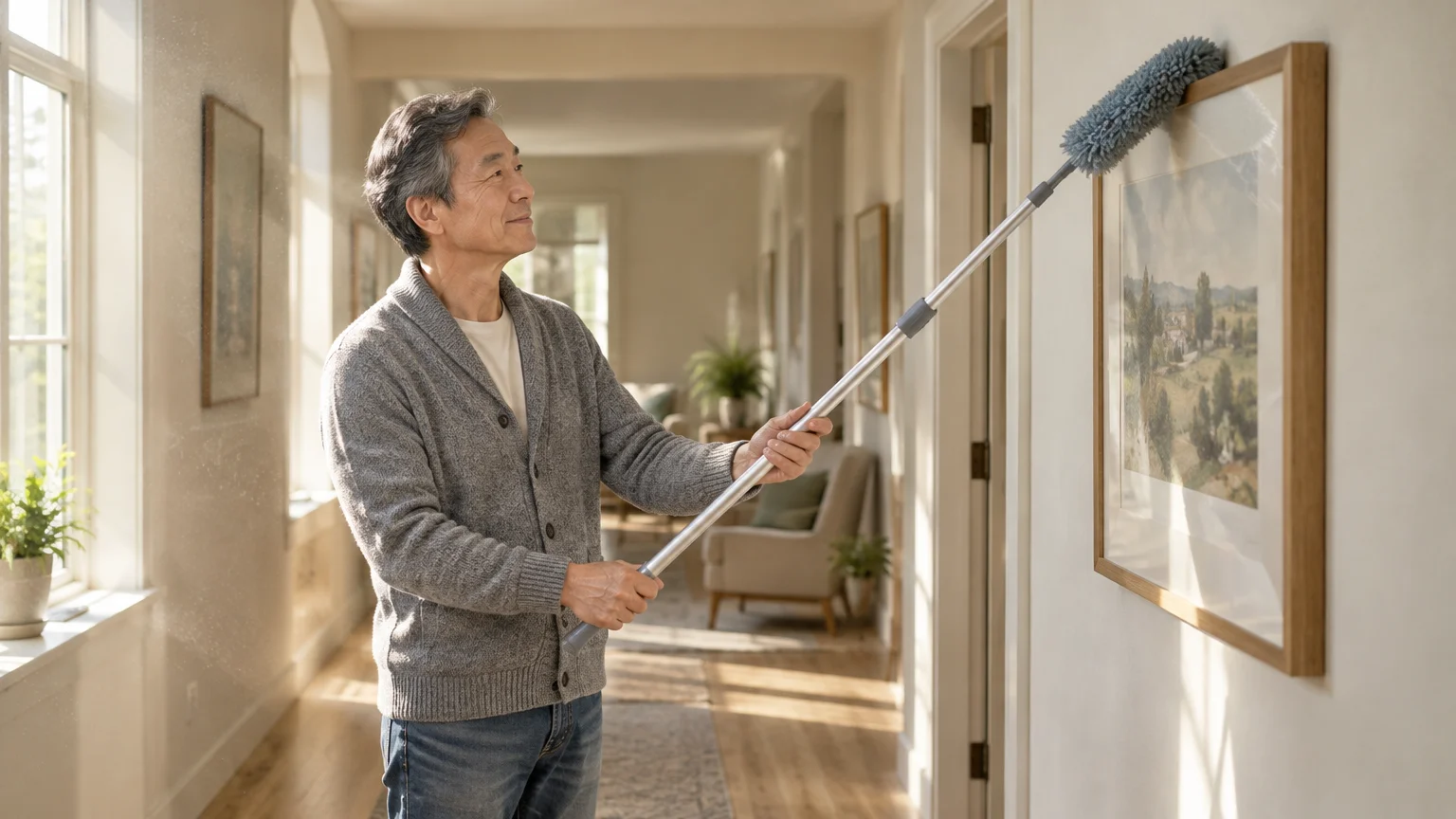
3. Upgrade to Telescopic Extension Poles
Overhead reaching strains your neck and shoulders, while bending down to floor moldings aggravates lumbar joints. A sturdy aluminum extension pole lets you clean high vents and low baseboards from a stationary stance.
Look for poles featuring universal threaded tips that accept duster heads, squeegees, and scrubber pads. High-quality twist-lock mechanisms keep the pole firmly locked at your desired length without slipping under pressure.
Selecting lightweight aluminum over dense fiberglass makes a noticeable difference during extended use. You maintain precise control without tiring your shoulders or forearms.
Extension poles allow you to clear ceiling corners while sitting in a comfortable armchair. This simple adjustment prevents dangerous balance shifts while keeping high zones tidy.
Execution Hacks: Cleaning Surfaces Without Bending or Reaching
Everyday chores often demand awkward postures that place immense pressure on vulnerable spinal discs. The following execution hacks allow you to tackle tough grime while staying balanced and supported.
4. Harness Cordless Electric Spin Scrubbers
Traditional scrubbing relies on vigorous elbow grease that can quickly trigger tendonitis and shoulder fatigue. A cordless spin scrubber uses high-torque rotational heads to eliminate soap scum with virtually no manual pressure.
Most models feature modular extension handles that let you clean bathtubs, tile walls, and shower floors while standing upright. You simply guide the rotating head across grout lines and let the motor do the hard work.
Match the brush stiffness to your surface, choosing soft dome heads for curved porcelain and flat, stiff bristles for floor tiles. This simple adjustment protects delicate finishes while lifting stubborn mineral deposits.
Recharging the unit after each session ensures you always have maximum rotational power available. The electric motor delivers consistent scrubbing power without draining your personal energy reserves.
5. Employ No-Rinse Cleaners and Spray Foams
Scrubbing and rinsing surfaces repeatedly multiplies the physical effort required for basic sanitization. Foaming shower cleaners and no-rinse sprays cling to vertical surfaces and dissolve grime through chemical action alone.
Spray your shower walls thoroughly after evening use, then let the product break down soap scum overnight. The next morning, simply turn on the shower head to wash the dissolved residue down the drain.
Safe chemical application practices featured in HGTV cleaning tutorials recommend avoiding harsh caustic bleaches in favor of gentle foaming surfactants. You protect your respiratory health while bypassing manual scrubbing entirely.
Using no-rinse formulations on kitchen counters eliminates the tiresome second step of wiping away soapy residue. You cut your active cleaning time in half with a single spray.
6. Swap to Lightweight Stick or Robot Vacuums
Heavy upright vacuums often weigh fifteen pounds or more, demanding intense pushing, pulling, and bending. Switching to an ultralight cordless stick vacuum weighing under five pounds dramatically reduces rotational torque on your spine.
For hands-free floor maintenance, an automated robotic vacuum cleans carpets and hardwood floors on a preset daily schedule. You only need to empty the dustbin occasionally, freeing you from pushing a vacuum altogether.
Select stick vacuums with swivel steering and top-mounted dust cups for effortless maneuvering around furniture legs. Swivel heads glide along baseboards smoothly, requiring minimal directional steering effort from your wrists.
Many modern cordless models also include wall-mounted charging cradles installed at waist height. This convenient mounting location eliminates bending down to plug in cords or retrieve the machine.
7. Deploy Magnetic and Reach-Extender Grabbers
Dropping a cleaning rag or picking up stray items off the floor often triggers dizziness or back spasms. An ergonomic reaching tool gives you an extra two to three feet of functional reach without stooping.
Premium grabbers feature articulated rubber suction cups and magnetic tips capable of retrieving both tiny metal pins and bulky washcloths. You keep your feet firmly planted on the ground while clearing clutter safely.
Store a grabber tool in every primary zone of your home so help remains within arm’s reach. Hanging them on adhesive wall hooks keeps them visible and easily accessible.
Use the grabber claws to hold damp wipes when spot-cleaning spills on distant floor surfaces. You address sudden messes immediately without kneeling or hunting for a mop.
8. Clean Baseboards Using Long-Handled Sponge Mops
Kneeling on hard floors to wipe dusty baseboards places intense pressure on vulnerable knee joints. An angled sponge mop with a swiveling rectangular head cleans baseboards effortlessly while you stand or sit comfortably.
Lightly dampen a microfiber mop pad with a mild wood cleaner and run it horizontally along the trim. The wide surface area covers several feet of baseboard in a single fluid sweeping stroke.
This method keeps your spine aligned and prevents the dangerous head-down postures that cause balance loss. You finish an entire room’s perimeter moldings in a fraction of the usual time.
You can also use the same sponge mop head to dust high door casings and ceiling trim. Versatile tools reduce clutter and save you from constantly switching implements.
Finishing and Maintenance Hacks: Low-Effort Daily Preservation
Maintaining clean surfaces requires far less energy than scrubbing neglected areas covered in thick buildup. These preventative finishing strategies keep dirt from bonding, dramatically reducing future scrubbing needs.
9. Apply Hydrophobic Surface Sealants
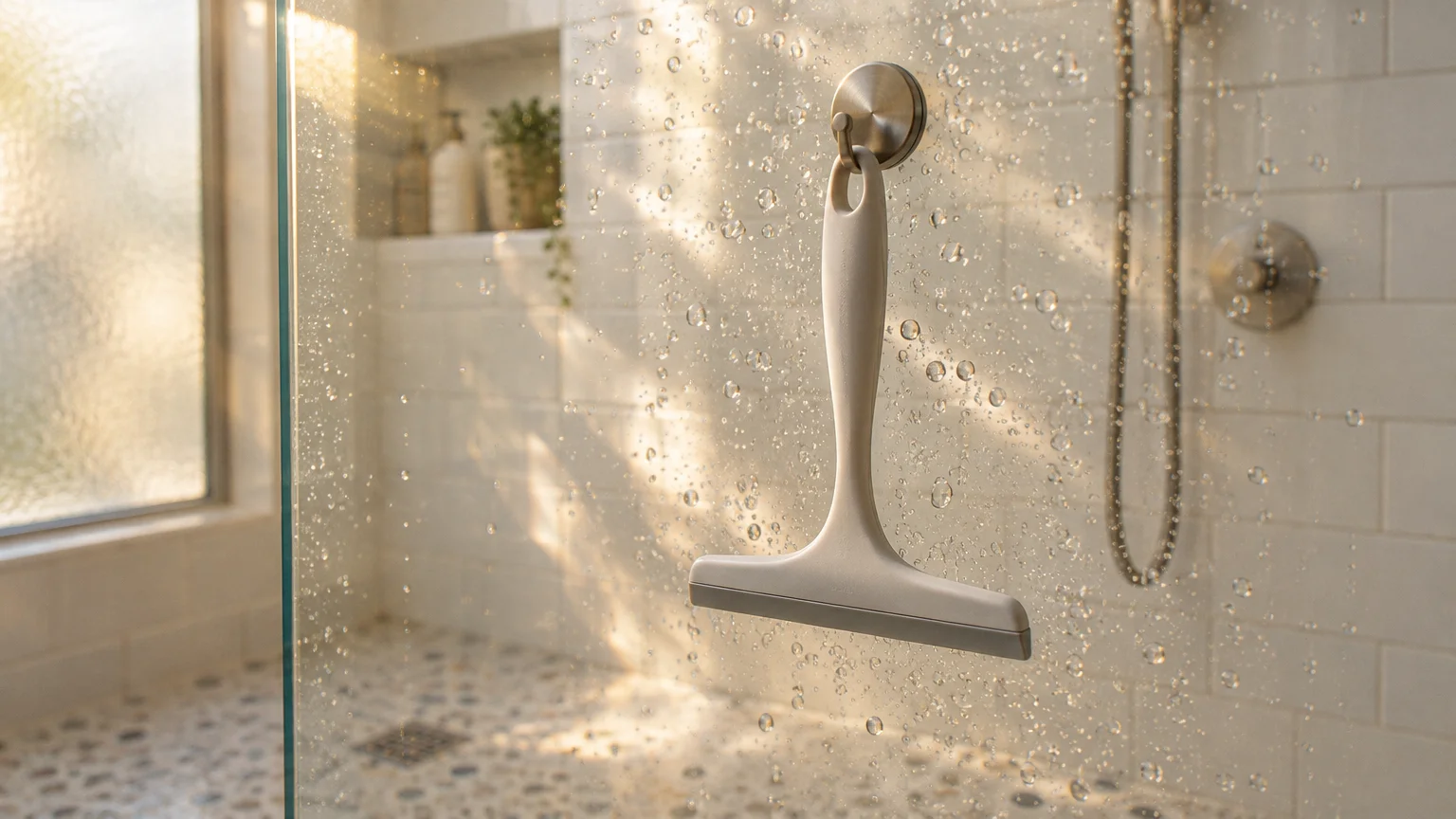
Hard water droplets and mineral scale create cloudy buildup that requires aggressive scrubbing to remove. Applying a hydrophobic glass and ceramic sealant creates a microscopic barrier that forces water to bead up and roll away.
After an initial thorough cleaning, buff the sealant onto dry shower doors and sinks using a microfiber pad. Reapply the treatment every few months to preserve its slick, water-repelling properties.
By preventing mineral deposits from anchoring to glass pores, you eliminate deep scrubbing sessions forever. A quick post-shower water misting keeps your enclosure crystal clear with minimal maintenance.
You can apply similar repellent coatings to ceramic stovetops to keep burnt grease from adhering. Spills wipe away cleanly with a single gentle pass of a damp cloth.
10. Implement Zone Cleaning with Timed Intervals
Attempting to clean your entire residence in one exhausting marathon leads to severe physical flare-ups and prolonged fatigue. Divide your home into micro-zones and address just one isolated area for several minutes daily.
Wiping down the bathroom vanity on Monday and sweeping the kitchen entryway on Tuesday maintains steady order without draining your reserves. Consistency replaces intensity, keeping your living environment perpetually tidy without physical consequences.
Set a gentle timer on your phone and stop immediately when the chime sounds, even if small tasks remain. Honoring your physical boundaries ensures you remain refreshed and ready for the next day’s micro-zone.
Pacing your chores protects your stamina and preserves your energy for enjoyable personal hobbies. Balanced daily effort leads to a comfortable, clean home without physical suffering.
11. Install Raised and Motion-Sensor Trash Systems
Stooping down to open foot-pedal cans or lifting heavy trash bags from deep bins places extreme shear stress on your spine. Elevated trash cans with automatic infrared motion sensors open smoothly with a simple hand wave.
Place smaller wastebaskets on low side tables or mount them to interior cabinet walls at waist height. This adjustment eliminates bending entirely whenever you dispose of daily household packaging or spent cleaning wipes.
Line receptacles with oversized bags that lift out effortlessly without creating a tight internal vacuum seal. When it comes time to empty the bin, you pull the bag outward smoothly without jarring resistance.
Positioning multiple small bins throughout your living space keeps disposal points within immediate reach. You minimize unnecessary walking trips and avoid carrying heavy rubbish sacks through the house.
Storage, Organization, and Spatial Styling
Integrating adaptive cleaning equipment into your living space should enhance your home aesthetics rather than make it look clinical. Thoughtful design choices turn mobility aids into stylish, intentional home features.
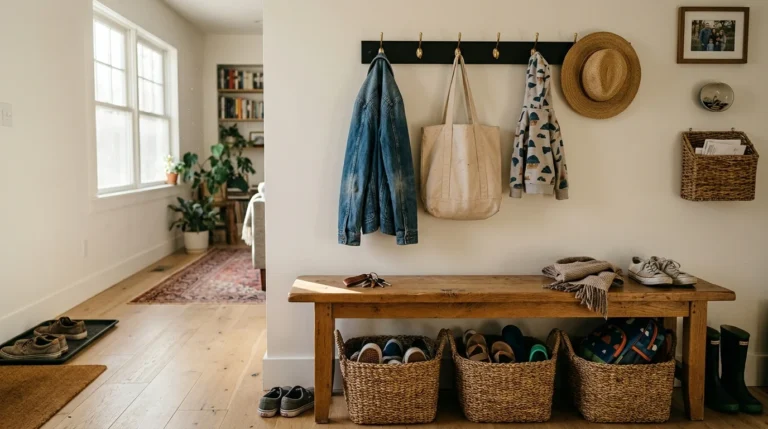
Incorporating universal design principles ensures your cleaning stations blend seamlessly with your interior decor. Choose matte black, brushed brass, or woven wicker storage caddies that complement your existing furniture.
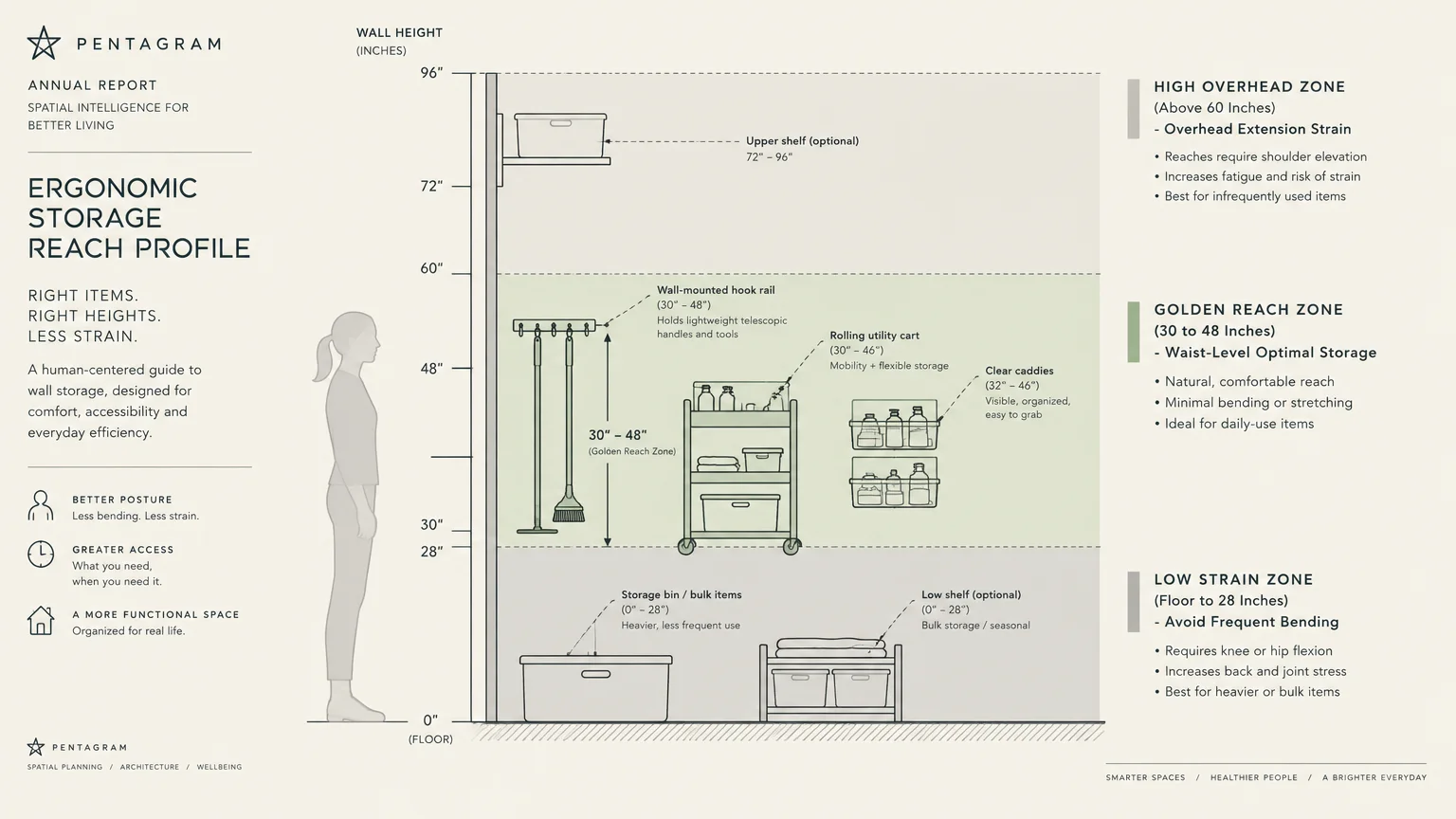
Install open floating shelving between chest and waist height in closets and utility areas. Keeping tools within this optimal reach zone eliminates both overhead stretching and floor-level squatting.
Label storage baskets clearly using high-contrast fonts so you can locate supplies instantly without shifting heavy containers around. Neat organization reduces mental fatigue while streamlining your physical workspace.
Hang extension wands and grabbers on modern wall-mounted pegboards finished in soft neutral tones. Your tools stay organized as attractive visual accents rather than cluttered obstacles in your hallways.
Keep your home walkways wide and free of loose floor clutter to accommodate mobility devices and cleaning carts. A thoughtfully styled home supports easy movement while remaining visually welcoming and warm.
Troubleshooting Common Adaptive Cleaning Pitfalls
Even with excellent tools, unexpected obstacles can disrupt your cleaning flow and test your balance. Learning how to navigate slick surfaces and cumbersome equipment keeps your routine safe and effective.
Wet tile floors present serious slipping hazards, especially when you have diminished joint stability or use walking aids. Always wear non-slip, rubber-soled shoes and work backward toward room exits so you never step on damp floors.
Cord entanglement creates dangerous tripping hazards that can quickly lead to devastating falls. Transitioning to cordless tools or securing power cables along wall trim eliminates loose wires across walking pathways.
If a motorized spin scrubber pulls or jerks against your wrists, reduce the motor speed and decrease your downward pressure. Let the bristles graze the grime lightly; high-speed rotation lifts debris without requiring heavy hand force.
Overfilling mop buckets or spray bottles creates unnecessary dead weight that strains your joints during transport. Fill spray bottles only halfway to keep them featherlight and easy to squeeze.
Reviewing home safety recommendations from the National Institute on Aging can help you spot hidden trip risks throughout your home. Proactive hazard removal protects your physical independence for years to come.
Frequently Asked Questions
What are the most essential adaptive cleaning tools for beginners?
Start with a lightweight cordless stick vacuum, a telescopic extension duster, and a multi-tier rolling utility cart. These three items immediately eliminate the majority of bending, heavy lifting, and overhead stretching.
Once you master those basics, you can add specialized tools like electric spin scrubbers and reacher-grabbers based on your personal needs.
How can I clean low baseboards and floors without bending down?
Use a long-handled flat microfiber mop with an adjustable swivel neck to clean trim and flooring while seated or standing upright. Spray the mop pad directly with a gentle cleaner to avoid hauling heavy water buckets.
A handheld grabber fitted with a microfiber cloth also lets you buff spot stains off floors without lowering your torso.
Where can I source reliable adaptive cleaning products affordably?
Standard hardware stores, big-box retailers, and online home improvement suppliers carry most extension poles and rolling carts at reasonable prices. You rarely need to purchase expensive specialty medical gear to achieve great ergonomic results.
Look for commercial janitorial supply lines, which often design lightweight, durable tools built specifically to minimize repetitive strain.
How do I adapt my cleaning routine for smaller living spaces?
In compact apartments, substitute rolling carts for wall-mounted organizers installed at arm level inside utility closets. Multi-use tools with interchangeable heads save valuable floor space while maintaining total accessibility.
Focusing on daily two-minute micro-sessions prevents clutter from accumulating in narrow hallways where mobility aids need clear passage.
Start Your Simplified Cleaning Routine Today
Maintaining a clean and serene living space should never come at the cost of your physical well-being. By adopting ergonomic tools and pacing your efforts, you protect your body while keeping your home immaculate.
Select just one hack from this list to implement this week, whether it is assembling a mobile cart or ordering an extension pole. Small modifications quickly compound into transformative daily habits that restore your comfort and confidence.
Take control of your living environment today by choosing methods that honor your physical needs. Your home will shine, and your body will thank you for the gentle care.