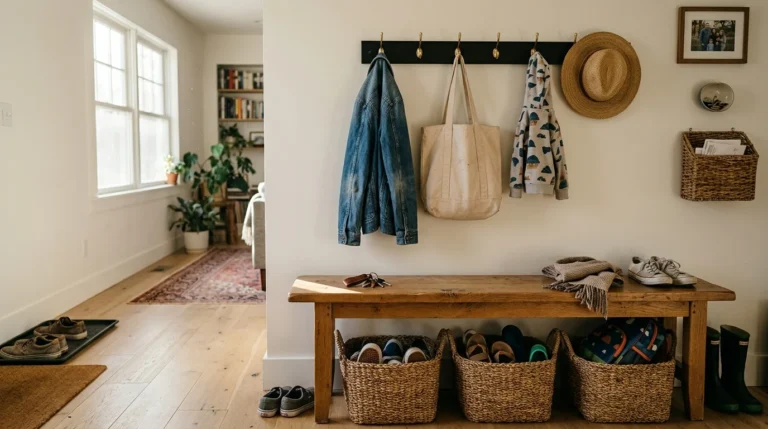
Transforming cluttered rooms into serene, highly functional spaces requires more than buying pretty acrylic bins and wicker baskets. Professional organizers approach home spaces with a tactical framework that treats organization as an architectural system rather than a quick cleanup session. By analyzing how you daily move through your home, experts build sustainable setups that eliminate visual stress and cut morning prep time in half. You can easily replicate these results without hiring expensive consultants or undertaking major structural renovations. Master these seven foundational habits, apply realistic project planning, and you will turn chaotic closets and overflowing pantries into streamlined systems that maintain themselves effortlessly.
Planning Your Project: Budget, Timeline, and Skill Level
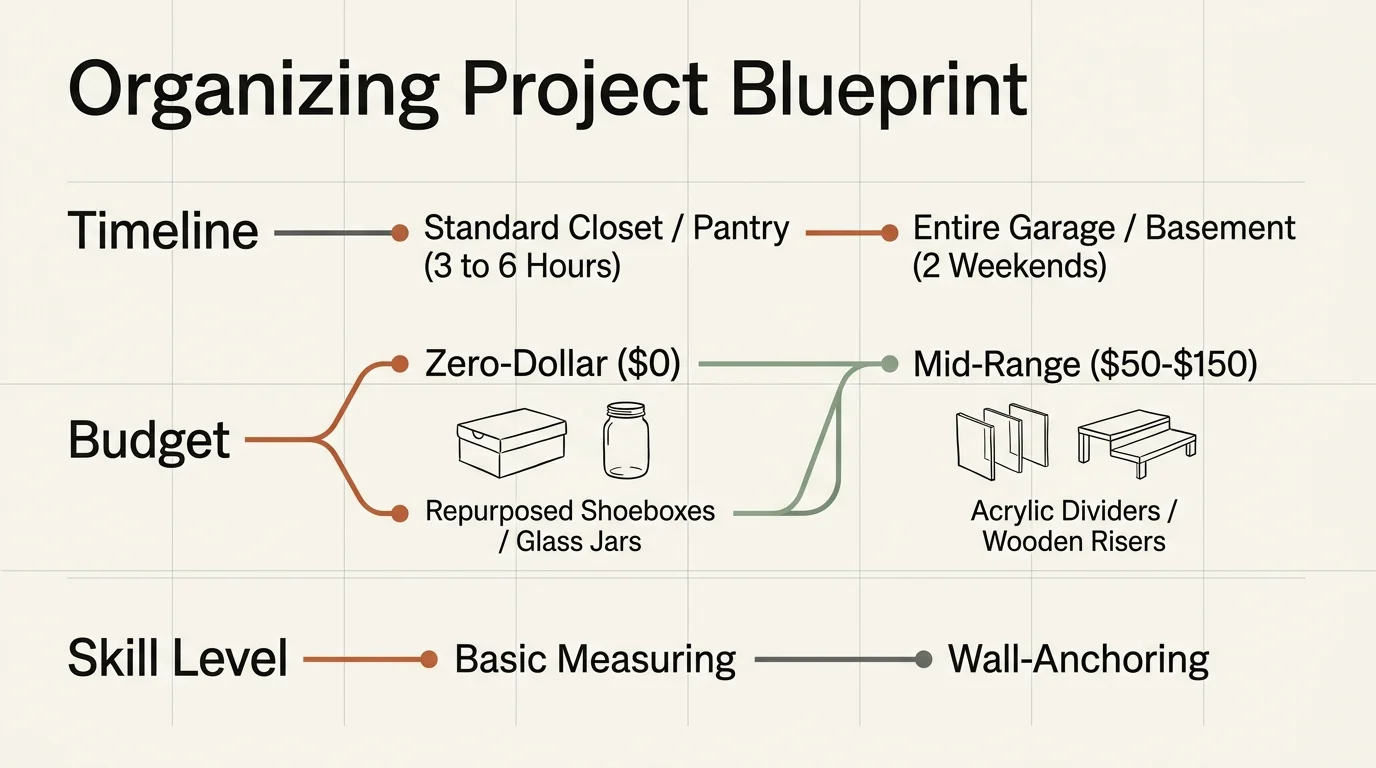
Before you dismantle a closet or pull every canned good out of your pantry, establishing a realistic roadmap guarantees success. Most homeowners fail at organizing not because they lack motivation, but because they underestimate the time and structural planning required. Professional organizers view every room as a functional ecosystem. Completing a standard bedroom closet or kitchen pantry typically demands a timeline of three to six hours; tackling an entire garage or multi-purpose basement may require two full weekends. Setting aside dedicated, uninterrupted blocks of time prevents project fatigue and keeps your living spaces from remaining in chaos midway through the process.
Your financial investment depends entirely on your personal style choices and material preferences. A zero-dollar budget relies on repurposing existing shoeboxes, sturdy shipping cartons, and glass jars you already own; a mid-range budget of fifty to one hundred fifty dollars allows you to purchase uniform fabric bins, clear acrylic drawer dividers, and wooden shelf risers that elevate the visual aesthetic. From a skill perspective, standard organizational projects require basic mechanical aptitude. You need only master simple measuring techniques, basic wall-anchoring procedures for modular shelving, and intuitive space distribution principles based on Architectural Digest space planning concepts.

The 7 Core Secrets of Professional Organizers
1. They Edit and Purge Before Buying Bins
Amateurs head straight to home goods stores to purchase decorative storage containers before evaluating their actual belongings. Professional organizers do the exact opposite by starting with a rigorous editing phase. You must haul every single item out of the space to perform an honest inventory. Group similar objects into distinct categories on a clean work surface—place all baking supplies together, cluster all hardware items, or aggregate every pair of athletic socks. Seeing the sheer volume of your possessions highlights unnecessary duplicates and expired goods. Experts aim to remove roughly twenty to forty percent of volume during an initial purge before purchasing a single container.
2. They Measure Every Square Inch Prior to Planning
Guesswork destroys functional storage plans. Professional organizers carry tape measures and record three specific dimensions for every shelf, drawer, and cabinet: width, depth, and vertical height clearance. They also measure door swing radiuses, drawer pull track clearances, and the position of light switches or outlet plates. Purchasing containers that miss shelf depth by even half an inch prevents cabinet doors from closing flush, wasting money and creating daily frustration. When measuring your storage units, account for structural obstacles like cabinet hinges, lip overhangs, and internal support brackets to ensure modular containers fit tight against one another.
3. They Map Zones Based on Frequency of Use
Professional organizers apply ergonomic principles to assign items specific locations based on how often you reach for them. They divide storage spaces into prime, secondary, and tertiary real estate. Prime real estate spans the area between your knees and your shoulders. This intuitive zone requires minimal bending or stretching, making it the perfect location for everyday essentials like dinnerware, daily cookware, or work attire. Secondary real estate includes bottom shelves below knee level, ideal for moderately used items like specialized appliances; tertiary real estate encompasses top shelves near the ceiling and deep back corners, reserved for archivable items and off-season supplies.
4. They Maximize Vertical Space and Hidden Corners
Flat surfaces are precious commodities that quickly accumulate visual clutter when vertical space remains unexploited. Experts look upward to double or triple available storage capacity within the same floor footprint. Adding adjustable shelf risers inside tall cabinets utilizes dead vertical air space, allowing you to stack plates or mug sets safely without creating precarious piles. Wall-mounted track systems, tension rods, and over-the-door hanging racks turn blank drywall into high-density storage zones. Take cues from HGTV smart storage solutions by installing pegboards, vertical divider slots for baking sheets, or wall tracks in utility closets.
5. They Establish Strict Container Boundaries
Containers serve a far greater purpose than simply grouping loose objects—they act as physical boundaries that enforce volume caps. Professional organizers utilize bins, baskets, and dividers to set firm limits on inventory expansion. If you assign a single fabric bin to house winter scarves, that specific bin dictates how many scarves you can comfortably keep. When the container reaches full capacity, you must edit an old item before introducing a new purchase. This container principle prevents insidious clutter creep over time by transforming abstract organizational goals into clear, tactile limits.
6. They Label Systems for the Entire Household
Organized spaces rapidly break down if only one person understands where items belong. Professional organizers rely on detailed labeling to turn personal organizational knowledge into a universal household standard. Clear, legible labels eliminate guesswork for children, partners, and houseguests during cleanup routines. Labeling sets explicit expectations for where every object resides, leaving zero room for misplacement. Select a labeling style that matches both your design aesthetic and functional needs, whether using printed adhesive tape for sleek pantry containers, clip-on chalkboard labels for woven baskets, or picture-based labels for young children’s toy bins.
7. They Design Systems for Easy Drop-off, Not Just Pickup
Human behavior leans heavily toward the path of least resistance. Amateur organizers design systems focused entirely on how easy it is to retrieve an item, but professional organizers prioritize how effortless it is to put that item away. If returning an umbrella requires navigating three latches, removing a top lid, and squeezing past a crowded rack, you will inevitably leave the umbrella on the nearest kitchen counter. Eliminate unnecessary physical steps in your maintenance routines by swapping covered storage boxes for open-top bins and replacing traditional coat hangers with sturdy wall hooks. According to Utah State University Extension family resource guidelines, streamlining household maintenance systems reduces domestic friction.

Step-by-Step Implementation Framework
Executing an organizational transformation requires a systematic, phased approach. Breaking down your project into distinct stages maintains momentum and guarantees high-quality, lasting results.
Phase 1: Prep and Inventory. Begin by completely emptying the chosen zone. Wipe down empty shelves, vacuum cabinet interiors, and inspect surfaces for wear or damage. Lay out all items on a large table or floor workspace. Sort items into strict categorical piles, discarding broken goods, expired food, or unneeded items. Group the remaining keeper items by utility and frequency of use.
Phase 2: Execution and Placement. Measure your empty space precise to the fraction of an inch. Map out your storage zones on paper before moving containers into place. Install shelf risers, drawer inserts, or wall-mounted tracks using proper anchors and screws. Ensure heavy items reside on lower shelves to prevent structural tip-over risks, and position everyday items within prime reach zones between knee and shoulder height.
Phase 3: Finishing Touches and Quality Checkpoints. Load curated items into designated containers, ensuring you do not exceed established container boundaries. Apply uniform labels to every bin, basket, and drawer front. Test all moving parts by opening and closing cabinet doors, sliding drawers back and forth, and checking that wall-anchored shelves remain firm and stable under load.

Styling and Personalization for a Custom Look
Functional organization does not mean sacrificing visual appeal. Professional organizers elevate functional storage into high-end interior design by introducing cohesive colors, rich textures, and thoughtful lighting. Select containers that complement your room’s overall aesthetic—choose natural hyacinth or sea-grass baskets for warm, rustic environments, or opt for crystal-clear acrylic containers and brushed metal accents to complement modern interiors.
Unify disparate product packaging by decanting dry pantry goods into matching glass jars or food-safe plastic containers. Add decorative contact paper or textured shelf liners inside drawers to protect surfaces while introducing subtle patterns. Darkness ruins functional organization, so incorporate battery-operated or hardwired LED puck lights under shelves and inside dark closets. Reviewing Department of Energy task lighting suggestions helps you choose energy-efficient LED fixtures that illuminate dark cabinet corners without generating damaging heat.

Troubleshooting Common Pitfalls and Long-Term Upkeep
Even expertly organized spaces require periodic adjustments to remain functional over time. A common pitfall is creating systems that are too complex or micro-categorized. If your system requires sorting paperclips by color or folding dish towels into elaborate shapes, it will inevitably collapse during busy weekdays. Keep categories broad enough that returning items takes less than five seconds.
Prevent system breakdowns by establishing a non-negotiable fifteen-minute weekly reset routine. Use this short window to return stray items to their designated bins, re-align misplaced labels, and identify emerging clutter hotspots. Adopt the “one in, one out” rule for clothing, toys, and kitchen gadgets—whenever a new item enters your home, donate or discard an older item to keep physical inventory stable within your established container boundaries.
Frequently Asked Questions
What basic tools and materials do I need before starting an organizing project? You need a flexible steel tape measure, a sturdy step ladder, a clear notepad for recording measurements, post-it notes for temporary sorting labels, trash bags for donations and disposal, and a basic cleaning set to wipe down surfaces before re-populating shelves.
How can I source functional containers on a strict budget without sacrificing style? Repurpose solid cardboard shoe boxes by wrapping them in decorative contact paper, reuse clean glass pasta jars for small office or pantry items, and search discount stores for matching sets of clear plastic bins or canvas totes. Consistency in container shape and color matters far more than retail price.
What strategy works best for organizing small, awkward rental spaces without drilling walls? Focus on non-damaging vertical solutions like heavy-duty tension rods inside closets, over-the-door organizer racks, freestanding metal wire shelving units, and adhesive utility hooks that remove cleanly without stripping wall paint.
How frequently should I audit and re-evaluate my organized zones? Conduct a comprehensive audit twice a year, ideally during seasonal transitions in spring and autumn. Use these opportunities to purge off-season clothing, clear out expired pantry items or medications, and tweak container zones based on changing lifestyle demands.
Empower Your Home Transformation
Creating an organized, peaceful living environment does not require innate design talent or limitless spending. By adopting the precise, intentional habits of professional organizers—purging first, measuring accurately, mapping ergonomic zones, and building low-friction drop-off systems—you take complete control over your living space. Select one problematic closet, drawer, or pantry zone today, measure its exact dimensions, and start building a functional system that serves your daily life effortlessly.