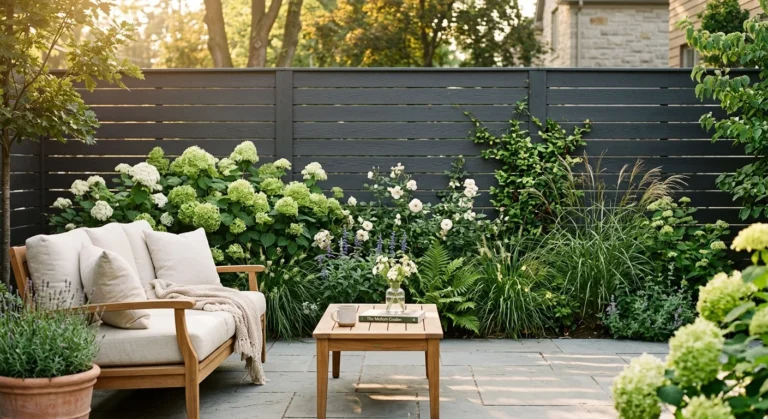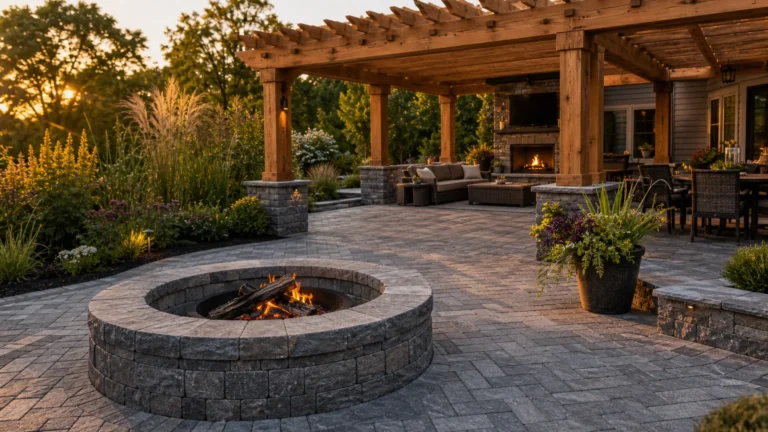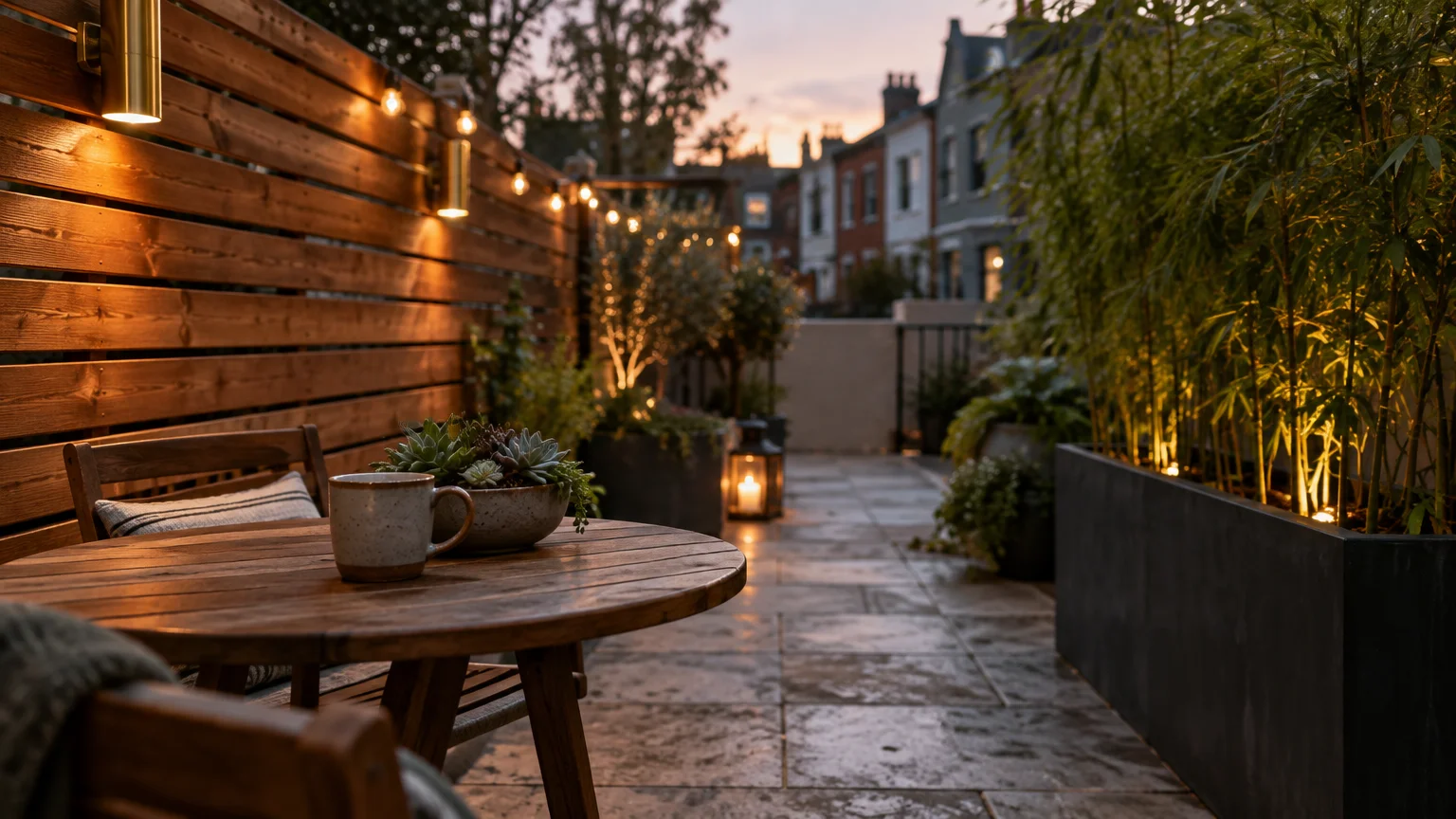
You can transform an exposed small patio into an intimate, secluded retreat without building a fortress. A few strategic design choices block prying eyes while preserving natural light and open-air comfort.
Whether you face towering neighboring windows or a busy shared courtyard, smart barriers establish instant tranquility. Compact outdoor footprints simply require clever vertical thinking and dual-purpose furnishings.
The following curated techniques blend structural screening with lush botanical borders. Discover how to reclaim your personal sanctuary with projects tailored to any budget and skill level.
Planning Your Patio Privacy Project
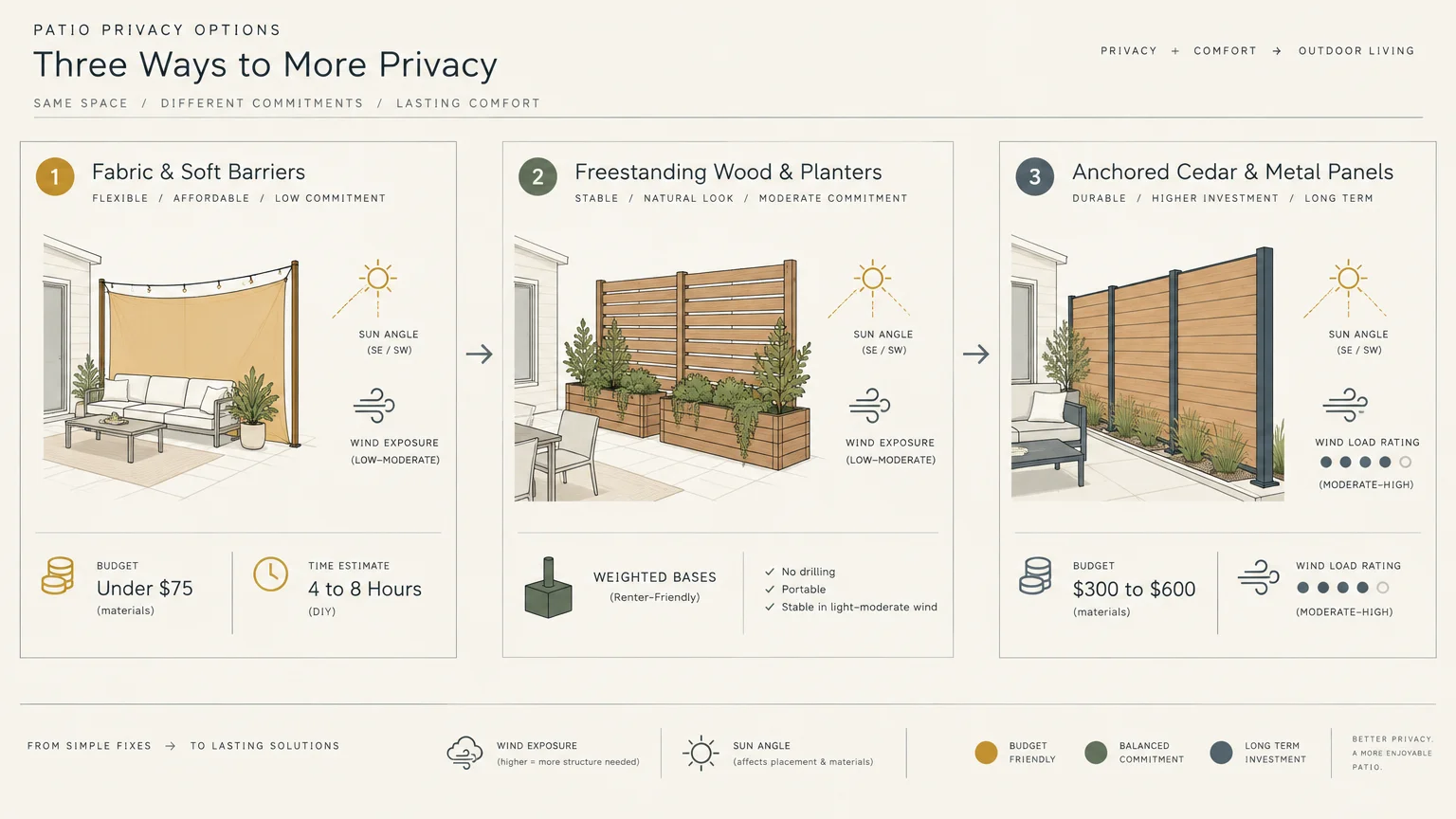
Before buying materials, evaluate your footprint, sun exposure, and local restrictions. A weekend warrior can execute most outdoor privacy solutions in four to eight hours.
Budgets scale depending on your vision. Lightweight fabric solutions cost under $75, whereas cedar slats or metal panels average $300 to $600.
Renters should prioritize freestanding partitions with weighted bases. Homeowners can explore semi-permanent anchored fixtures to withstand local wind loads.
1. Install Horizontal Slatted Wood Screens
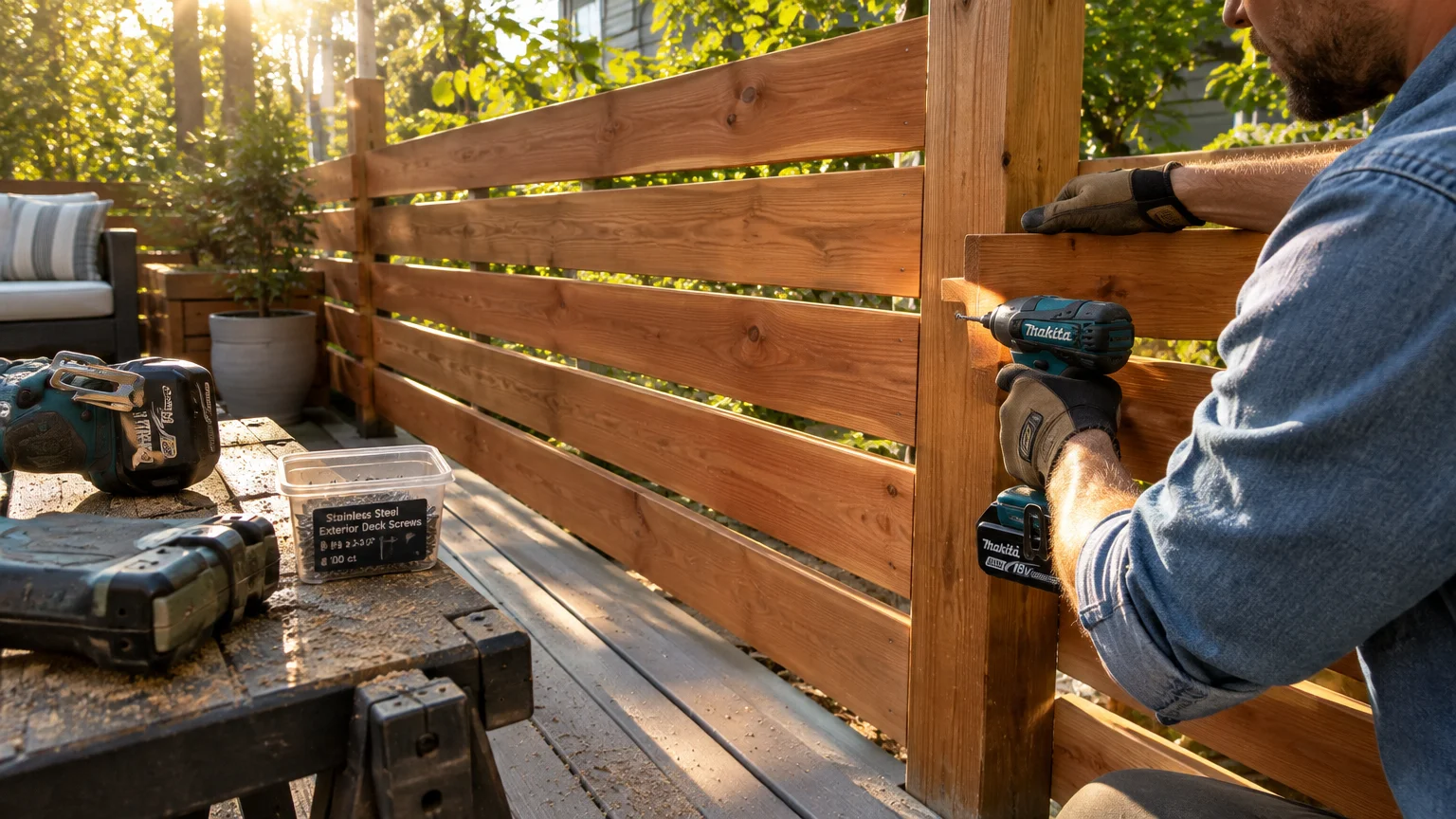
Horizontal wood slats provide a sleek, modern architectural barrier that deflects sightlines. Narrow gaps between boards let gentle breezes filter through so the patio never feels suffocating.
Opt for weather-tolerant lumber like cedar, redwood, or thermally modified pine. These species resist moisture rot and insect infestation naturally over years of outdoor exposure.
Mount the slats to sturdy 4×4 corner posts anchored in heavy deck footings or decorative planters. Staining the wood a deep charcoal or warm teak customizes your aesthetic instantly.
Design ideas curated by Architectural Digest highlight horizontal wood screens as ideal backdrops for compact urban spaces. They double as mounting surfaces for hanging herbs or sconces.
2. Cultivate Clumping Bamboo in Trough Planters
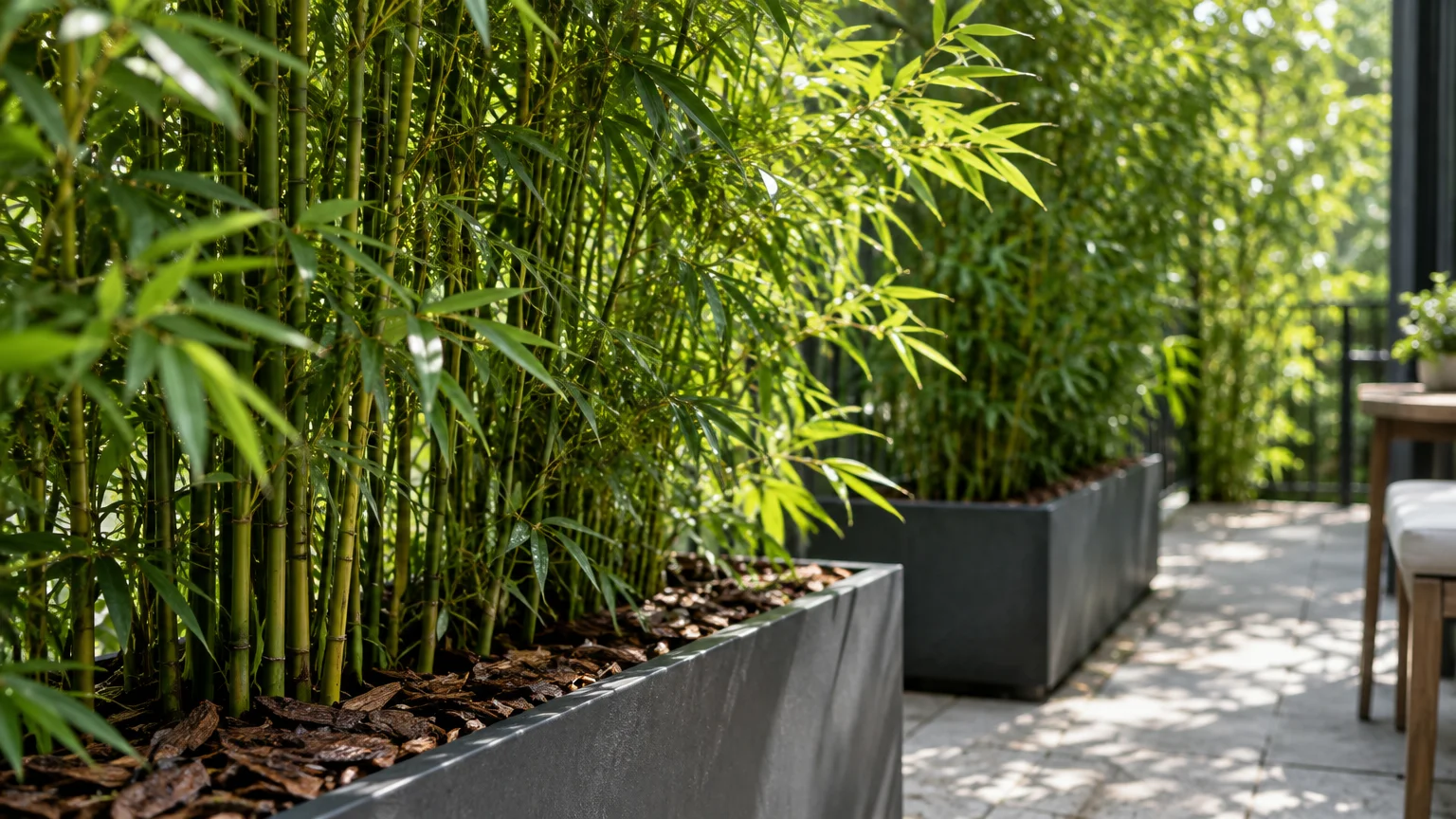
Plants deliver soft, organic privacy while filtering noise and urban dust. Tall trough containers packed with clumping bamboo establish a vibrant green living fence in minutes.
Always select clumping varieties like Fargesia rather than aggressive running types. Running bamboo escapes containers aggressively, but clumping species stay compact and polite.
Trough planters measuring at least 16 inches deep provide adequate root space and soil ballast. Heavy planters resist tipping during gusty summer storms without requiring permanent patio anchors.
According to the University of Minnesota Extension, containerized perennials need consistent moisture and well-draining potting mix. Add a layer of pine bark mulch across the soil surface to conserve moisture.
3. Hang Weather-Resistant Outdoor Curtains
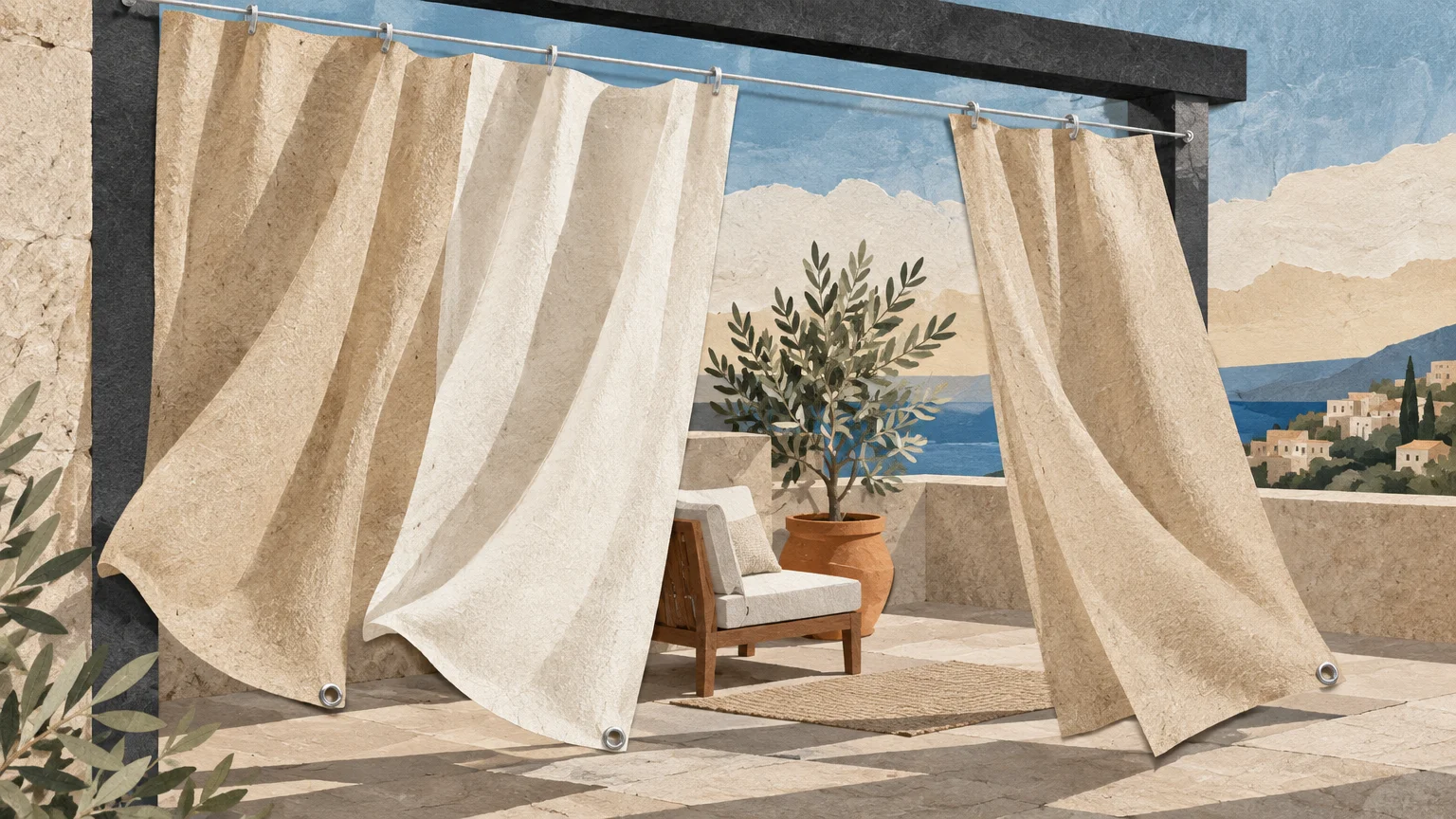
Outdoor drapery softens hard patio masonry while offering flexible, on-demand screening. You can pull the panels shut during dinners or gather them with tiebacks when you want open views.
Look for solution-dyed acrylic or marine-grade polyester fabrics. These materials resist fading under direct ultraviolet rays and shed driving rain without developing mildew.
Suspend the curtains using heavy-duty galvanized steel conduit or stainless steel cable kits. Secure the hardware into exterior wall studs or sturdy pergola overhead beams for long-term stability.
Weigh the curtain hems with rustproof metal washers or coated fishing weights. Anchoring the lower corners prevents frustrating billowing during brisk afternoon breezes.
4. Build a Vertical Trellis Living Wall
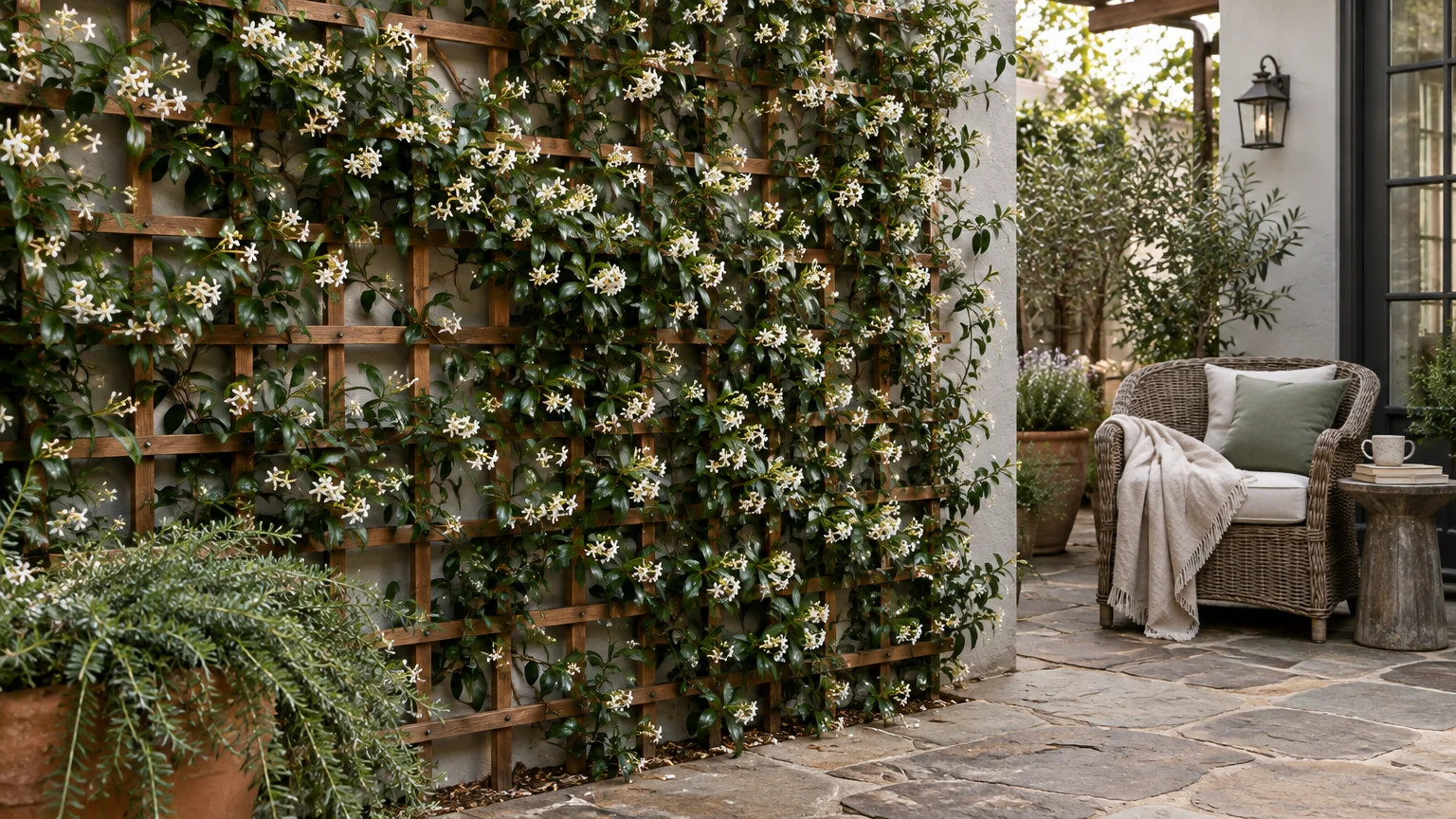
When ground area is scarce, vertical gardening utilizes empty vertical planes to build lush density. A narrow cedar trellis supports vigorous climbing vines without sacrificing precious floor space.
Pair your climbing trellis with fragrant flowering climbers like star jasmine or climbing hydrangea. These woody vines produce dense foliage curtains that mask sightlines and perfume your patio.
Position the trellis along your most exposed boundary line. You can secure the base directly into a long planter box filled with rich organic potting soil.
As the foliage climbs, weave tender shoots through the lattice grid to encourage balanced coverage. Annual light pruning preserves clean borders and promotes dense branch branching.
5. Mount Retractable Side Privacy Screens
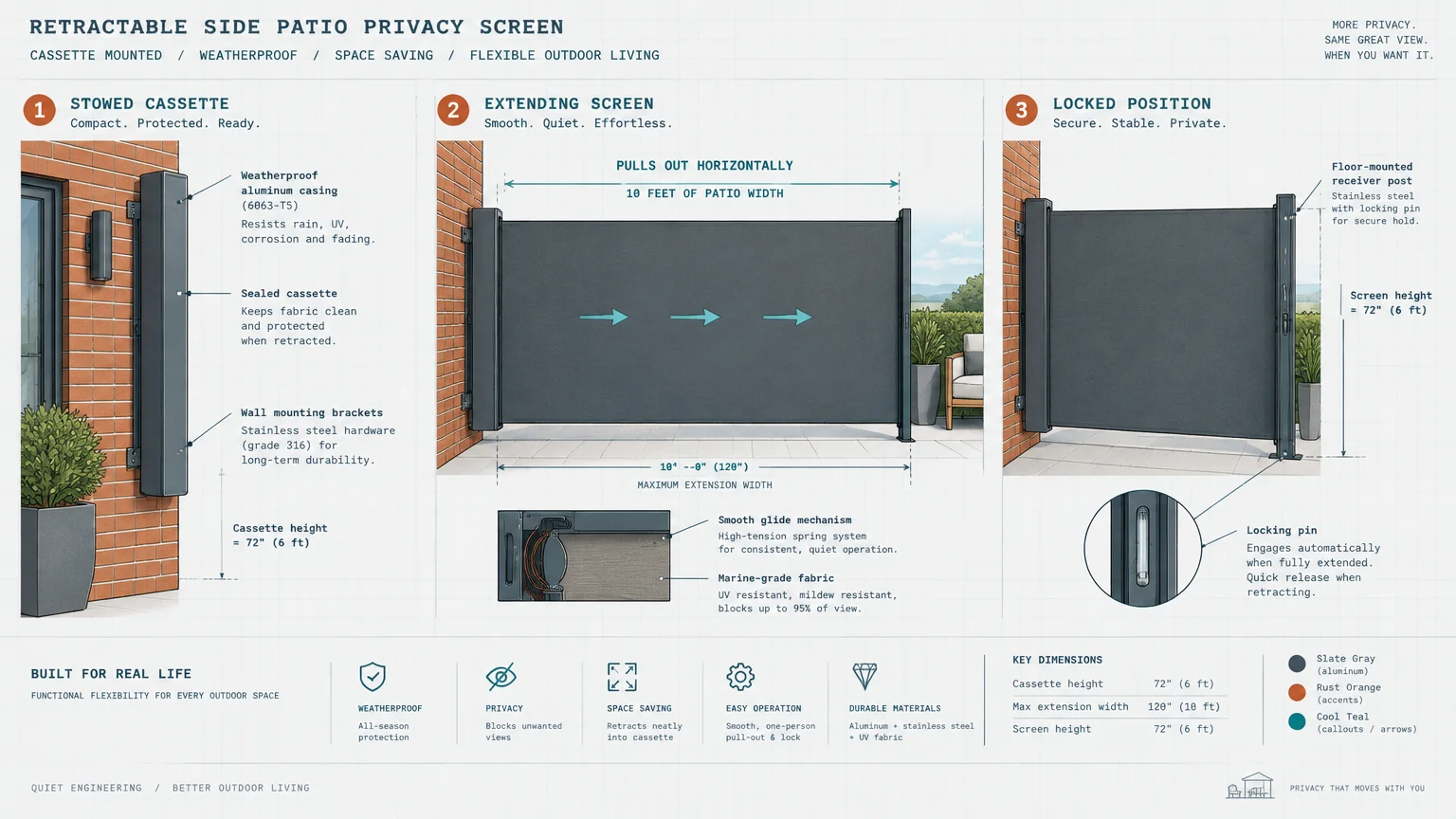
Retractable side awnings operate just like horizontal window roller shades. They pull smoothly out from a wall cassette and latch onto a slim receiving post across your patio perimeter.
When retracted, the durable polyester fabric rests completely protected inside a weather-sealed metal housing. This feature makes retractable screens exceptionally discreet on compact balconies.
These screens provide dependable wind barriers alongside complete visual privacy. Many high-density polyester fabrics block up to 90 percent of incoming ultraviolet rays.
Review expert collections on HGTV outdoor privacy screens to see how retractable options preserve small footprint layouts. They vanish completely whenever you prefer open vistas.
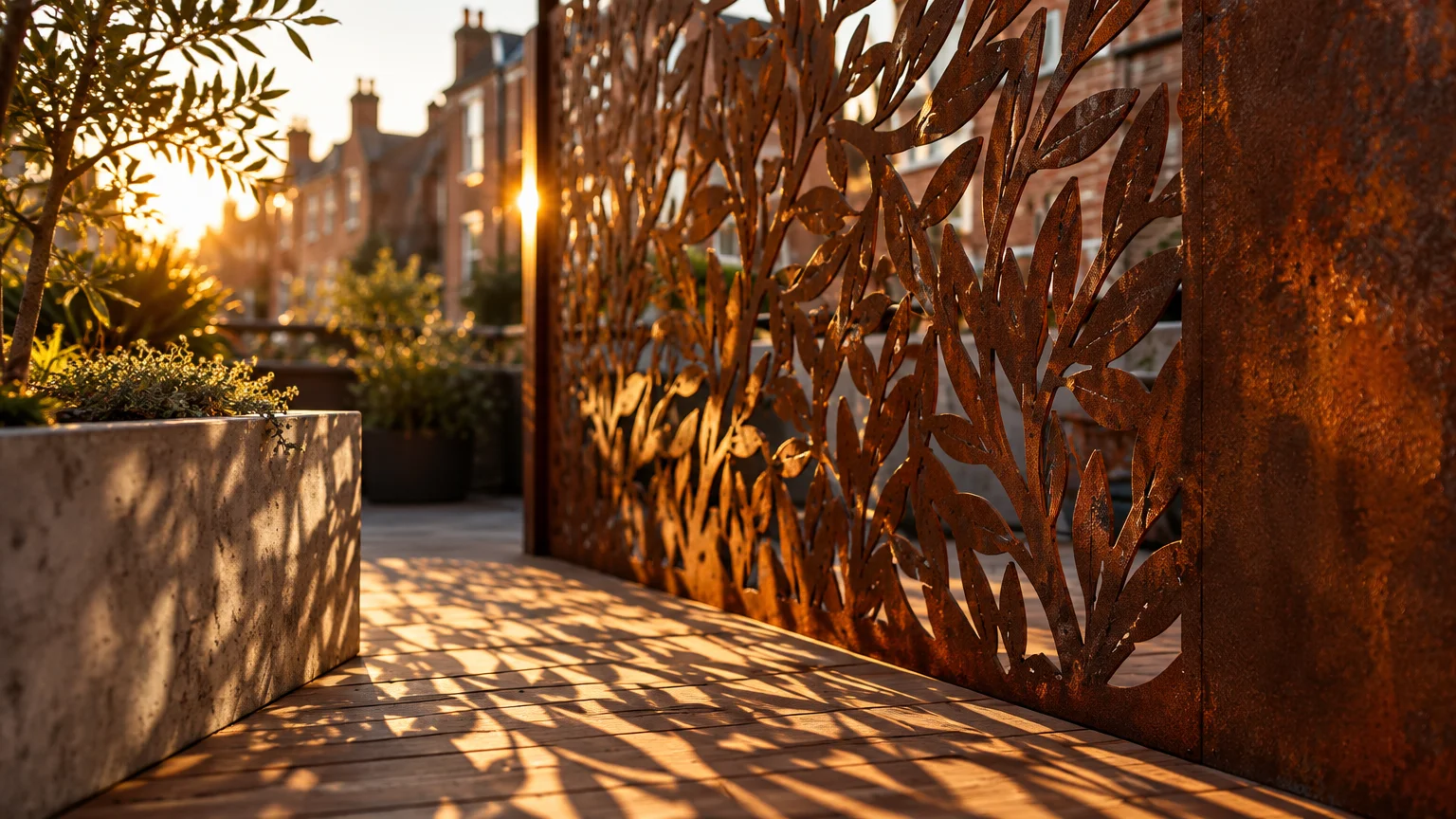
6. Set Up Decorative Laser-Cut Metal Panels
Perforated aluminum and corten steel panels serve as striking exterior art installations. Geometric patterns filter harsh sunlight into dynamic ground shadows while scattering direct sightlines.
Powder-coated aluminum panels remain lightweight and totally immune to rust. Corten steel panels, conversely, develop a rich, protective amber patina that matures beautifully over seasonal changes.
Anchor standalone metal panels within slotted steel posts bolted onto heavy stone paver bases. This freestanding arrangement meets standard rental property requirements where exterior drilling is strictly prohibited.
Pair warm backlighting behind perforated metal panels to create dramatic evening patio ambience. The warm glow transforms structural privacy screens into illuminated focal features.
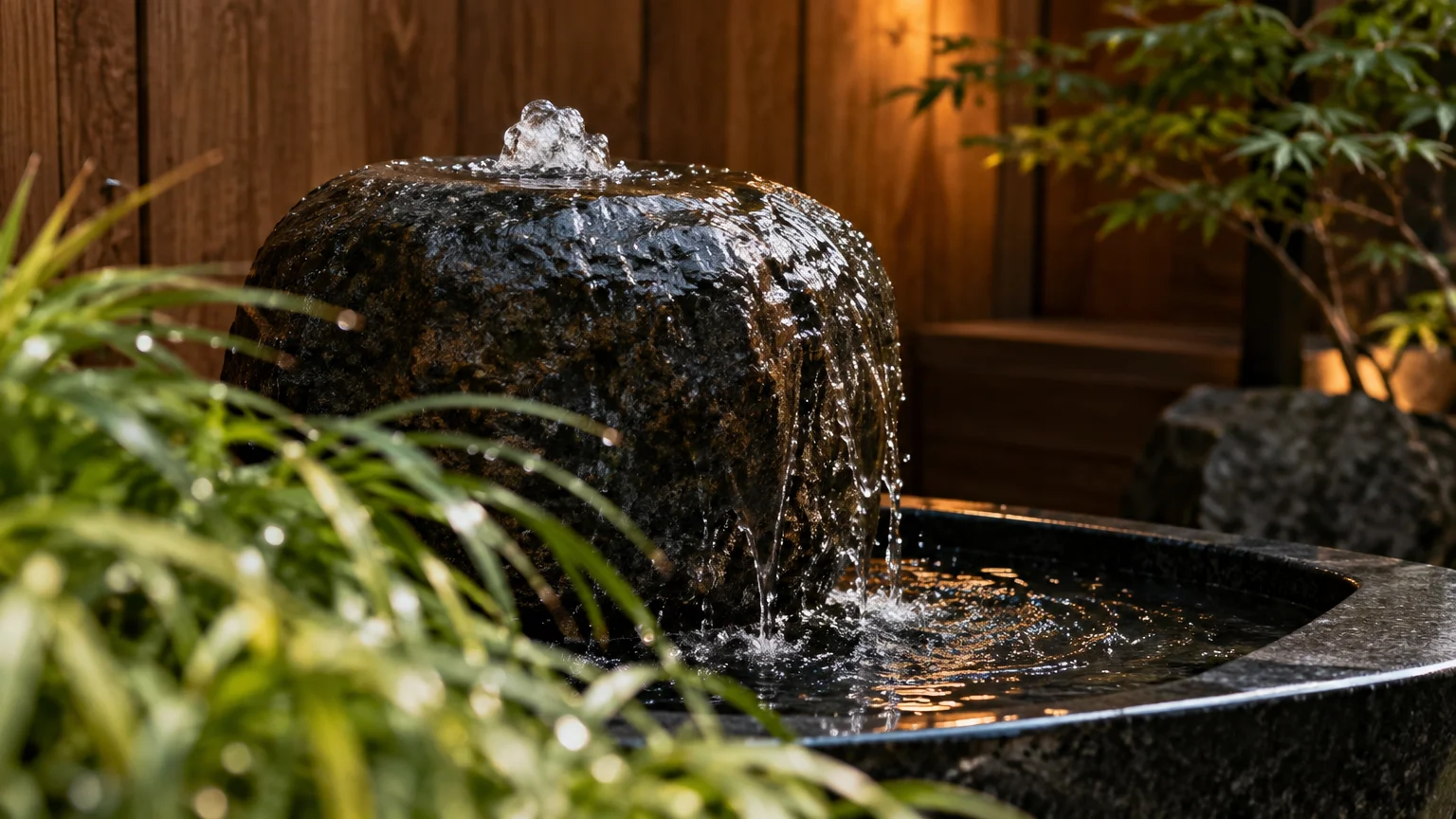
7. Introduce Sound-Masking Water Features
Visual privacy is only half the battle when close neighbors chat nearby. Gentle acoustic masking obscures private patio conversations while muting intrusive neighborhood street noises.
A self-contained tiered stone fountain or recirculating basalt column fits neatly into patio corners. Water cascading over textured slate produces soothing, consistent ambient acoustics.
Situate the fountain along the boundary closest to sidewalks, driveways, or neighboring decks. The immediate splashing audio forms a localized sonic perimeter around your seating area.
Modern plug-and-play fountains require only a standard outdoor ground-fault circuit interrupter outlet. Refill the reservoir weekly to prevent pump burnouts caused by natural summer evaporation.
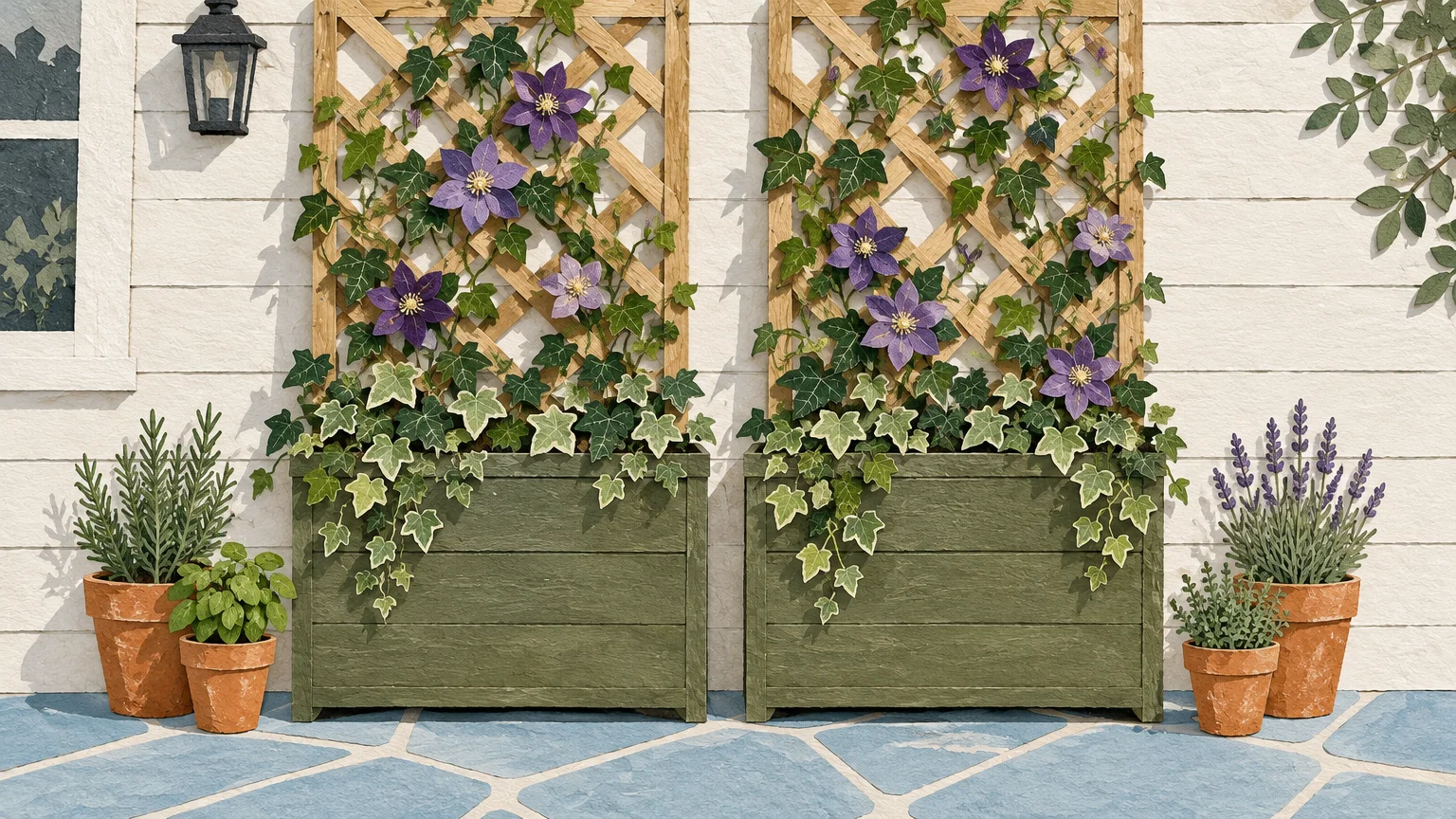
8. Deploy Tall Planters with Integrated Lattice
Mobile planter boxes equipped with rear lattice panels combine structural support with botanical screening. You gain instant shoulder-height shielding even before climbing plants grow to full maturity.
Fill the deep planter reservoir with high-performance potting soil to provide stability and plant nourishment. The heavy soil mass acts as an effective counterweight against high winds.
Train fast-growing annual vines like black-eyed Susan vine or morning glories across the wood lattice. They produce prolific foliage and colorful trumpet blossoms throughout warm summer months.
Install locking caster wheels beneath the planter frame before filling it with soil. This adaptation allows you to shift the privacy screen whenever the angle of sight changes.
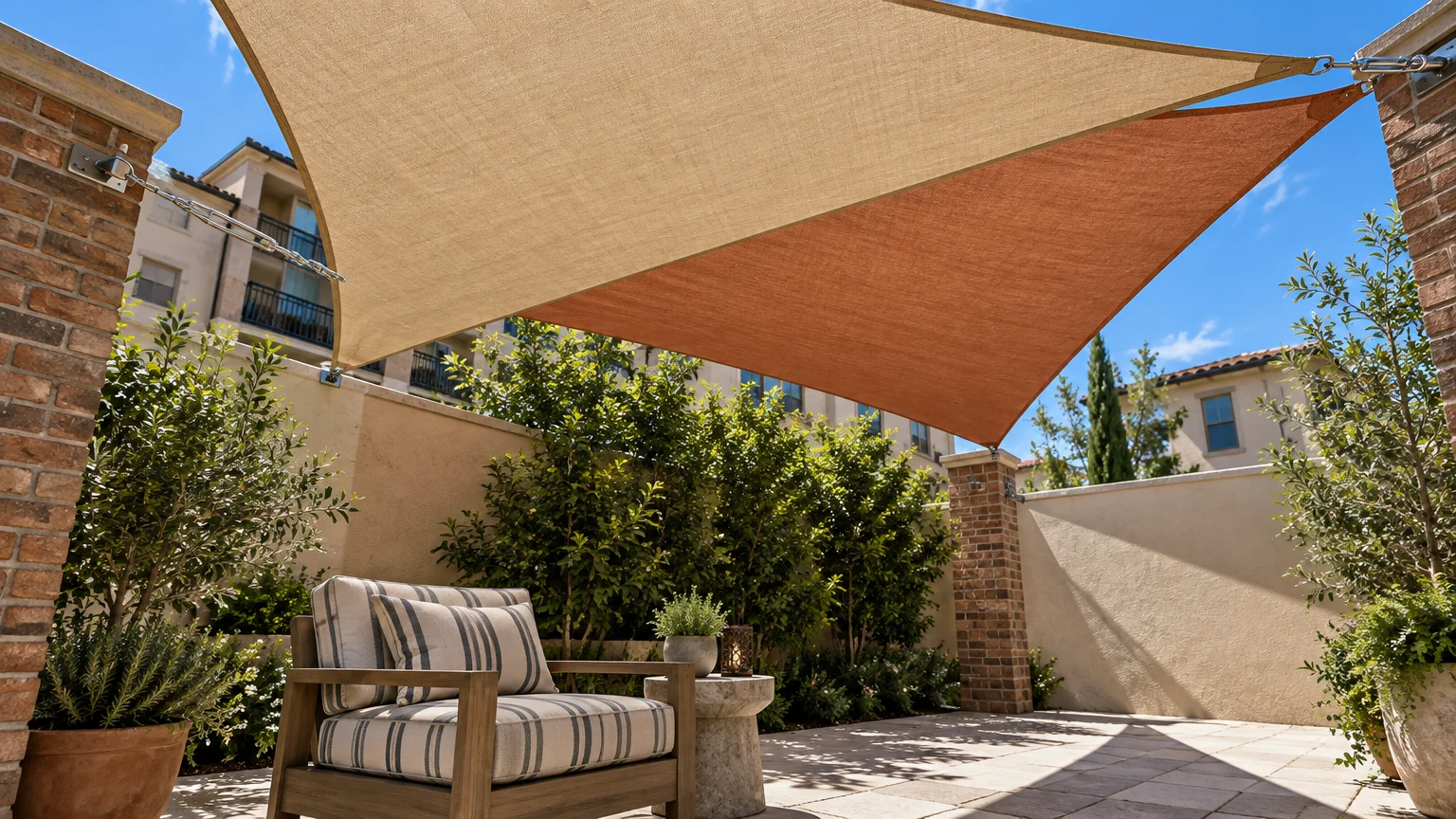
9. Angle Suspended Sun Shade Sails
Multistory neighboring homes create awkward downward sightlines directly onto small ground-level patios. Suspended shade sails intercept elevated overhead views while shielding you from intense midday heat.
The Department of Energy notes that exterior shading significantly lowers patio surface heat and adjoining home cooling costs. Woven shade sails allow hot air to rise while blocking harsh direct radiation.
Anchor triangular or rectangular sails using marine-grade stainless steel turnbuckles and pad eyes. Mount anchor points at deliberate opposing heights to encourage efficient rainwater runoff and prevent fabric sagging.
Overlapping two contrasting shade sails creates custom sculptural geometry overhead. Choose neutral canvas, terracotta, or deep navy hues to coordinate with your outdoor cushions.
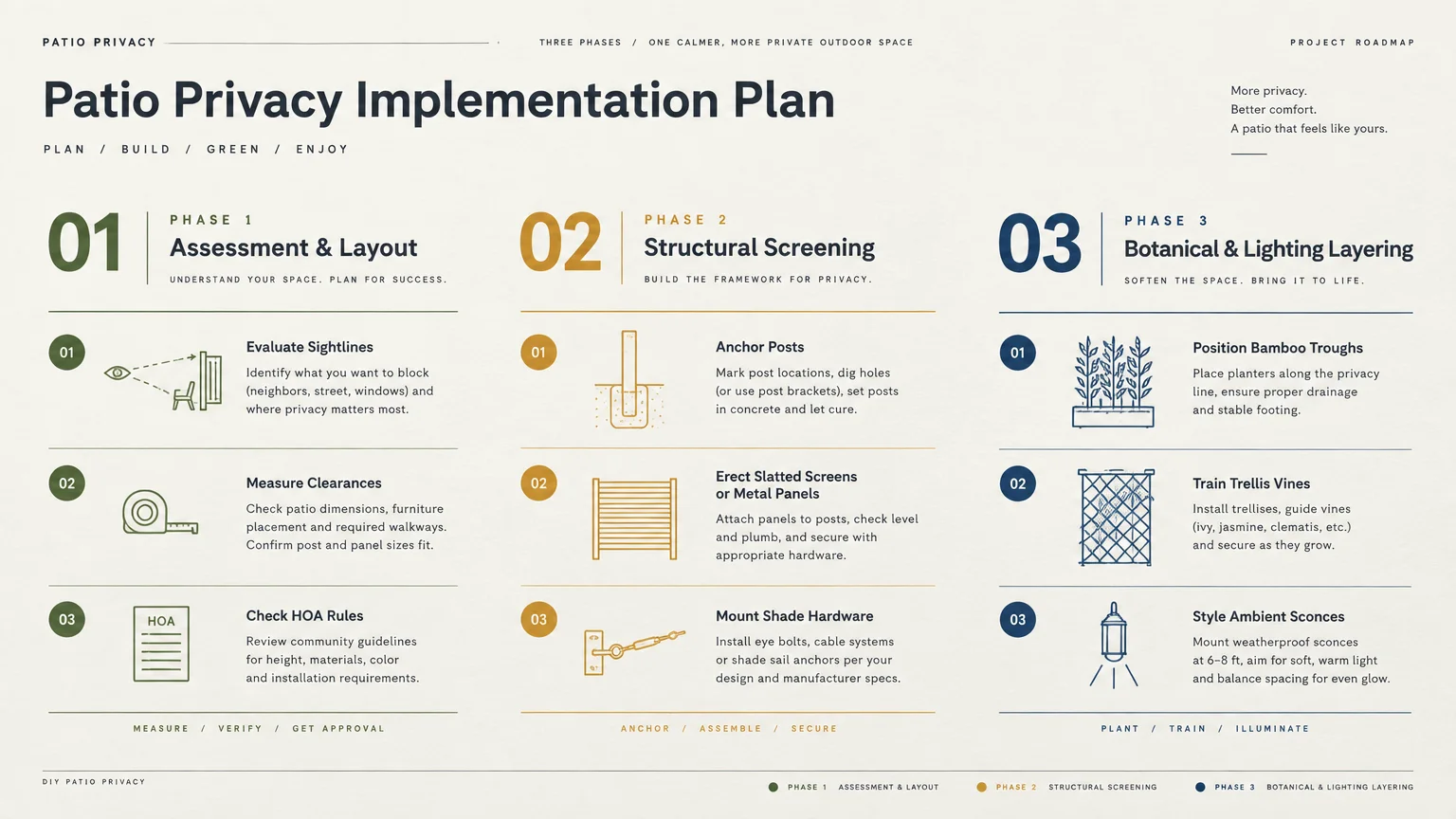
Three-Phase Project Implementation Framework
Executing an exterior privacy project demands orderly execution to ensure durability and aesthetic harmony. Breaking your installation into distinct phases prevents common beginner oversights and costly material waste.
Phase 1: Site Preparation and Code Assessment
Begin by measuring the precise boundaries of your patio footprint with a locking steel tape. Map the sun path and prevailing wind directions across different parts of the day.
Review homeowner association bylaws and municipal zoning rules regarding residential fence heights. Most regions cap property line screens at six feet without specialized building permits.
Locate underground utility conduits before digging or driving ground stakes near your patio edges. Calling your local utility locator service prevents dangerous and expensive service disruptions.
Phase 2: Stable Structural Assembly
Level your foundation thoroughly before securing upright posts, heavy planter boxes, or wall tracks. Shimming uneven patio pavers ensures your finished vertical screens stand straight and plumb.
Use exterior-grade structural fasteners like ceramic-coated decking screws or stainless steel bolts. Standard zinc-plated interior screws corrode quickly when exposed to rain, leaving dark rust streaks.
Incorporate wind relief mechanisms into every solid screen panel design. Leaving small board gaps or installing hinged louver slats lets heavy gusts bypass the structure safely.
Phase 3: Weatherproofing and Refined Finishing
Coat bare exterior timber with penetrating ultraviolet-inhibiting stains or protective marine oils. Reseal wooden components annually to protect against warping, surface checking, and graying.
Tuck all outdoor cords and water irrigation tubes cleanly along screen bases with cable clips. Concealed utility lines elevate your project from raw DIY build to professional outdoor architecture.
Add ambient exterior lighting, such as warm solar spotlights or brass fairy strands. Backlighting screens creates depth while illuminating perimeter boundaries after dusk.
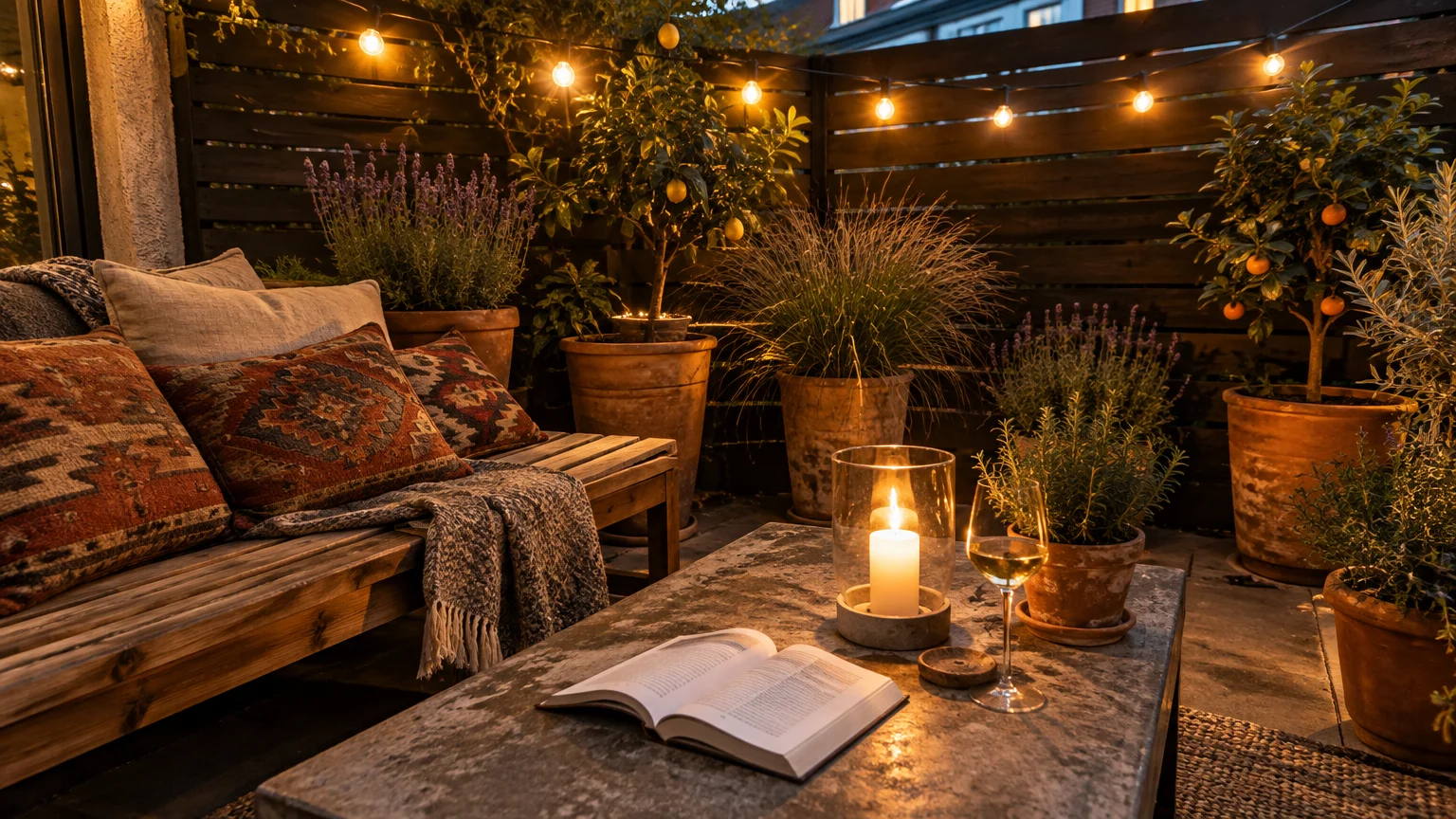
Styling and Personalizing Your Private Patio
Privacy features should feel like cohesive extensions of your home rather than defensive stockade barriers. Harmonizing finishes, textures, and scales ensures your small patio remains welcoming and bright.
Repeat interior decor colors across your exterior cushions, planters, and stained panel slats. A coordinated color scheme creates seamless indoor-outdoor flow through sliding glass patio doors.
Layer varying botanical textures against flat geometric screens to soften harsh perimeter lines. Pair broad-leaf hostas and glossy camellias with feathery ornamental fountain grasses for maximum visual contrast.
Avoid dark, solid fencing around small spaces because dark perimeter barriers can induce claustrophobia. Light wood stains, creamy linens, and painted sage accents reflect daylight and expand spatial perception.
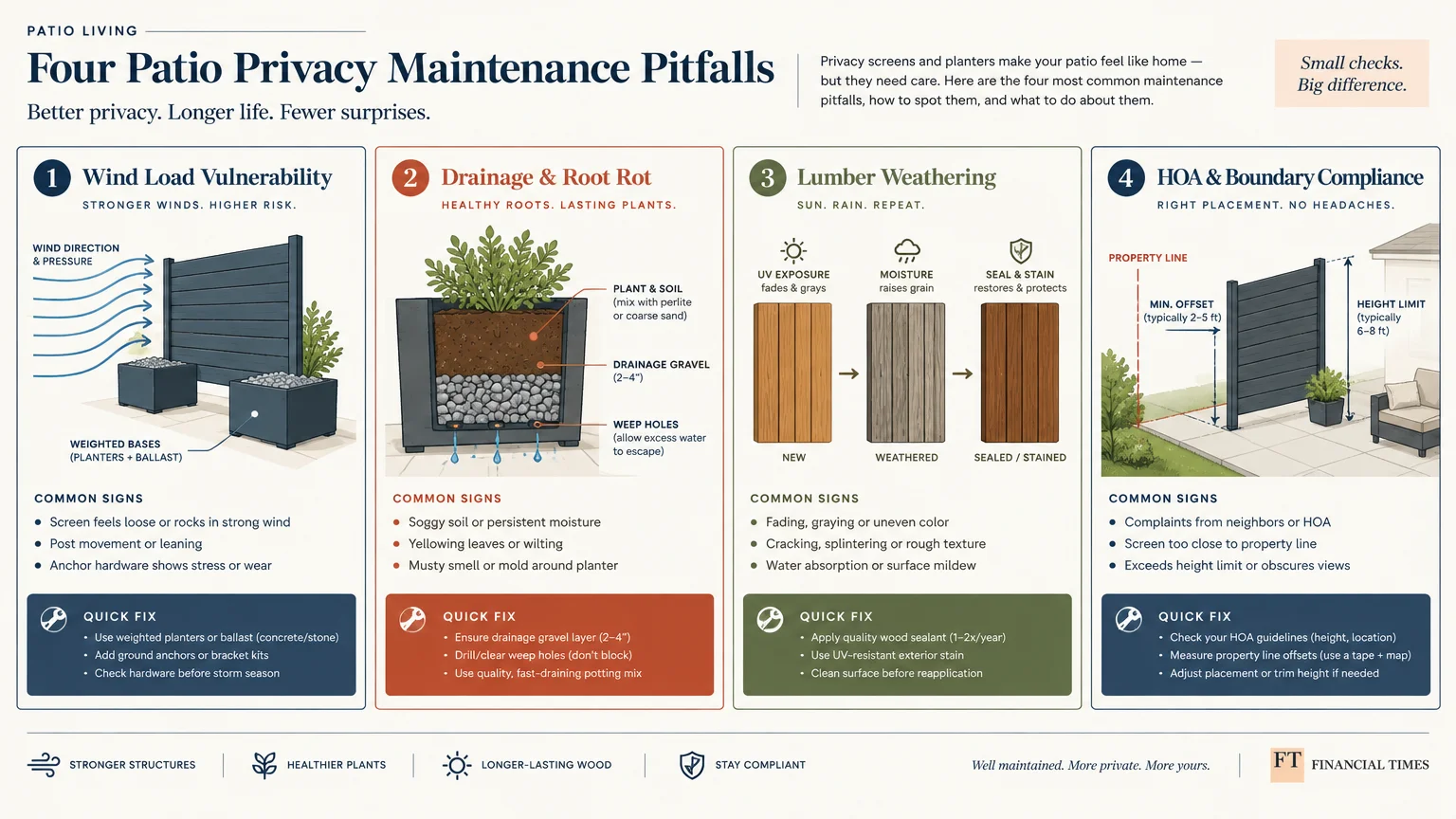
Troubleshooting and Maintenance Pitfalls
High wind remains the most common threat to tall exterior privacy structures. Freestanding screens lacking proper foundation ballast can easily tip over during sudden severe thunderstorms.
Combat instability by weighting base planters with heavy pea gravel beneath your potting soil. Aim for at least fifty pounds of ballast per linear foot of vertical screen.
Mold and mildew thrive on shaded fabric screens and damp wooden lattices. Wash textiles each autumn with mild soap and inspect timber surfaces for moisture retention.
Ensure drainage holes in privacy planters stay completely clear of root debris. Saturated soil drowns root systems and causes heavy wooden planter boxes to rot from within.
Frequently Asked Questions
How can I anchor a privacy screen on concrete without drilling?
Use heavy trough planter boxes as integrated ballast bases for your vertical posts. A planter filled with gravel and moist potting soil weighs hundreds of pounds, securing tall screens without surface damage.
Alternatively, slide heavy outdoor umbrella bases beneath your screen frame corners. These weighted steel discs deliver reliable wind resistance without requiring concrete anchors or adhesive adhesives.
Which fast-growing privacy plants thrive best in tight containers?
Clumping bamboo species like Fargesia robusta grow quickly in containers without spreading invasively. They reach ten to twelve feet tall, providing dense year-round evergreen screening in tight spaces.
Emerald Green arborvitae and sky pencil hollies also offer upright evergreen structure in planters. These columnar shrubs maintain narrow silhouettes without demanding constant seasonal pruning.
What patio privacy ideas work best for strict apartment leases?
Freestanding tension rod curtain assemblies and folding wooden privacy screens avoid all building penetrations. You can dismantle them easily upon lease completion without losing your rental deposit.
Mobile planter boxes equipped with tall bamboo or ornamental grasses also adhere strictly to rental guidelines. They create lush, natural screening while leaving building siding and concrete undisturbed.
How do I stop outdoor privacy curtains from blowing wildly in the wind?
Insert stainless steel curtain weights or heavy marine cable directly into the bottom hem. The added lower weight stabilizes fabric panels during normal patio breezes.
You can also install a second taut steel cable across the patio floor. Thread the curtain bottom grommets through this lower guide wire to lock panels securely in position.
Transform Your Outdoor Living Experience
You do not need an expansive estate or a huge contractor budget to carve out private outdoor space. Small patios possess immense potential when you maximize vertical planes and introduce purposeful screening.
Choose one privacy project that suits your layout and start gathering your supplies this weekend. Reclaim your fresh air sanctuary and enjoy your secluded patio haven all season long.