
Phase Two: Executing the 11 Surprising Uses
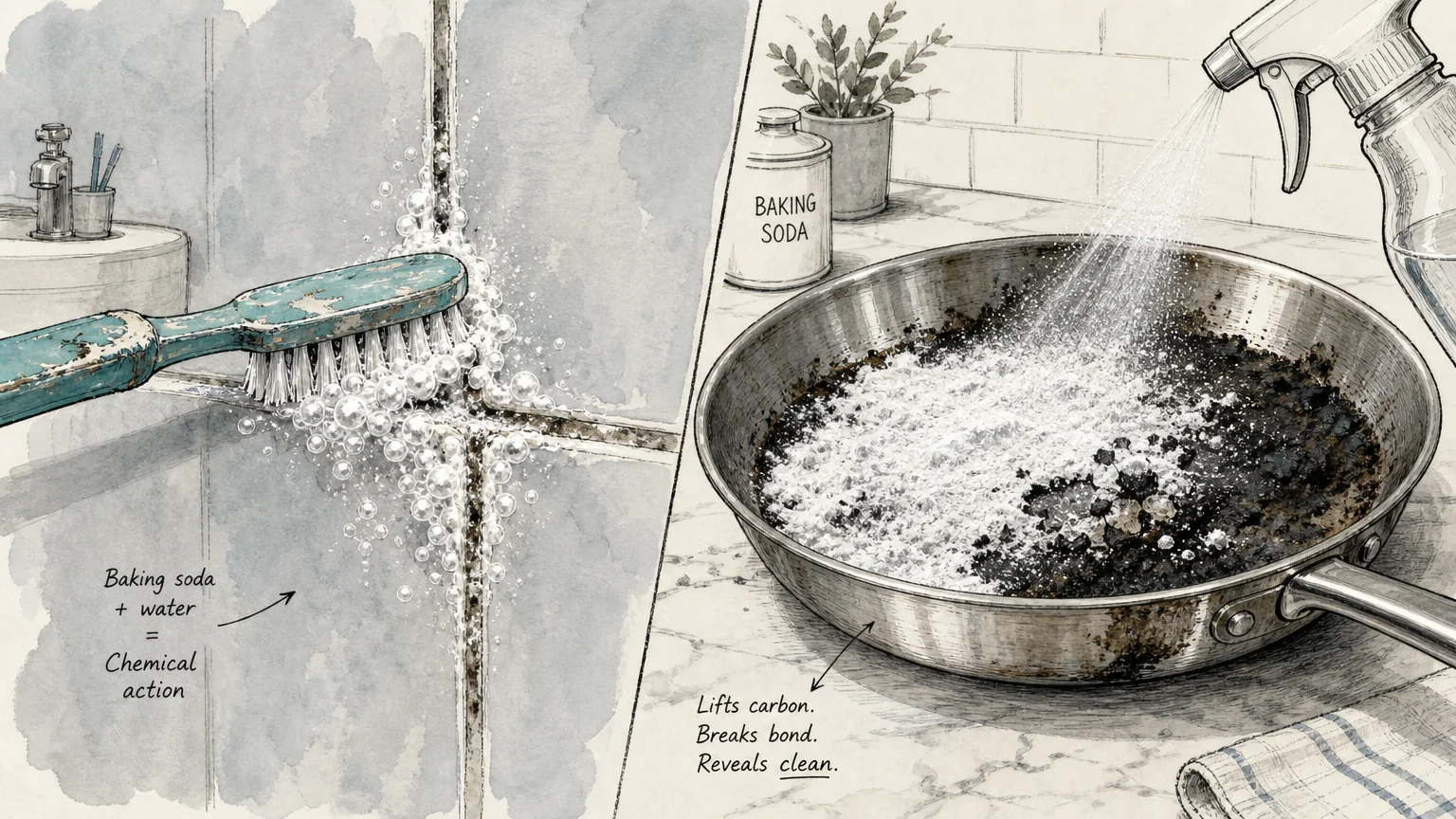
1. Reviving Dingy Grout Lines
Revitalizing your bathroom floor requires nothing more than baking soda and standard three-percent hydrogen peroxide. Pour a half-cup of baking soda into a bowl and stir in peroxide until you form a thick paste. Apply this directly to dingy grout lines using an old toothbrush.
Let it sit for ten minutes so the bubbling action lifts embedded mold spores. Scrub vigorously, then wipe away the residue with a damp cloth. You can learn more about expert bathroom maintenance strategies to keep floors pristine.
2. Rescuing Scorched Pots and Pans
Salvage heavily scorched pots by thoroughly dusting the bottom of the pan with baking soda. Spray pure hydrogen peroxide directly over the powder until fully saturated. Leave the pan on your counter for three hours.
The chemical reaction between the mild abrasive and the oxidizer effectively breaks the tight bonds of the baked-on carbon. Wipe the mess away with a standard sponge and rinse with hot water.
3. Eliminating Armpit Stains from White Shirts
Banish stubborn yellow underarm stains by mixing one part liquid dish soap with two parts hydrogen peroxide. Massage this liquid deeply into the affected fabric fibers using a soft laundry brush. Allow the garment to sit for exactly thirty minutes before laundering it on your usual wash cycle.
The peroxide naturally bleaches the yellow discoloration while the dish soap dissolves lingering oil residues.
4. Sanitizing Wooden Cutting Boards
Porous wooden cutting boards harbor invisible bacteria deep within their grain. Wash your board with soap and hot water to remove surface debris first. Spray pure three-percent hydrogen peroxide generously across the damp wood.
Watch as the liquid fizzes, indicating the destruction of harmful microbes. Let the board sit for five minutes, rinse under running water, and stand it upright to dry.
5. Boosting Plant Health and Fighting Root Rot
Overwatering your indoor jungle often leads to root rot and annoying fungus gnats. Save your houseplants by mixing one tablespoon of hydrogen peroxide into one cup of room-temperature water. Pour this aerating solution directly into the soil.
The extra oxygen aggressively aerates the waterlogged root system and kills fungal spores. Check with university extension services for comprehensive guides on identifying specific plant diseases.
6. Disinfecting Beauty and Grooming Tools
Makeup brushes, metal tweezers, and nail clippers accumulate dead skin cells and bacteria with daily use. Disinfect these grooming items quickly by submerging metal tools entirely in pure hydrogen peroxide for ten minutes.
For makeup brushes, dip only the synthetic bristles into a half-water, half-peroxide mixture, keeping the glued ferrules dry. Rinse thoroughly with warm water and air dry.
7. Clearing Up Cloudy Humidifiers
Ultrasonic humidifiers quickly become breeding grounds for mold and pink slime. Empty the water tank and pour in two cups of pure hydrogen peroxide. Swish the liquid around vigorously to coat every interior surface. Let the tank sit for thirty minutes to obliterate bacterial biofilms. Rinse repeatedly with fresh water. Understanding optimizing household appliance efficiency ensures your devices run safely all winter.
8. Removing Organic Carpet Stains
Accidental spills and pet messes demand immediate attention. Blot up as much of the fresh spill as possible using a dry towel. Spray hydrogen peroxide directly onto organic stains like red wine or pet urine. Wait for the liquid to foam, signaling the lifting of pigments from the synthetic fibers.
Blot the area gently with a clean cloth—never rub, as rubbing pushes stains deeper.
9. Whitening Yellowed Plastics
Vintage electronics and aging appliance covers turn yellow over time due to degrading fire-retardant chemicals. Restore their crisp white color using the retro-brighting technique. Coat the plastic thoroughly with hydrogen peroxide cream, wrap the item tightly in clear plastic wrap, and place it outside in direct sunlight. The combination of ultraviolet rays and oxidation reverses the chemical degradation entirely.
10. Refreshing Musty Towels in the Wash
Bath towels frequently trap moisture and develop a sour, mildewed odor that detergent fails to remove. Refresh your linen closet by adding a half-cup of hydrogen peroxide directly into the bleach dispenser of your washing machine.
The extra oxygen attacks the lipid barriers of trapped bacteria and neutralizes embedded mildew spores, leaving your towels smelling incredibly clean and restoring their fluffy texture.
11. Cleaning Refrigerator Shelves Safely
Sticky condiment rings and raw meat drippings create hazardous zones inside your refrigerator. Clean these food-storage areas safely without relying on heavily perfumed, toxic chemical sprays. Wipe down all glass shelves and plastic crisper drawers with pure three-percent hydrogen peroxide.
The solution reliably sanitizes surfaces and rapidly evaporates into harmless water. This zero-residue approach is critical for maintaining healthy indoor air quality.
So what does any of this crappie have to do other uses for hydrogen peroxide all it is is a ad for this toilet cleaner really what a scam