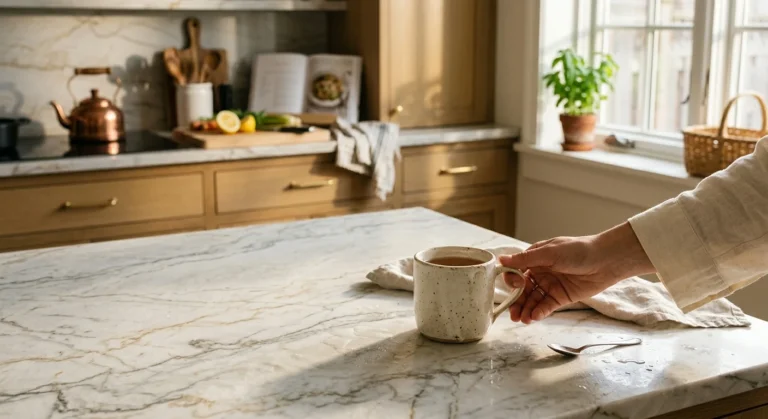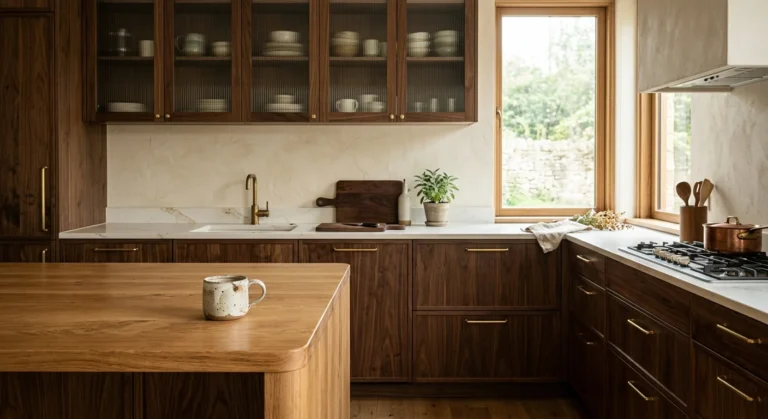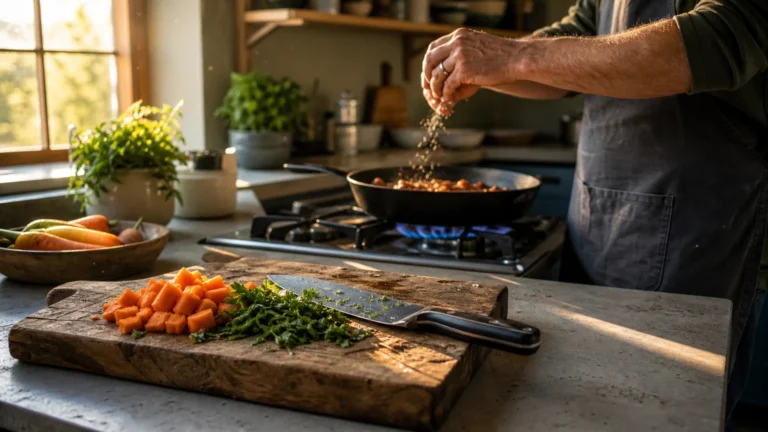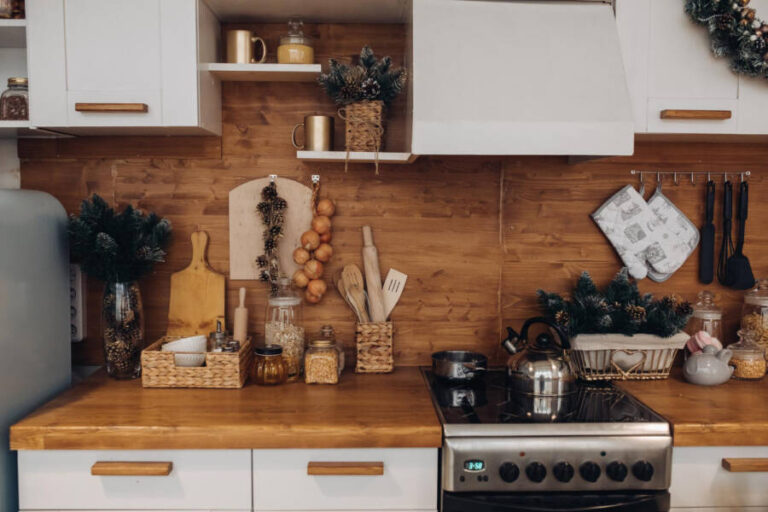
Pairing your countertops with cabinetry instantly defines the entire mood of your kitchen. The right palette harmonizes undertones, bounces natural light, and elevates standard materials into a bespoke culinary retreat.
Balancing textures and finishes feels intimidating when you face hundreds of stone slabs and paint swatches. Fortunately, established design principles take the guesswork out of coordinating colors across your primary work surfaces.
Exploring tested pairings helps you curate a cohesive space tailored to your daily routine. Let us examine nine designer-approved schemes that bring effortless beauty and lasting durability to your home.
Planning Your Countertop and Cabinet Palette
Before ordering stone or picking up a paintbrush, evaluate your budget and project timeline realistically. Surface upgrades range from budget-friendly weekend paint transformations to specialized slab installations requiring professional fabricators.
Most DIYers can comfortably handle cabinet refinishing, hardware installation, and butcher block templating. Conversely, engineered quartz and natural granite slabs require specialized lifting tools and diamond cutting blades best left to pros.
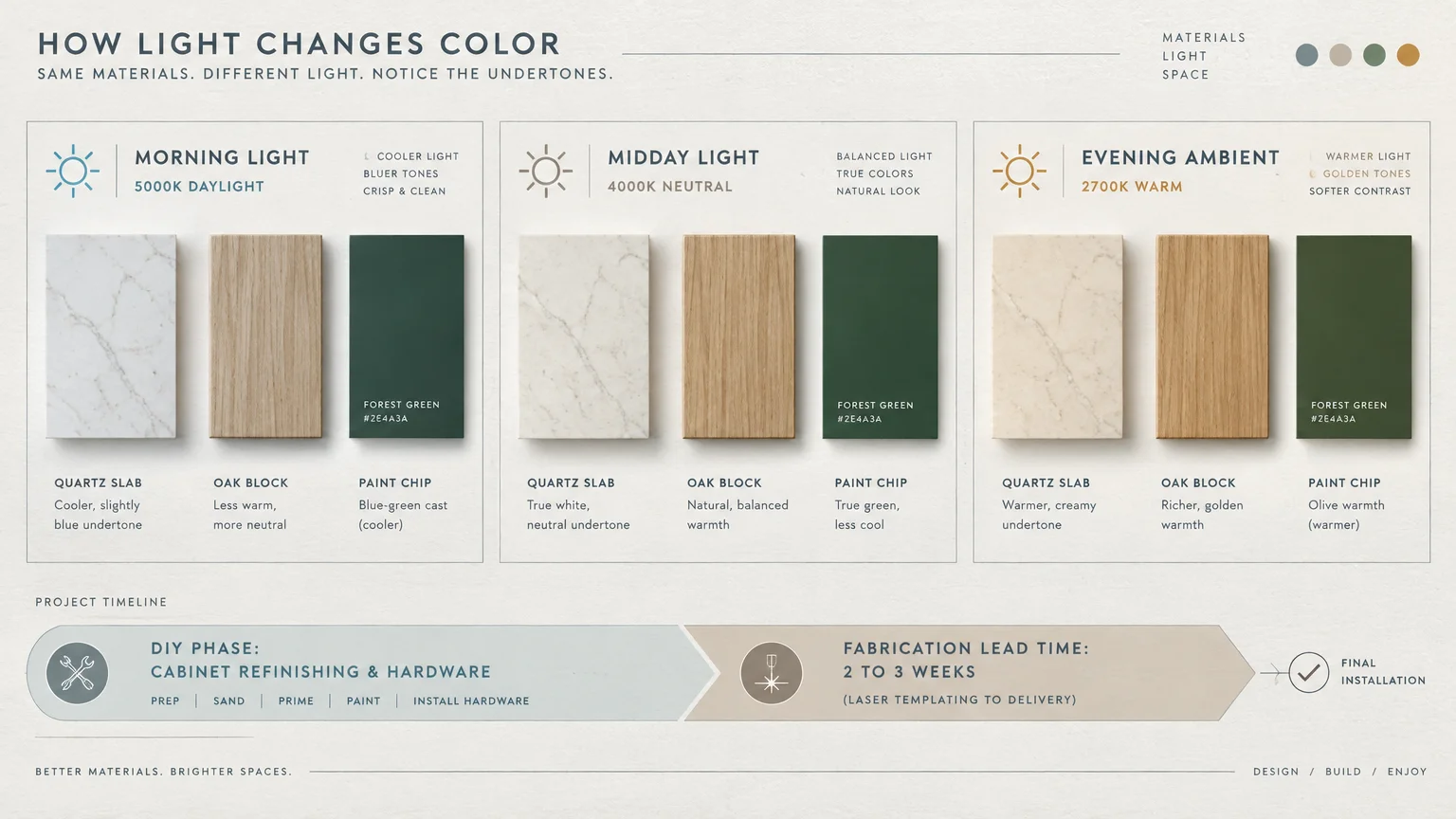
Collect physical samples of your intended door profiles, countertop materials, and backsplash tiles early. Check these materials under morning, midday, and artificial evening lighting to verify how undertones behave across varying conditions.
Ambient lighting plays a massive role in how pigments interact across broad, horizontal planes. Reviewing energy-efficient ambient fixtures from the Department of Energy lighting guidance helps you choose bulbs that render kitchen pigments accurately.
Establish a firm project buffer in your schedule for slab fabrication lead times. Professional stone fabricators often need two to three weeks between final laser templating and physical delivery.
9 Designer-Approved Countertop and Cabinet Pairings
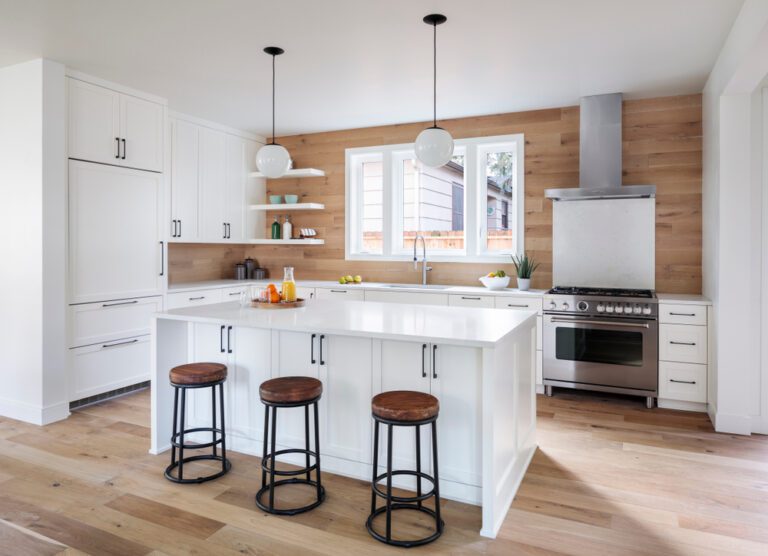
1. Warm White Quartz with White Oak
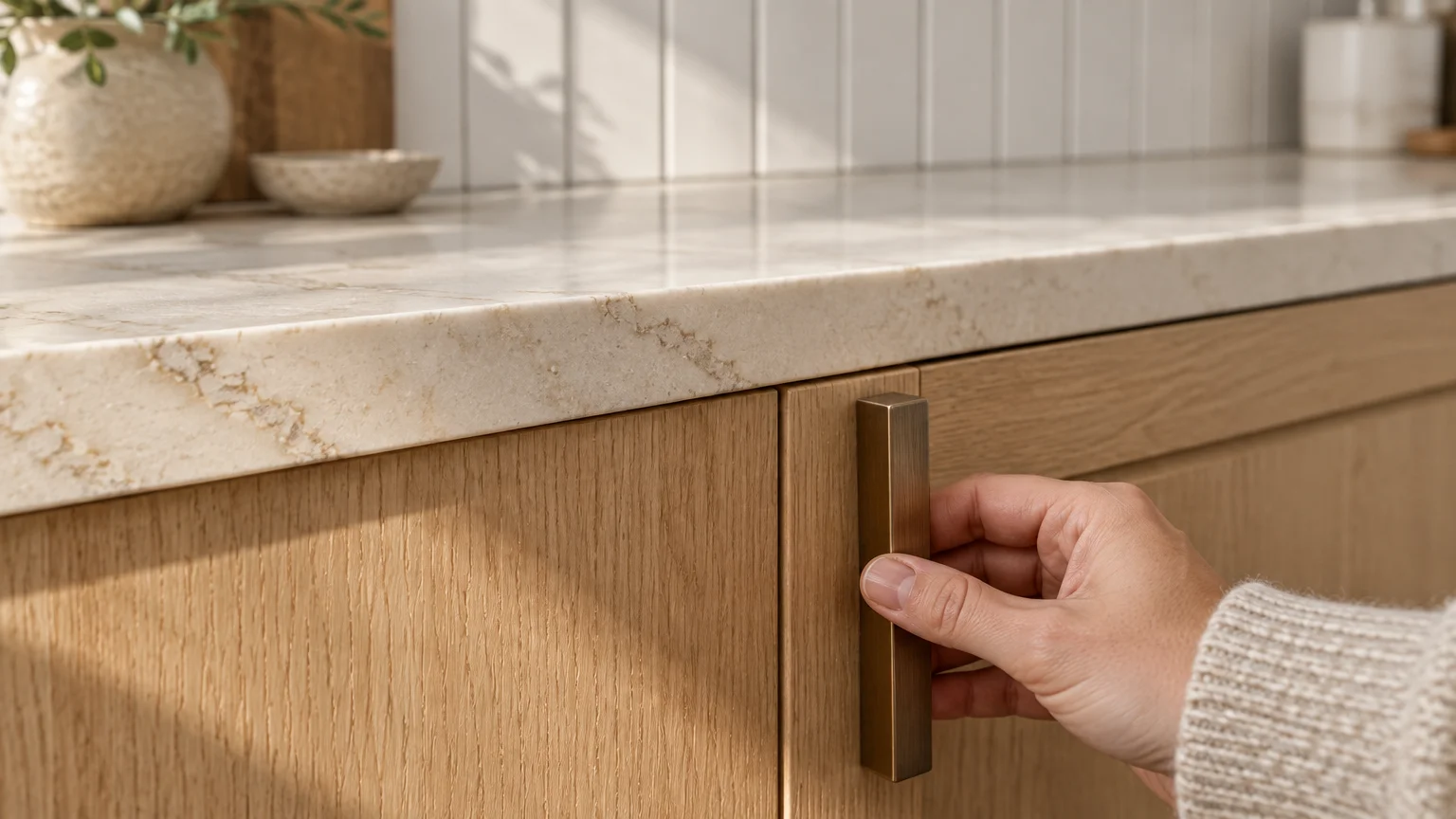
Warm white quartz featuring subtle gold or taupe veining provides a soft, luminous counterpoint to rift-sawn white oak cabinetry. This pairing captures an organic modern aesthetic that feels bright without reading sterile or clinical.
White oak brings distinct linear grain patterns and earthy grounding to your space. The uniform, non-porous quartz resists spills while reflecting ambient light across the natural timber millwork.
Pair this duo with brushed brass or matte bronze cabinet pulls to reinforce the warm undertones. Keep the backsplash neutral with vertical ceramic subway tile to maintain a clean visual rhythm.
Incorporate warm white paint on perimeter walls to let the wood grain take center stage. Matte finishes on both cabinets and counters prevent distracting glare from nearby patio doors.
2. Honed Charcoal Soapstone with Warm Cream Shakers
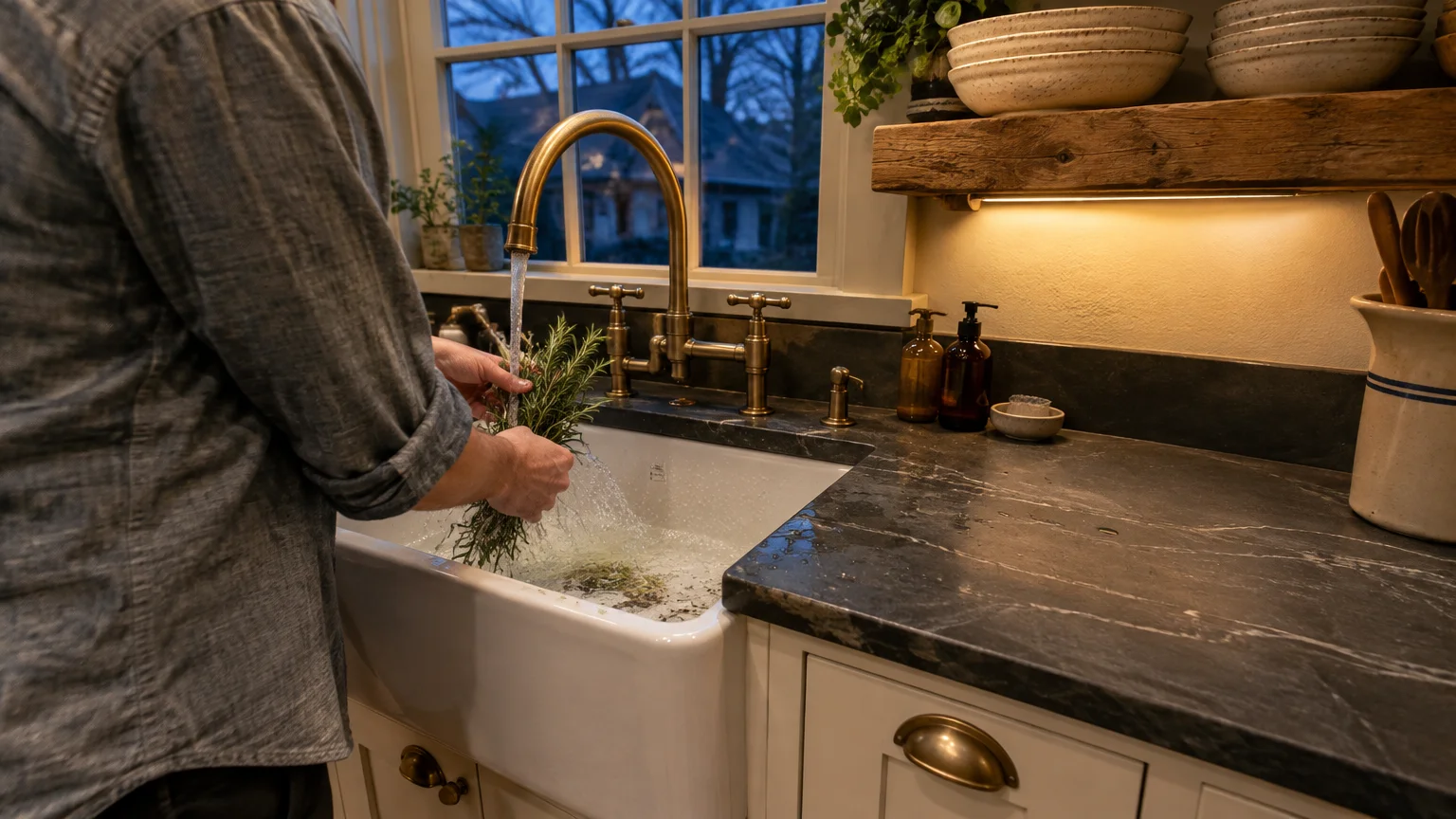
Honed charcoal soapstone paired with warm cream shaker cabinets delivers timeless historic elegance. The deep, velvety gray stone creates high visual contrast against soft, off-white casework without feeling jarring or stark.
Soapstone offers remarkable heat resistance and develops a rich patina over decades of culinary use. Creamy cabinetry softens the dramatic stone, preventing the kitchen from feeling overly dark or formal.
Unlacquered brass hardware and traditional bridge faucets complement this pairing beautifully. Incorporating open wall shelving in reclaimed pine bridges the gap between classic craft and modern utility.
Soft under-cabinet task lighting illuminates the dark soapstone work surface while preparing meals. A crackle-glaze off-white subway tile backsplash reinforces the historic, handcrafted sensibility of the room.
3. Calacatta Quartz with Deep Forest Green
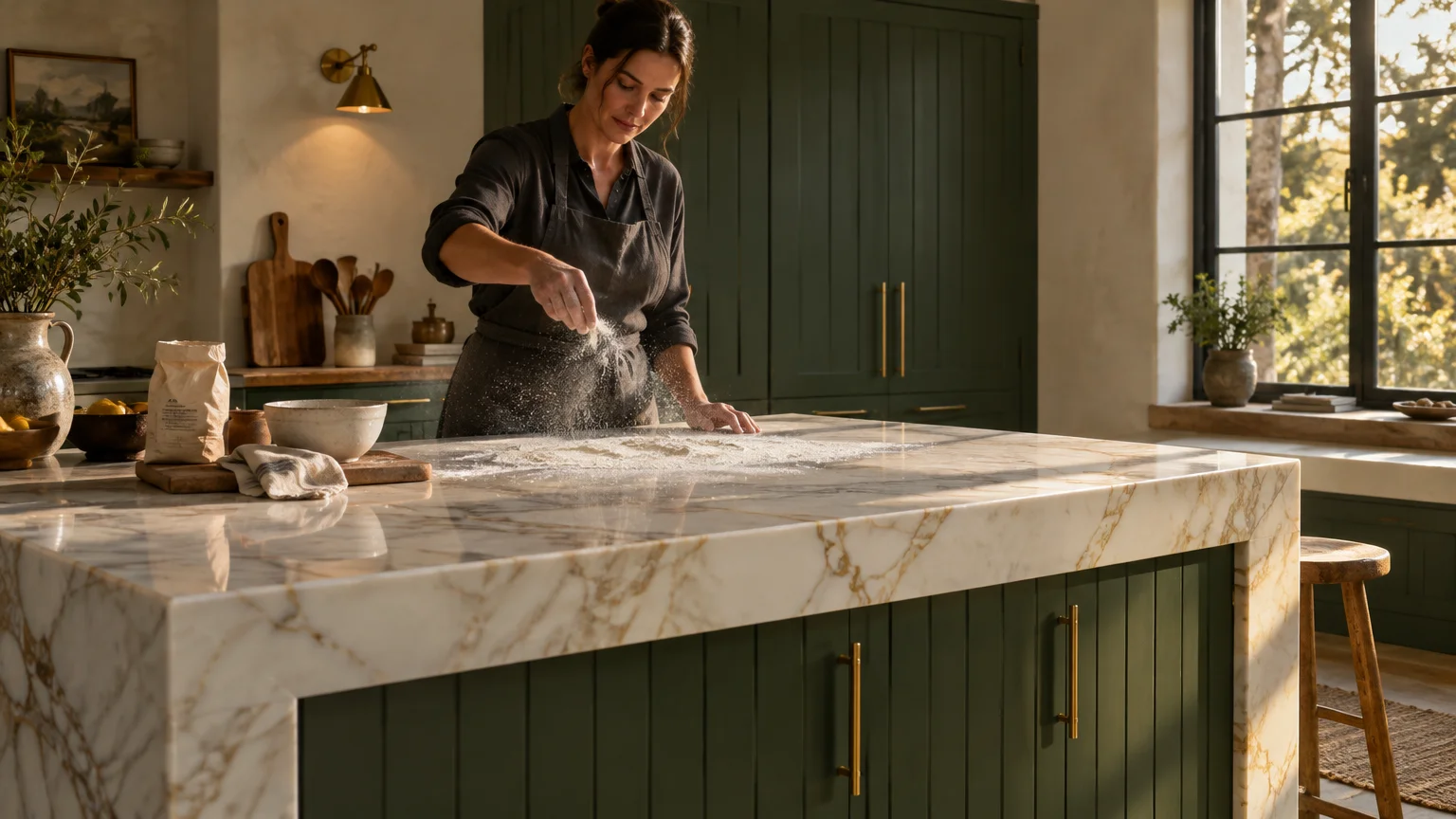
Deep forest green cabinetry pairs exceptionally well with Calacatta quartz showcasing bold gold and gray veining. The moody millwork grounds the room, allowing the dramatic stone patterning to command visual attention.
Leading stylists featured in Architectural Digest design showcases frequently use botanical greens to bring outdoor tranquility indoors. The bright white field of the engineered stone keeps the moody cabinetry feeling vibrant rather than enclosed.
Opt for satin finishes on green doors to reflect light across your primary work triangles. Polished gold or warm copper hardware ties directly into the warm ribbons of the stone.
Balance the rich cabinetry with light oak flooring to maintain vertical visual balance. Solid slab quartz backsplashes that run up to upper cabinets magnify the luxurious impact.
4. Concrete-Look Gray Quartz with Matte Black Millwork
Concrete-look quartz countertops set against matte black cabinetry create an undeniably sleek, urban industrial vibe. The mottled mid-tone gray surfaces soften the intense visual weight of solid black cabinetry.
Unlike raw poured concrete, engineered quartz resists stubborn oil stains and acidic etching from citrus or vinegar. The matte black surfaces absorb glare, creating an intimate and sophisticated architectural atmosphere.
Layer in warm walnut floating shelves and blackened steel accents to introduce organic warmth. Fluted glass cabinet inserts also prevent large banks of black casework from appearing monolithic.
Install high-output under-cabinet strip lighting to illuminate the gray workspace during evening meal preparation. A matte textured gray tile backsplash bridges the tonal shift between the surfaces seamlessly.
5. Hard Maple Butcher Block with Navy Blue
Warm hard maple butcher block surfaces bring welcoming warmth to rich navy blue cabinetry. This high-contrast maritime combination radiates coastal farmhouse charm while remaining exceptionally practical for passionate home cooks.
Wood countertops soften kitchen acoustics and provide a tactile, forgiving surface for culinary prep work. Deep navy blue conceals scuffs on lower base cabinets while anchoring the room visually.
Consult technical timber maintenance manuals from the Forest Products Laboratory to select food-safe mineral oils and beeswax for regular seasoning. Polished chrome or polished nickel hardware adds a sharp, crisp tailored finish.
Pair this classic duo with bright white shiplap walls or crisp white ceramic tile backsplashes. Woven rattan barstools around a wooden island counter emphasize the laid-back coastal texture.
6. Pure White Solid Surface with Muted Greige
Seamless pure white solid surface countertops provide a pristine canvas against muted greige millwork. Greige—a balanced hybrid of gray and beige—adapts fluidly to shifting natural daylight throughout the day.
Solid surface materials allow for inconspicuous seams and integrated sinks that streamline daily wipe-downs. The gentle greige tone on cabinet boxes provides subtle contrast without interrupting visual minimalism.
Enhance this pairing with matte black hardware for modern restraint, or soft champagne bronze for gentle warmth. Textured zellige wall tiles introduce handcrafted variation against the pristine, solid surfaces.
Light ash or white oak flooring complements the greige cabinetry without introducing competing yellow undertones. Keep decorative accents minimalist with matte ceramic vases and neutral linen window treatments.
7. Polished Black Granite with Rich Walnut Wood
Deep black absolute granite countertops create luxurious sophistication when paired with mid-century walnut cabinetry. The flowing, variegated chocolate tones of walnut temper the crisp, reflective formality of dark stone.
Black granite remains one of the hardest, most scratch-resistant natural surfaces available for high-traffic food prep. Its consistent dark field draws out the intricate amber and espresso grain swirls of natural walnut.
Choose a leathered or honed granite finish if you prefer subtle texture over high-gloss reflections. Sleek brushed nickel or matte black finger pulls maintain a clean, mid-century profile.
Install crisp white quartz on an accent island to break up the rich perimeter tones. Soft ambient wall sconces accentuate the vertical wood grain along flat-panel walnut door fronts.
8. Flecked Terrazzo with Soft Sage Green
Terrazzo or aggregate composite countertops inject playful personality when nestled against soft sage green cabinetry. The multi-colored stone chips within the terrazzo reflect surrounding colors, creating an effortlessly cohesive aesthetic.
Sage green provides a soothing, organic foundation that functions almost like a gentle neutral. The speckled countertop surface hides daily crumbs and dust between cleans while adding retro flair.
Pair this combination with fluted wall panels and warm brushed brass cup pulls. White oak open accents seamlessly bridge the vintage charm of terrazzo with modern transitional decor.
Keep your backsplash subtle with simple white stacked square tiles to avoid overwhelming the eye. A porcelain undermount sink maintains clean lines across the detailed aggregate countertop surface.
9. Warm Cream Limestone with Earthen Terracotta
Warm cream limestone or travertine surfaces set against terracotta-painted cabinetry deliver rustic Mediterranean warmth. The earthy clay hues of the cabinets infuse the room with spirited energy and artisan character.
Muted limestone countertops feature gentle fossil markings and sand-colored undertones that temper rich reddish-brown casework. This pairing feels collected, sun-drenched, and wonderfully grounded in Old World craft.
Wrought iron hardware and hand-painted ceramic backsplashes amplify the artisanal appeal of this design. Choose matte or eggshell paint sheens to keep the terracotta finish looking soft and organic.
Introduce unlacquered copper cookware and open cedar wall shelving to complement the warm earthy tones. Neutral stone floor tiles anchor the palette while letting the terracotta cabinetry shine.

Step-by-Step Palette Execution Framework
Phase 1: Surface Preparation and Accurate Measuring
Successful installations begin with meticulous surface preparation and structural verification across all existing base boxes. Verify that lower cabinets sit completely level using a four-foot carpenter level before templating any slab.
Shim uneven cabinet bases directly against the subfloor to prevent stress cracks in heavy stone counters. Take precise diagonal measurements from cabinet corners to identify out-of-square walls before cutting rigid materials.
When painting existing cabinets, thoroughly wash all face frames and doors with trisodium phosphate to remove grease. Sand surfaces thoroughly with medium-grit abrasives to create a strong mechanical bond for bonding primers.
Label every cabinet door and hinge location systematically with painter tape during disassembly. Organized labeling saves hours of frustration during reassembly once fresh paint coats cure completely.
Phase 2: Dry Fitting and Precise Material Installation
Always complete a thorough dry fit of your countertop segments before dispensing structural adhesives or silicone sealants. This trial placement reveals tight wall corners, uneven seams, or gaps around plumbing rough-ins.
Enlist several capable helpers when maneuvering heavy stone or composite slabs into position to prevent back strain. Apply heavy-duty construction adhesive along cabinet perimeter frames before lowering rigid materials into final alignment.
Pull multi-piece slab seams tight using specialized mechanical seam setters equipped with vacuum suction cups. Level adjacent slab edges meticulously using shims underneath the stone substrate before adhesives fully cure.
Check sink cutouts and faucet hole alignments carefully before securing the top surfaces permanently. Fasten undermount sink clips securely to the underside of the stone with two-part epoxy anchors.
Phase 3: Sealing, Caulking, and Protective Finishes
Apply a flexible, mold-resistant silicone sealant along the expansion gap between your countertop back edge and wall studs. Never substitute rigid grout for silicone along change-of-plane transitions, as natural structural movement will cause cracks.
For porous natural stone, apply a penetrating fluoropolymer impregnator following guidelines from the Natural Stone Institute resources. Buff away excess sealer before it dries to prevent hazy surface residue from clouding the polish.
If installing butcher block, treat both top and bottom faces equally to prevent uneven moisture absorption and warping. Allow sealants to cure fully according to manufacturer instructions before reconnecting sinks or turning on water lines.
Reinstall freshly painted cabinet doors with soft-close hinges once all surface sealants reach total cure. Adjust hinge set screws carefully to achieve uniform reveal gaps across all adjacent cabinet doors.
Styling and Custom Personalization
Personalizing your palette requires balancing color saturation, sheen levels, and tactile contrast across major planes. If your countertops display busy veins or aggregate specks, choose quiet, monochromatic cabinet doors to maintain equilibrium.
Layering textures prevents neutral kitchens from appearing flat or uninspired over time. Pair smooth, polished countertops with tactile wire-brushed wood grain, ribbed tile, or woven pendant light shades.
Designers at HGTV kitchen remodel guides recommend matching your hardware finish to secondary accent colors rather than primary stone tones. Polished metals add sparkle, while matte finishes foster grounded, architectural calm.
Use open shelving to display ceramic dinnerware that echoes your accent colors and countertop undertones. A wooden cutting board collection leaning against the backsplash softens hard stone surfaces with organic warmth.
Introduce greenery and textured linen runner towels to bring lived-in character to clean stone surfaces. Thoughtful styling transforms a technical remodeling project into a personalized culinary sanctuary.
Troubleshooting Pitfalls and Long-Term Care
Mismatched undertones represent the most frequent mistake when pairing countertops and cabinet finishes. A cool gray countertop paired against yellow-toned cream cabinets can make casework appear aged or discolored.
Always evaluate paint and stone chips side by side under your room’s exact ambient lighting temperatures. Standard incandescent bulbs cast warm yellow glows, whereas 4000K LEDs reveal subtle blue and green tints.
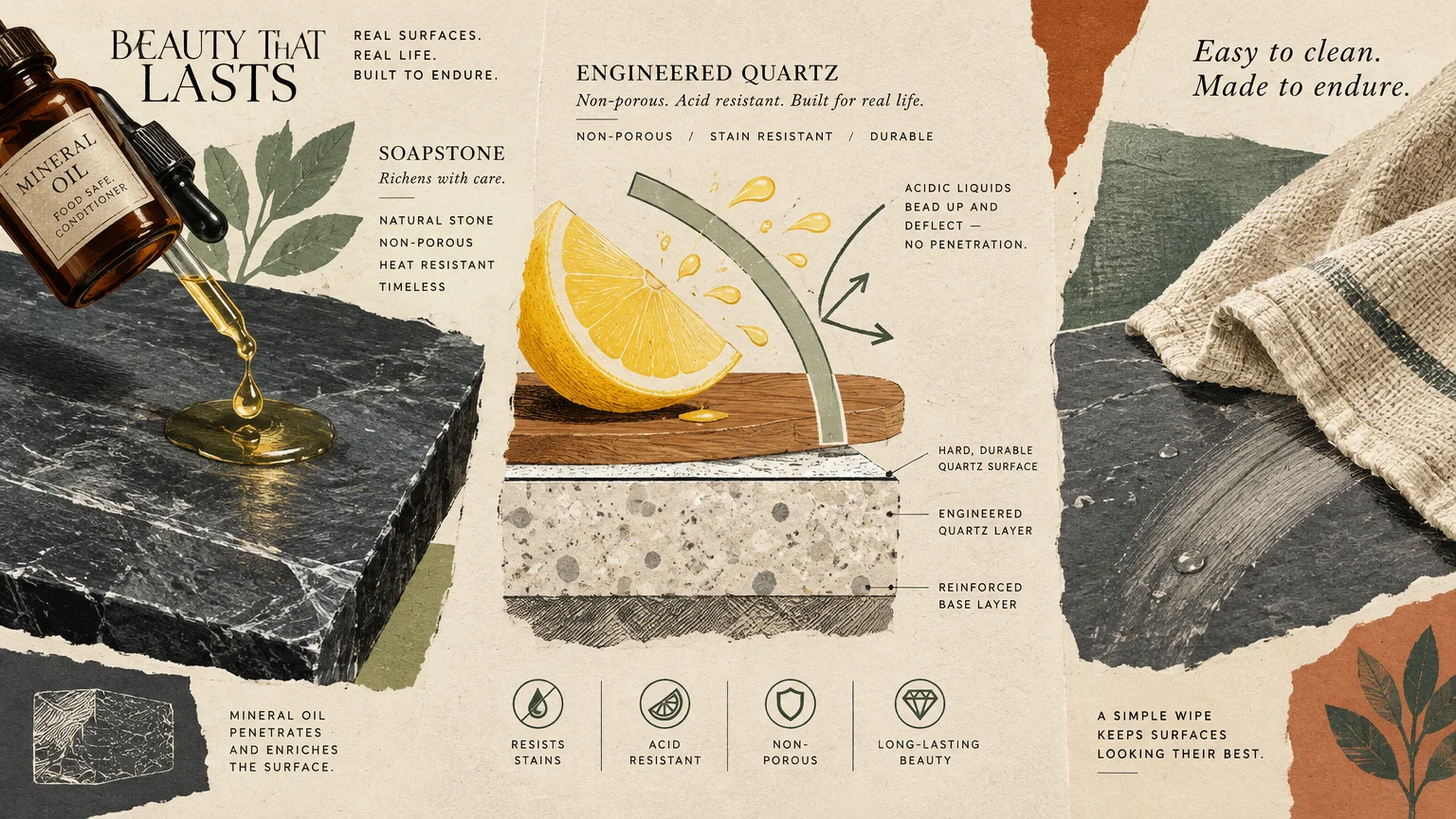
Routine maintenance preserves the visual integrity of your selected color combination over years of hard use. Clean quartz and solid surface materials using pH-neutral dish soaps and microfiber towels rather than abrasive scouring pads.
Reapply penetrating sealers to marble, granite, and limestone whenever water droplets stop beading on the surface. For oiled butcher blocks, sand light scratch marks locally and apply fresh mineral oil every few months.
Never cut directly on quartz, granite, or wood countertops with steel knives to avoid scratches and blade damage. Always place hot pans on trivets, as thermal shock can crack natural stone and scorch quartz resin.
Frequently Asked Questions
Should countertops always be lighter than cabinets?
Countertops do not need to be lighter than surrounding cabinetry to create a balanced, attractive room. Dark countertops over lighter cabinets ground the workspace, while light counters over dark bases bounce overhead task light effectively.
The key lies in creating deliberate contrast rather than matching values too closely. Strong contrast creates distinct architectural boundaries that make both elements stand out clearly.
How do I test countertop samples against cabinet paint?
Paint large poster boards with your shortlisted cabinet paint colors rather than painting small patches directly on walls. Place your actual countertop stone samples flat on top of the vertical boards under natural kitchen lighting.
Move the sample boards around your kitchen to observe them near windows and shadowy corners. Check them in the morning, afternoon, and under evening artificial lights before purchasing materials.
Can I mix different countertop materials on the perimeter and island?
Mixing countertop materials adds designer flair when you keep the surrounding cabinet palette unified. Pair durable quartz on busy perimeter prep areas with a statement butcher block or dramatic marble on your island.
Ensure that both countertop materials share at least one common undertone to avoid visual clash. For example, match the gray veining in island marble to a solid gray perimeter quartz surface.
What is the most forgiving countertop color combination for busy families?
Mid-tone gray or flecked terrazzo countertops paired with medium wood or greige cabinets hide dust and crumbs best. Avoid solid glossy black or pure stark white surfaces, which show fingerprints, water spots, and crumbs immediately.
Textured matte or leathered finishes also conceal daily micro-scratches far better than high-gloss polished surfaces. Choosing durable composite quartz ensures simple cleanup without requiring regular chemical resealing routines.
Bringing Your Kitchen Vision to Life
Updating your kitchen’s color relationship breathes fresh energy and purposeful design into the heart of your home. Clear planning, careful sample evaluation, and patient execution ensure professional results that endure daily use.
Focus on one phase at a time, from leveling casework to applying final protective sealants. Taking measured steps prevents overwhelm and guarantees a durable finish you will admire for years.
Gather your physical swatches, test your home lighting, and embark on your kitchen transformation with total confidence.