
You can transform your sleep quality and bedroom functionality today simply by shifting your bed to its optimal layout location. Waking up groggy, wrestling with awkward traffic paths around your footboard, or feeling vaguely exposed at night usually stems from poor bed placement rather than a faulty mattress. Positioning your frame correctly balances room proportions, enhances natural airflow, and creates an anchor point that instantly calms your visual environment. By recognizing subtle layout mistakes—such as blocking direct window light or aligning your headboard directly with high-traffic doorways—you can systematically unlock a peaceful, highly functional sanctuary without spending a dime on new furniture.

Planning Your Bedroom Realignment Project
Rearranging your bedroom layout requires minimal financial investment; in fact, most room realignments cost absolutely nothing unless you choose to purchase felt furniture sliders or heavy-duty carpet glides. Setting aside sixty to ninety minutes on a weekend gives you ample time to test multiple layouts without rushing. You do not need professional carpenter skills for this project, but you will benefit from basic spatial awareness and a willingness to measure your dimensions twice before dragging heavy furniture across the floor.
To complete this transformation smoothly, gather a flexible tape measure, a notebook or smartphone sketching app, painter’s tape to mark boundaries, and floor protection glides. If your bed frame includes integrated storage or a heavy solid wood headboard, enlist a second person to assist with the physical lifting; prioritizing bodily safety keeps this project rewarding and injury-free. Taking proper prep steps guarantees you won’t scuff your baseboards or scratch engineered hardwood flooring during the move.
7 Red Flags That Signal Your Bed Is in the Wrong Location
1. You Suffer From Drafts, Temperature Swings, or Direct Sunlight Exposure
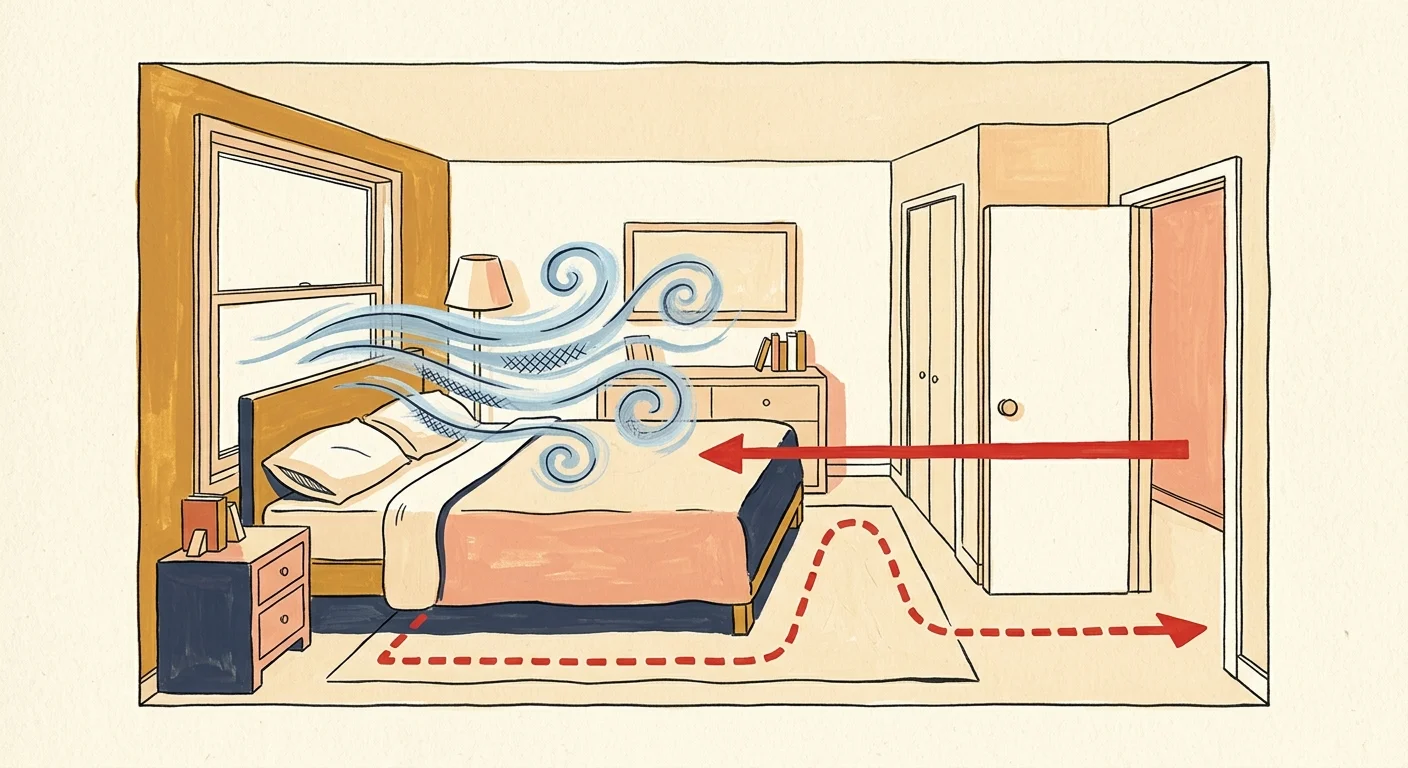
Placing your headboard directly beneath or adjacent to an uninsulated window subjects you to severe ambient temperature drops during winter and scorching radiant heat throughout summer months. Windows act as thermal bridges where exterior temperatures influence indoor air faster than central HVAC systems can compensate. Furthermore, direct morning sunlight beaming across your face can prematurely interrupt your circadian rhythm, cutting short critical REM sleep cycles. Consulting the Sleep Foundation’s research on bedroom environment confirms that ambient temperature fluctuations directly trigger nighttime awakenings; shifting your mattress away from perimeter glass walls stabilizes your thermal microclimate and shields your head from annoying drafts.
2. You Have Direct Line-of-Sight Alignment With the Main Doorway
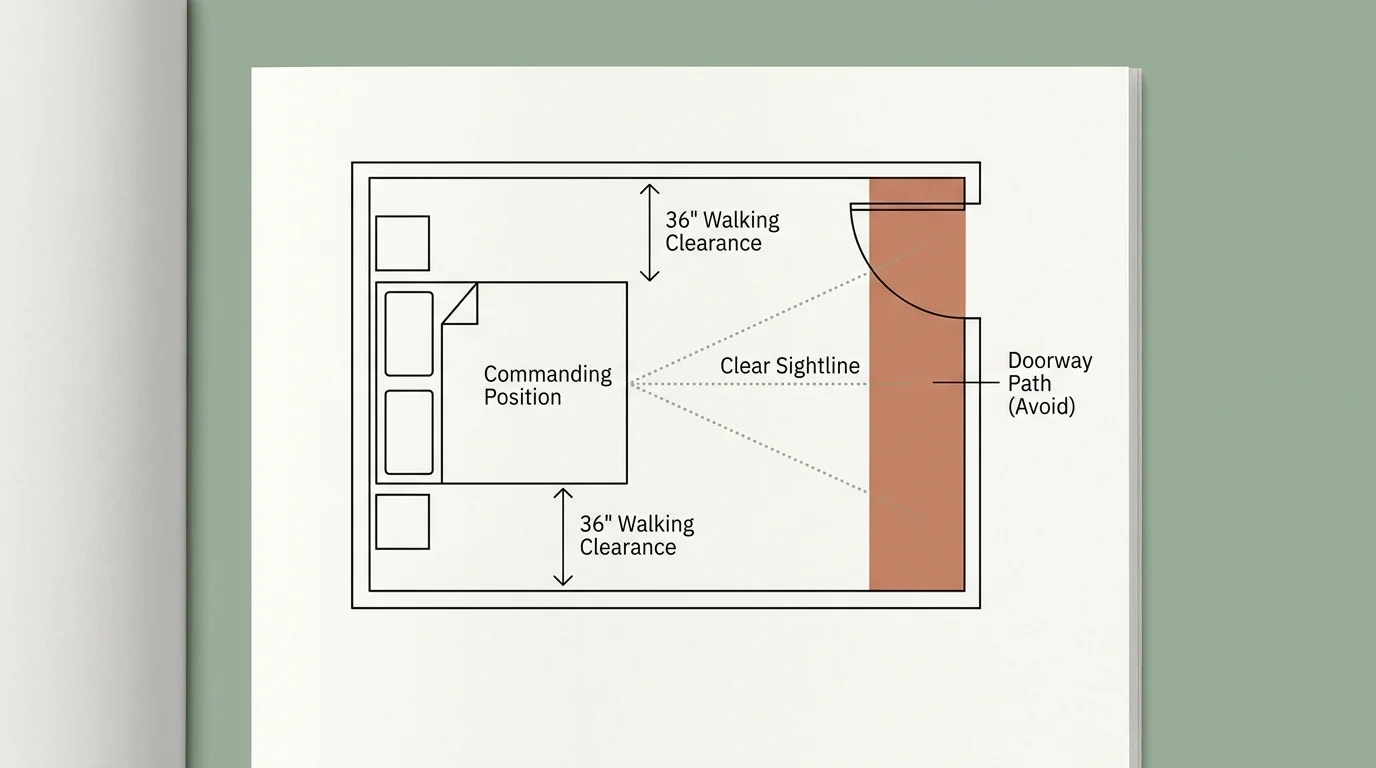
When your feet point directly toward the primary bedroom entry door, you enter what classical interior design and traditional spatial systems call the coffin position. From an evolutionary psychology standpoint, sleeping directly in line with an open doorway puts your nervous system on subconscious high alert because your primitive instincts sense a vulnerability to surprise interruptions. You want to position your bed in what spatial planners call the commanding position: diagonally across from the primary entrance so you maintain an unobstructed line of sight to the door without sitting directly in the doorway’s travel path. This subtle spatial shift lowers your baseline anxiety and fosters deep relaxation.
3. Navigating Around Your Footboard Feels Like an Obstacle Course
If you regularly bump your shins against the footboard or turn sideways to squeeze past your nightstand and closet doors, your bed placement breaks fundamental spatial ergonomics. Walking pathways through a bedroom require clear, comfortable clearance to support natural movement patterns. According to Architectural Digest’s spatial planning recommendations, primary walkways demand a minimum clearance of thirty to thirty-six inches between large furniture pieces and walls. Squeezing your frame into a tight corner might free up open floor space in the center of the room, but restricting primary walkways creates daily physical friction that ruins the room’s relaxing atmosphere.
4. Your Headboard Rests Against a Plumbing or High-Noise Shared Wall
Positioning your headboard against a wall shared with a busy bathroom, living room television, or major kitchen appliance turns your headboard into an acoustic amplifier. Sound vibrations travel easily through standard drywall and timber framing studs; every running dishwasher, flushing toilet, or echoing pipe hums straight into your inner ear while you attempt to drift off. To achieve pristine quiet, relocate your headboard to a solid interior partition wall or an exterior wall far away from high-traffic household mechanicals. If quiet wall space remains limited, adding a padded fabric headboard or thick acoustic wall hangings absorbs persistent structure-borne vibration.
5. You Cannot Easily Access Both Sides of the Bed
Shoving one side of a double, queen, or king-sized bed flush against a side wall is one of the most widespread bedroom layout mistakes in modern homes. While wall-pushing seems like a clever space-saving hack for small rooms, it severely compromises everyday utility for couples and single sleepers alike. Crawling across a partner to exit the bed or struggling to tuck in fitted sheets on a trapped side adds unnecessary frustration to your daily routine. Symmetry matters profoundly in spatial wellness; reserving at least eighteen to twenty-four inches on both sides of the mattress accommodates bedside tables, balancing reading lamps, and effortless morning wake-up routines.
6. Natural Light Is Blocked or Window Views Are Obstructed
When a tall headboard overlaps a window sill, it cuts off precious natural daylight and smothers the visual height of your room. Sunlight bouncing off interior walls makes modest bedrooms feel expansive, airy, and welcoming; blocking that incoming light with heavy furniture instantly darkens the room and makes it feel cramped. Furthermore, placing a bulky mattress frame directly over floor registers, baseboard heaters, or radiator units presents a major efficiency obstacle. Following energy efficiency tips from the U.S. Department of Energy reveals that blocking heating vents starves your HVAC system, skyrockets monthly utility bills, and creates dangerous hot spots that dry out wooden headboards.
7. Your Bed Dominates the Room’s Visual Balance or Smothers Architectural Features
Every functional bedroom needs a distinct visual hierarchy where the bed acts as the intentional centerpiece rather than an overwhelming physical barrier. If your mattress covers charming wall moldings, blocks access to built-in shelving, or forces you to position nightstands at awkward angles, the placement clashes with the architectural bones of your room. Inspecting guidelines from HGTV’s bedroom layout guidelines underscores that harmonizing furniture scale with architectural features creates an inviting balance. Aligning your bed with high structural ceilings, ceiling fan centers, or central wall spans establishes a grounded anchor that elevates the entire room’s aesthetic value.
A Step-by-Step Framework to Reposition Your Bed Like a Designer
Phase 1: Measure, Map, and Clear
Begin your transformation by removing all bedding, pillows, and mattress toppers to reduce the physical weight of your frame. Measure your bed frame’s precise length and width, then use high-visibility painter’s tape to outline the proposed new footprint directly on your floor. This non-damaging tape visualizes how the new location interacts with swing clearances for closet doors, dressers, and entryway doors before you slide a single heavy item. Verify that your proposed layout leaves at least thirty inches of open walkway space along main thoroughfares and twenty inches alongside nightstands. Clear all loose rugs, cords, and small side tables out of the room to create a clean, hazard-free workspace.
Phase 2: Safely Shift and Test Ergonomic Flow
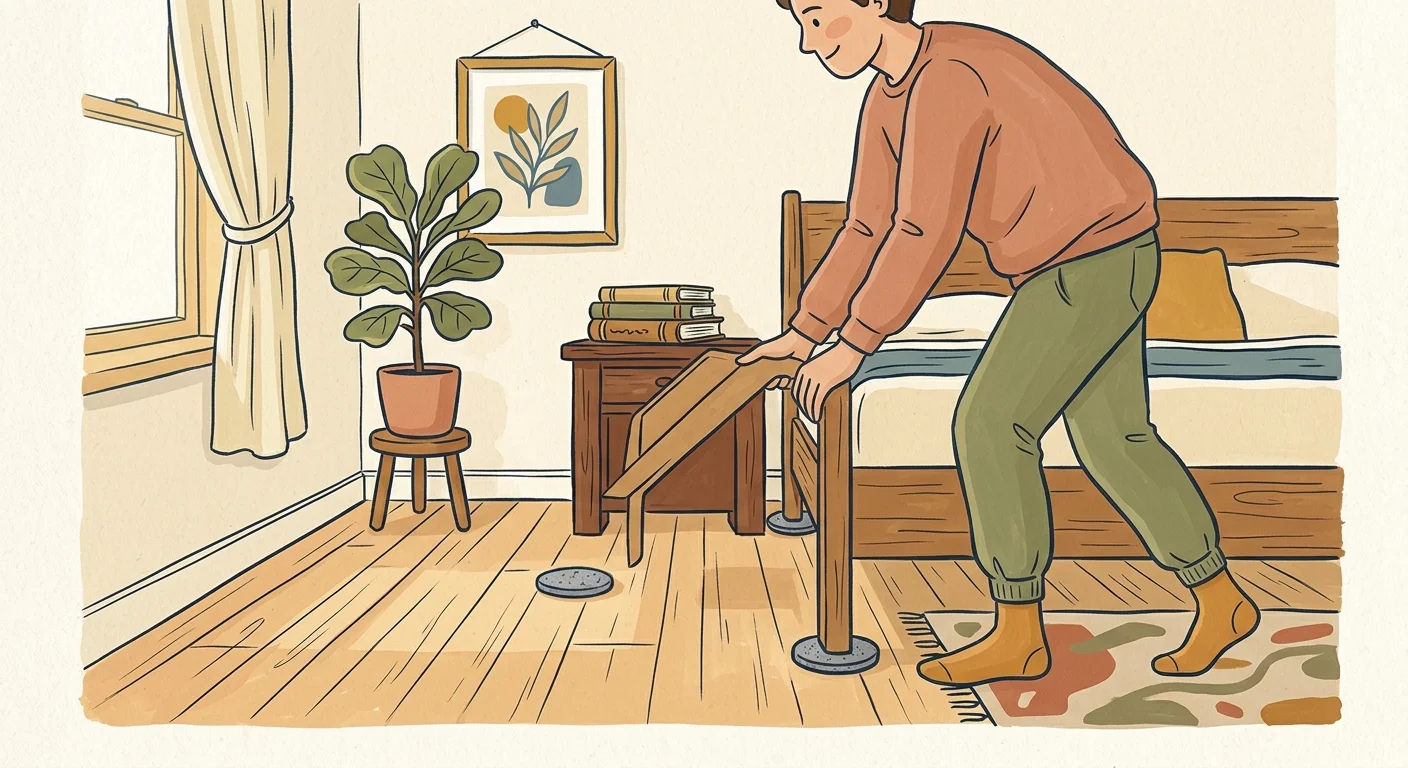
Place heavy-duty furniture sliders under each leg or foot of your bed frame to protect your flooring materials; use slick plastic sliders for plush carpeting and thick felt pads for finished hardwood or luxury vinyl plank. Lift with your legs—never your lower back—and maintain a wide, balanced stance while gently gliding the bed frame into its prospective location. Once in position, walk around the entire perimeter of the bed to test natural movement paths; practice opening adjacent wardrobe doors and drawers to ensure zero mechanical interference. Sit on the edge of the mattress and look toward the entry door to confirm that you enjoy a clear, comforting line of sight without feeling directly exposed in the doorway threshold.
Phase 3: Secure, Balance, and Calibrate Anchors
After settling on the ideal spot, verify that your bed frame sits completely level on the floor surface. Old homes and settled subfloors often feature slight slopes; insert thin felt shims beneath frame legs if you detect any rocking or uneven weight distribution to prevent structural squeaking down the line. Re-anchor heavy headboards securely to the wall studs using heavy-duty wall anchors or direct bracket attachments so the frame remains stable when you lean back to read. Plug nightstand lamps into nearby electrical outlets using surge protectors, routing cables safely along baseboards with adhesive clips to eliminate tripping hazards behind the headboard.

Styling and Personalizing Your New Bedroom Focal Point
Once your bed occupies its optimal spatial location, style the surrounding elements to emphasize balance and tranquility. Flank your headboard with matching or visually balanced nightstands that sit at roughly the same height as the top of your mattress, creating an intuitive surface for nighttime essentials. Introduce layered lighting by pairing ambient overhead fixtures with warm, dimmable bedside lamps equipped with warm soft white LED bulbs; this specific light spectrum signals your brain to produce melatonin for restorative sleep.
Ground your realigned bed by placing a large area rug beneath the bottom two-thirds of the frame, extending at least twenty-four inches beyond the sides and foot of the bed. This anchoring rug anchors the sleeping zone while providing a plush, warm surface for your feet during cold mornings. Choose calming color palettes on the accent wall behind your headboard—such as muted sage greens, serene slate blues, or soft warm taupes—to visually solidify your bed as the comforting heart of the room.
Troubleshooting Common Layout Pitfalls and Ongoing Upkeep
Small or oddly shaped bedrooms frequently challenge traditional placement rules, forcing creative spatial solutions. If your room features multiple windows or awkward sloped ceilings, consider placing your bed on a diagonal angle across a corner. While diagonal placement uses slightly more floor area behind the headboard, it opens up traffic paths and establishes a strong focal point in tricky asymmetrical rooms. In rooms with zero solid wall space, installing low-profile headboards or floating headboard panels allows you to place the bed in front of windows without completely blocking natural sunlight.
Maintain your optimal layout by performing a quick quarterly audit of your bedroom setup. Inspect furniture glides, tighten loose headboard bolts that can loosen over time, and ensure heating vents remain completely unobstructed as seasonal temperature shifts occur. Rotating your mattress every six months alongside these layout checks preserves sleep support while giving you a perfect opportunity to vacuum dust build-up behind the headboard, maintaining a clean, healthy indoor air environment.
Frequently Asked Questions About Bed Positioning
What if my small bedroom only has one functional wall with a window?
If a window wall is your absolute only option, choose a low-profile headboard or an open-slat wood frame that allows sunlight to filter through into the room. Keep the mattress pulling forward slightly—leaving a three to four-inch gap between the headboard glass—to ensure proper window drape operation, prevent condensation buildup, and permit clean air circulation from nearby heating vents.
Is the Feng Shui commanding position really effective for sleep quality?
Yes, positioning your bed in the commanding position leverages deep psychological principles of safety and environmental control. Seeing who enters your room without staring straight down an open hallway reduces subtle adrenaline spikes, allowing your sympathetic nervous system to wind down completely before sleep.
How much clearance space do I actually need around my bed?
Aim for a minimum clearance of thirty to thirty-six inches for primary traffic paths, such as the space between the foot of your bed and an opposing wall or dresser. Secondary side paths next to nightstands require a minimum of eighteen to twenty-four inches so you can easily make the bed, clean under the frame, and walk without catching clothes on corners.
How do I move heavy wooden bed frames without damaging floors?
Never drag heavy furniture directly across bare floors. Always use dedicated furniture sliders under every support leg; choose smooth plastic bottoms for carpeted floors and soft felt bottoms for hardwood, vinyl, or tile. For extremely heavy solid wood frames, disassemble the mattress and box spring first to reduce weight before shifting the frame.
Take Control of Your Space and Reclaim Better Sleep Today
Reclaiming a peaceful, beautifully proportioned bedroom does not require expensive remodeling or high-end interior designers. By spotting the key warning signs of poor layout choices and implementing smart, ergonomic positioning, you transform your bedroom into an inviting sanctuary tailored for rest. Grab your tape measure, clear your floor space, and shift your bed into its ideal position today to experience the incredible power of a thoughtful spatial design.