
Stop tossing a valuable source of potassium, phosphorus, and calcium into the trash. Using banana peels in your garden transforms kitchen waste into a natural plant fertilizer that supercharges blooms and boosts fruit production. You can easily harness these nutrient-dense scraps to foster resilient root systems and ward off pests without spending money on synthetic chemicals. Whether you tend a modest balcony container garden or a sprawling backyard oasis, integrating simple organic gardening practices elevates your soil vitality. This straightforward approach saves cash while giving your greenery exactly what it craves. Let us walk through the best methods to turn your morning snack leftovers into a powerhouse amendment that ensures vigorous, sustained plant growth all season long.
Planning Snapshot: Budget, Timeline, and Skill Level
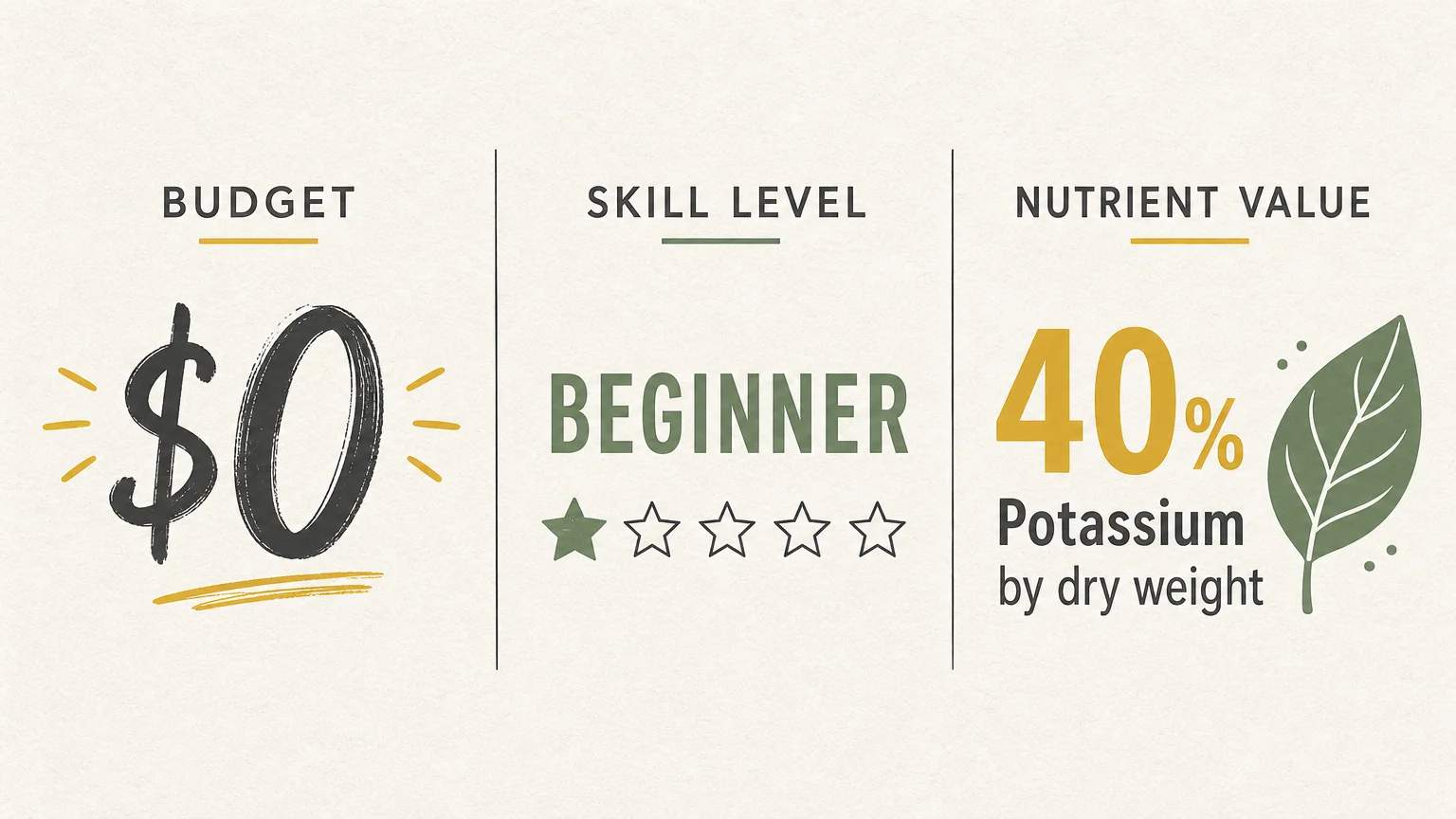
Before you grab a trowel, taking a moment to understand the scope of this project ensures you get the best possible results without any frustrating setbacks. The budget for this garden upgrade is genuinely zero dollars since you are repurposing everyday grocery items you already purchased for your kitchen. Your project timeline will vary depending on the specific application method you choose; preparing the raw materials takes only a few minutes of active labor, but the organic breakdown process requires anywhere from a few days to several weeks before the nutrients become fully bioavailable. From a skill perspective, this initiative is perfect for absolute beginners, though it requires a bit of diligence to prevent common pest issues. Bananas are incredibly rich in potassium, often making up over forty percent of the peel’s total dry weight. Potassium represents an essential macronutrient that regulates water movement within plant cells, fortifies structural stem integrity, and plays a crucial role in heavy flowering and fruiting cycles. According to the Penn State Extension guidelines on plant nutrition, actively managing these macronutrients organically leads to far more resilient, drought-tolerant landscaping. By understanding the underlying science, you can strategically time your specific applications to align with your garden’s most demanding growth periods.
Phase 1: Proper Preparation and Storage
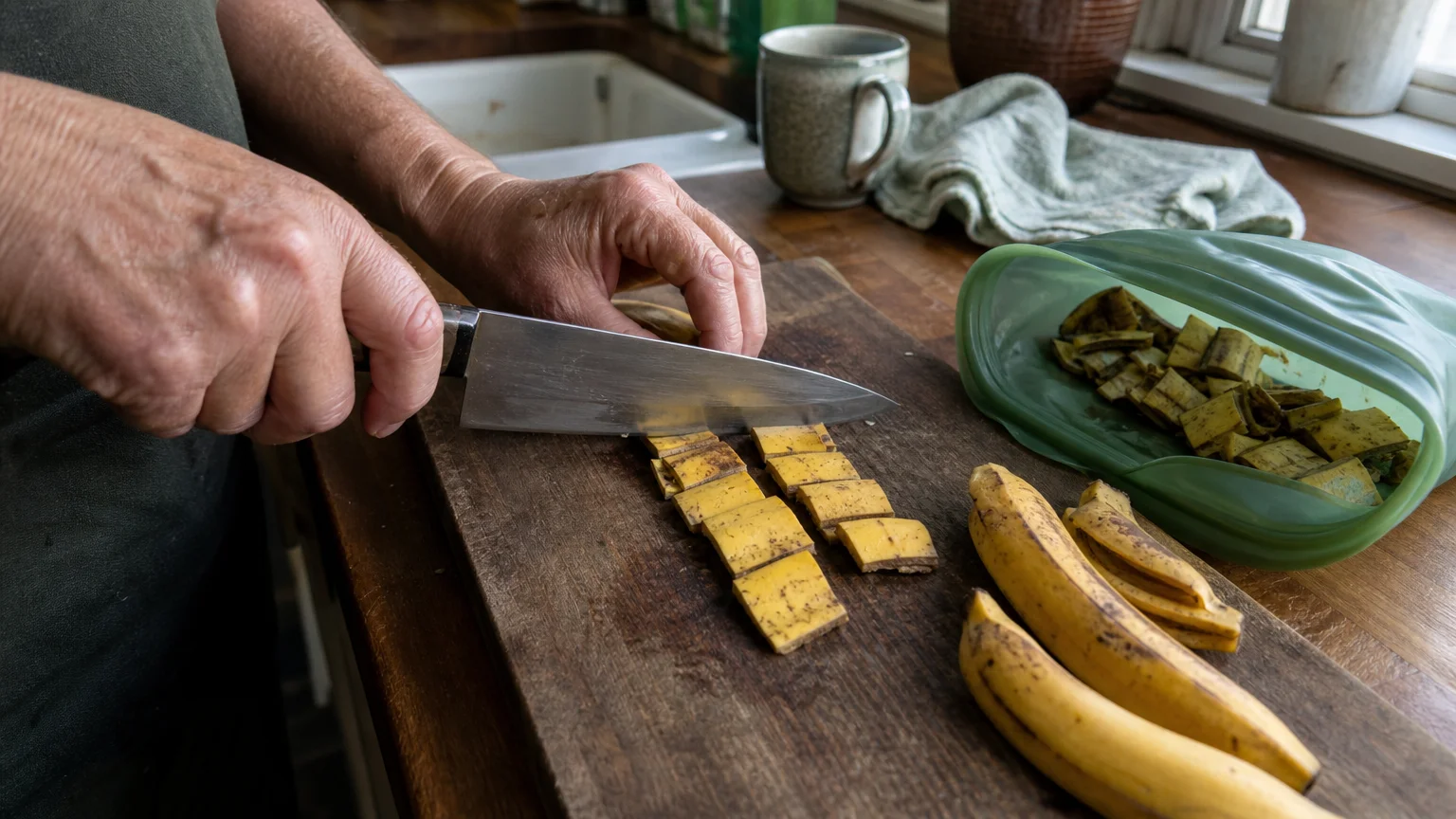
Before we dive into the specific application methods, you need a reliable strategy for collecting and storing your peels. Tossing a fresh, whole banana peel directly on top of your garden bed is a massive mistake; it practically rolls out the red carpet for raccoons, rats, and overwhelming swarms of fruit flies. Instead, you must process the skins to accelerate decomposition and maintain a highly sanitary kitchen environment. Start by keeping a dedicated, airtight container or a heavy-duty silicone freezer bag explicitly for this purpose. Whenever you finish a snack, take a sharp chef’s knife and chop the leftover skin into one-inch squares before adding it to your stockpile. This simple mechanical breakdown significantly increases the total surface area of the organic material. When you eventually introduce these smaller pieces into your outdoor environment, soil microbes and earthworms can digest them exponentially faster than they could a whole, intact peel. If your household generates organic waste slowly, storing your chopped pieces in the freezer effectively prevents mold growth and completely halts the natural decay process until you have gathered enough material to amend an entire raised bed. Proper preparation always sets the foundation for successful, odor-free organic gardening.
Phase 2: Execution with 6 Smart Applications
1. Brew a Nutrient-Dense Banana Peel Tea
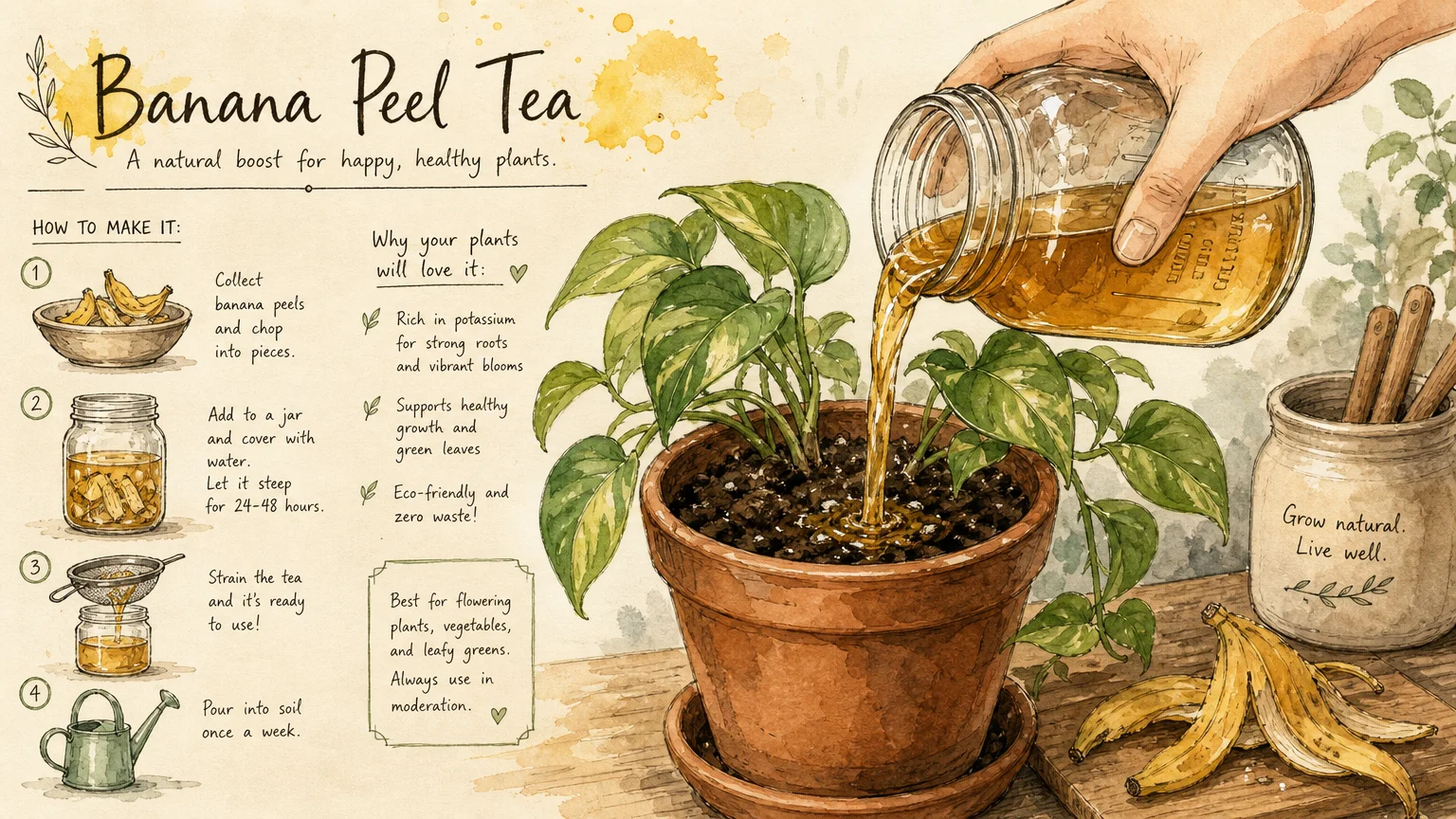
Liquid fertilizers deliver a fast-acting, easily absorbed nutrient boost directly to the root zone of your thirsty plants. To craft your own potent banana peel tea, drop your chopped skins into a large, sterilized mason jar and fill the container to the brim with clean, non-chlorinated water. Cap the jar loosely—allowing natural fermentation gases to escape without building dangerous pressure—and let the mixture steep at room temperature for roughly forty-eight to seventy-two hours. As the water turns a deep amber hue, strain the liquid into a separate bucket and discard the leftover mush directly into your outdoor compost bin. Dilute this concentrated tea with a standard watering can at a ratio of one part tea to four parts fresh water. Pour this mineral-rich concoction around the base of your most demanding fruiting plants, such as heirloom tomatoes, bell peppers, and eggplants, to encourage vigorous, sustained blooming. This straightforward brewing method provides an incredibly effective alternative to expensive synthetic liquid feeds, granting you complete, uncompromising control over the exact ingredients entering your fragile soil profile.
2. Trench Composting for Heavy Feeders
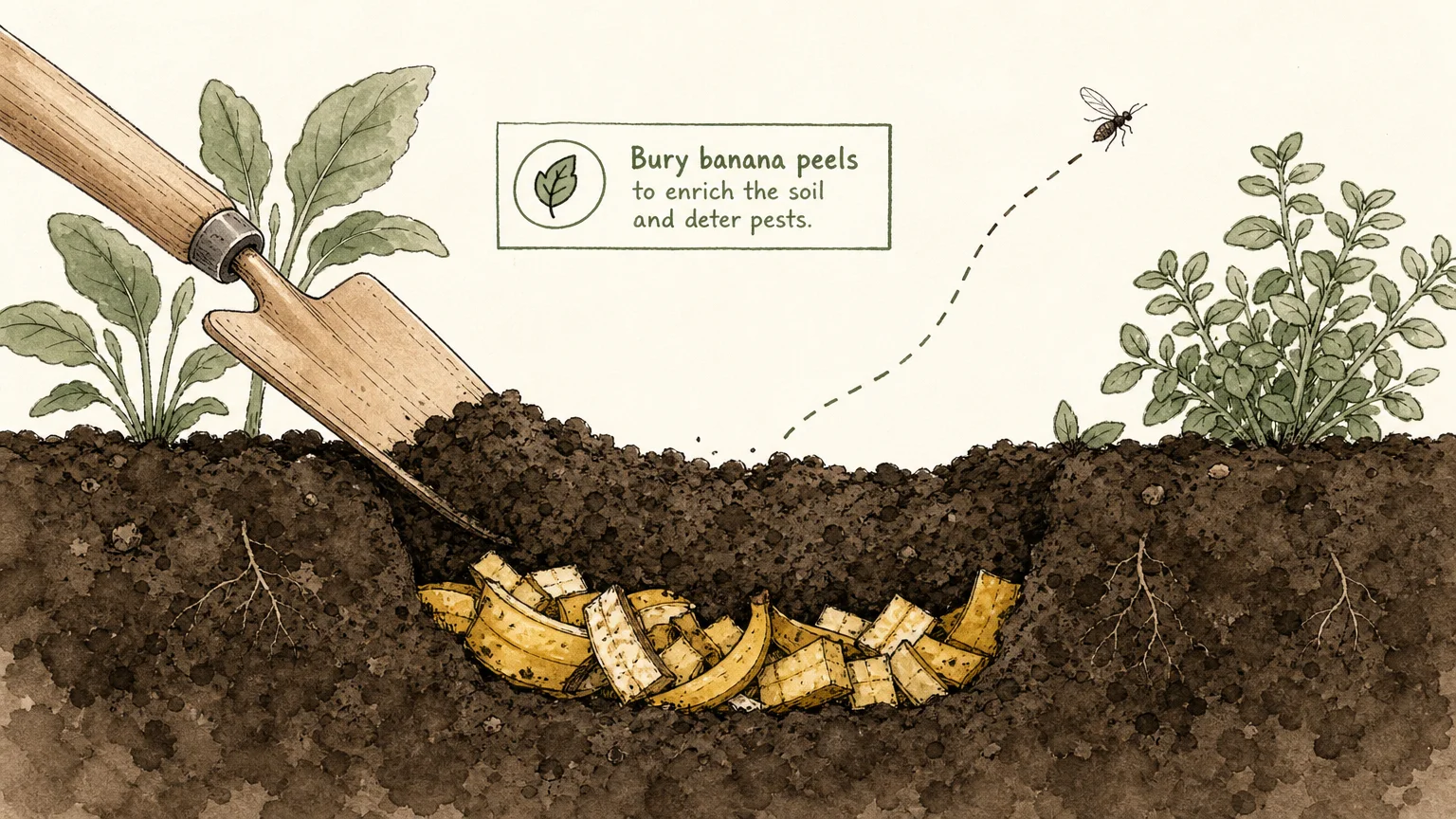
Direct soil trenching operates on the proven agricultural principle of delivering slow-release nutrients precisely where future root systems will eventually establish themselves. Before planting your spring seedlings or transplanting mature shrubs, dig a narrow trench approximately six to eight inches deep running parallel to your intended garden row. Lay a thick, continuous line of freshly chopped banana peels directly at the bottom of this trench. Cover the raw organic material with a generous layer of native topsoil and water the entire area deeply to jumpstart the biological breakdown process. As subterranean soil microbes and earthworms discover this buried treasure, they will slowly decompose the peels, creating an incredibly rich, subterranean buffet for your growing plants. This technique works exceptionally well for notorious heavy feeders, including hybrid tea roses, pumpkins, and summer squashes; the buried nutrients slowly become bioavailable right as these demanding plants enter their most energy-intensive growth and fruiting phases.
3. Create a Dehydrated Peel Powder
If you prefer to side-dress your beloved plants without running any risk of attracting local wildlife or neighborhood pests, creating a dehydrated banana peel powder serves as an outstanding, highly shelf-stable alternative. Spread your collected, chopped peels out evenly on a standard metal baking sheet, ensuring they do not overlap. Bake them at your oven’s absolute lowest temperature setting for several hours until the skins turn completely black, shriveled, and brittle to the touch. You can also utilize a dedicated countertop food dehydrator, or even harness the intense summer sun if you happen to reside in a consistently hot, arid climate. Once the dried peels snap cleanly in half with an audible crunch, toss them into a high-speed kitchen blender or a dedicated coffee grinder. Pulse the machine repeatedly until you achieve a fine, dark, nutrient-dense powder. Sprinkle this highly concentrated potassium dust directly onto the topsoil around your delicate indoor container plants, or gently scratch it into the upper inch of your outdoor raised beds for a discreet, powerful feeding.
4. Fashion Natural Aphid Deterrent Traps
While banana peels are justifiably famous across the horticultural world for their exceptional fertilizing properties, they simultaneously offer a clever, entirely non-toxic strategy for managing some of the most common and frustrating garden pests. Aphids frequently devastate tender, succulent new growth on ornamental plants, leaving behind a trail of sticky honeydew and severely curled, damaged leaves. Interestingly, the strong, pungent scent of actively decomposing banana peels naturally repels these destructive, soft-bodied insects. To deploy this defense mechanism, bury small, freshly chopped pieces of peel just barely beneath the soil surface encircling the main stems of your most vulnerable plants. Alternatively, you can drape slightly dried, leathery peel strips directly across the lower, hidden branches of heavily affected shrubs. This natural, olfactory deterrent helps you maintain a highly functional, balanced backyard ecosystem; you successfully banish the harmful pests without ever reaching for harsh, broad-spectrum chemical insecticides that might inadvertently injure or kill your essential local pollinators.
5. Supercharge Your Traditional Compost Pile
A sluggish, inactive compost pile often suffers from a severe lack of adequate moisture and green, nitrogen-rich organic matter. Banana peels bridge this critical gap perfectly by introducing both essential hydration and dense nutrients directly into the complex compost matrix. Because they decompose rapidly when exposed to the high heat and active microbes present in a healthy bin, peels act as a natural accelerator for your entire compost heap. To maximize their effectiveness, use a heavy garden pitchfork to open the center of the pile where the internal temperature consistently peaks, dump your chopped skins inside, and cover them completely with brown matter like dried autumn leaves or shredded cardboard. This deep-burying technique safely prevents fruit flies from swarming the surface and guarantees that the abundant potassium breaks down efficiently. For those looking to optimize their yard waste management even further, reviewing the Department of Energy home composting basics offers excellent, actionable baseline strategies. Once fully processed, this rich, dark compost will be perfectly balanced and ready to nourish your entire property during the next planting season.
6. Nourish Epiphytes and Houseplants
Traditional outdoor soil gardens are certainly not the only spaces that stand to benefit from this incredibly versatile organic resource; your prized indoor houseplants and specialized tropical epiphytes absolutely love an occasional surge of extra potassium. Because unique species like staghorn ferns, tillandsias, and select orchids naturally absorb vital moisture and nutrients directly through their foliage rather than relying on a traditional subterranean root system, they require a very gentle, highly digestible food source. You can lightly mist your heavily diluted banana peel tea directly onto the textured fronds of your ferns, ensuring even, gentle coverage without completely soaking the delicate central crown. Furthermore, you can utilize the soft, fleshy inside of a fresh banana peel to carefully wipe down the massive, broad leaves of your monstera deliciosa, fiddle leaf figs, and rubber plants. The natural, mild oils trapped inside the skin effectively remove thick layers of accumulated household dust while leaving behind a beautiful, healthy, glossy shine that physically helps the plant photosynthesize far more efficiently.
Phase 3: Styling and Personalizing Your Garden Space
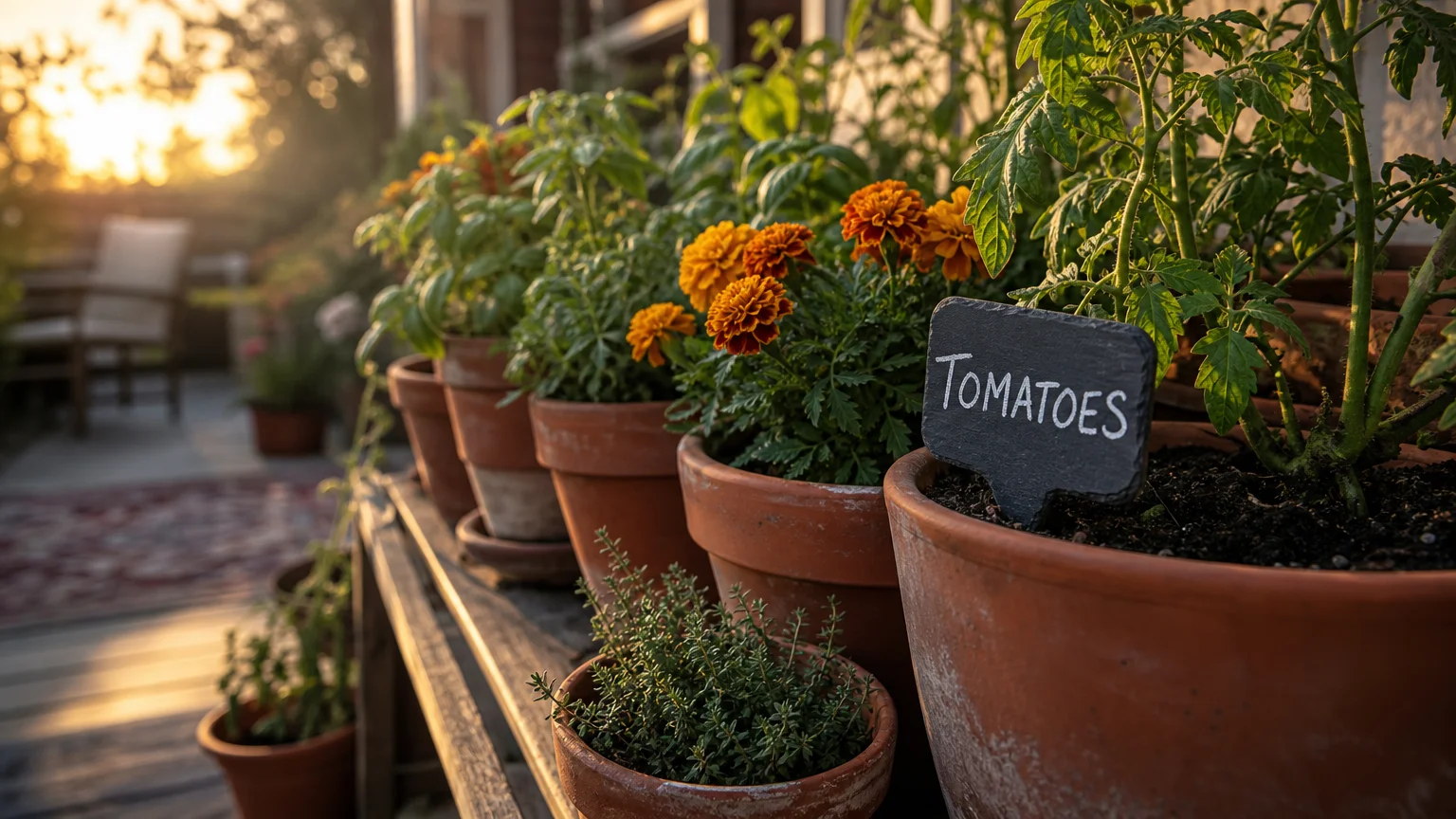
When you actively manage soil health using natural amendments, the visual impact on your overall garden styling becomes undeniably apparent. Robust, well-fed plants naturally display deeper, richer foliage colors and consistently produce significantly more vibrant blooms, allowing you to design a landscape that feels incredibly lush and custom-tailored to your aesthetic preferences. Consider intentionally grouping your heavy-feeding ornamentals—like tropical hibiscus, dramatic canna lilies, and fragrant heirloom roses—into designated high-impact visual zones. By concentrating your trench composting efforts in these specific, targeted areas, you create spectacular floral focal points that strongly anchor your yard’s overall design. The added potassium fundamentally helps plant stems grow thicker and more upright, which dramatically reduces the need for unsightly metal staking and artificial structural supports. Furthermore, cultivating a thriving, organically fed garden greatly enhances the natural, layered textures of your outdoor space, brilliantly contrasting the soft, broad leaves of healthy shade hostas against the delicate, brilliant blossoms of your sun-loving perennials. Integrating these sustainable habits directly influences your exterior design, proving beyond a doubt that beautiful styling truly begins at the microscopic root level. For more advanced guidance on arranging high-impact blooms and maximizing your visual space, many professional designers recommend heavily studying companion planting layouts, which you can easily explore through the Architectural Digest guide to garden layouts.
Troubleshooting and Upkeep
Embracing organic gardening methods requires a keen eye for observation and a strong willingness to adjust your approach when necessary. The absolute most common pitfall when introducing raw kitchen scraps into your elegant landscaping is inadequate burial. If you simply toss fresh banana skins onto your decorative wood mulch, you will inevitably invite aggressive mold growth, foul odors, and scavenging nocturnal rodents. Always ensure that any fresh, wet peels are thoroughly covered by at least two to three inches of dense soil, or fully submerged deep within your active compost pile. Should you notice a sudden, frustrating influx of fungus gnats or hovering fruit flies around your indoor container plants, immediately halt the use of liquid peel tea and allow the potting topsoil to dry out completely. Switching to the dehydrated powder method usually resolves these minor pest issues instantly while still safely delivering the necessary nutrients. Additionally, remember that while potassium is undeniably vital for overall plant health, an excessive, unchecked amount can physically lock out other essential soil minerals like magnesium and calcium. Monitor your plant leaves closely throughout the season; if older, lower foliage begins to noticeably yellow between the leaf veins, you may need to reduce your application rate and flush the soil with fresh water. Regular, moderate upkeep ensures that your soil amendment strategy remains a distinct benefit rather than an accidental burden. You can always accurately cross-reference your specific soil symptoms with established resources like the HGTV guide to soil testing to maintain a perfect, harmonious mineral balance.
Frequently Asked Questions
Can I use non-organic bananas for my garden fertilizer?
Yes, you can absolutely use conventional banana peels for your gardening projects. However, non-organic bananas are frequently treated with synthetic pesticides and fungicides during their commercial growing cycle. To responsibly minimize the introduction of chemical residues into your healthy soil, simply give the raw peels a thorough, vigorous wash under warm running water with a mild, natural dish soap before you chop and process them.
How often should I apply banana peel tea to my plants?
For actively growing and heavily fruiting plants, applying the appropriately diluted tea once every two to three weeks provides a steady, reliable supply of nutrients without overwhelming the sensitive root system. During the dormant, colder winter months—especially for your temperature-sensitive houseplants—you should significantly reduce or completely pause your feeding schedule to allow the plants to rest naturally.
Will decomposing banana peels drastically alter the pH of my garden soil?
Decomposing organic matter can temporarily create slight, highly localized acidity right around the breakdown site, but banana peels remain remarkably close to a neutral pH and will not drastically alter your overall, long-term soil chemistry. If you are deeply concerned about maintaining specific, highly tailored pH levels for sensitive acid-loving plants like blueberries or azaleas, regular monitoring through your local cooperative extension service can provide invaluable peace of mind.
Do banana peels provide enough total nitrogen to replace my standard lawn fertilizer?
No, they certainly do not. Banana peels are incredibly rich in essential potassium and contain valuable trace amounts of phosphorus and calcium, but they remain remarkably low in total nitrogen. Nitrogen is the primary macronutrient directly responsible for aggressive, leafy green growth. You must actively supplement your peels with a reliable, nitrogen-rich source, such as fresh grass clippings, brewed coffee grounds, or a well-balanced commercial organic feed, to achieve comprehensive plant health.
Taking the Next Step Toward a Thriving Garden
Upgrading your fundamental soil health does not require a massive landscaping budget or a specialized university degree in horticulture; it simply demands basic resourcefulness and an enthusiastic willingness to try something new. By strategically redirecting your morning kitchen scraps straight back into the earth, you actively participate in a sustainable, highly rewarding natural cycle that directly improves the beauty of your outdoor space. The methods carefully outlined here give you the ultimate flexibility to choose a distinct approach that perfectly matches your busy lifestyle, whether you heavily prefer the quick, satisfying brew of a nutrient tea or the slow, steady, reliable breakdown of trench composting. As you confidently experiment with these various applications, you will quickly begin to notice much stronger stems, significantly brighter blossoms, and far more resilient foliage across your entire landscape. Gather your materials today, select your very first pilot project, and watch with pride as your garden responds to this simple, natural boost with unparalleled, season-long vitality.